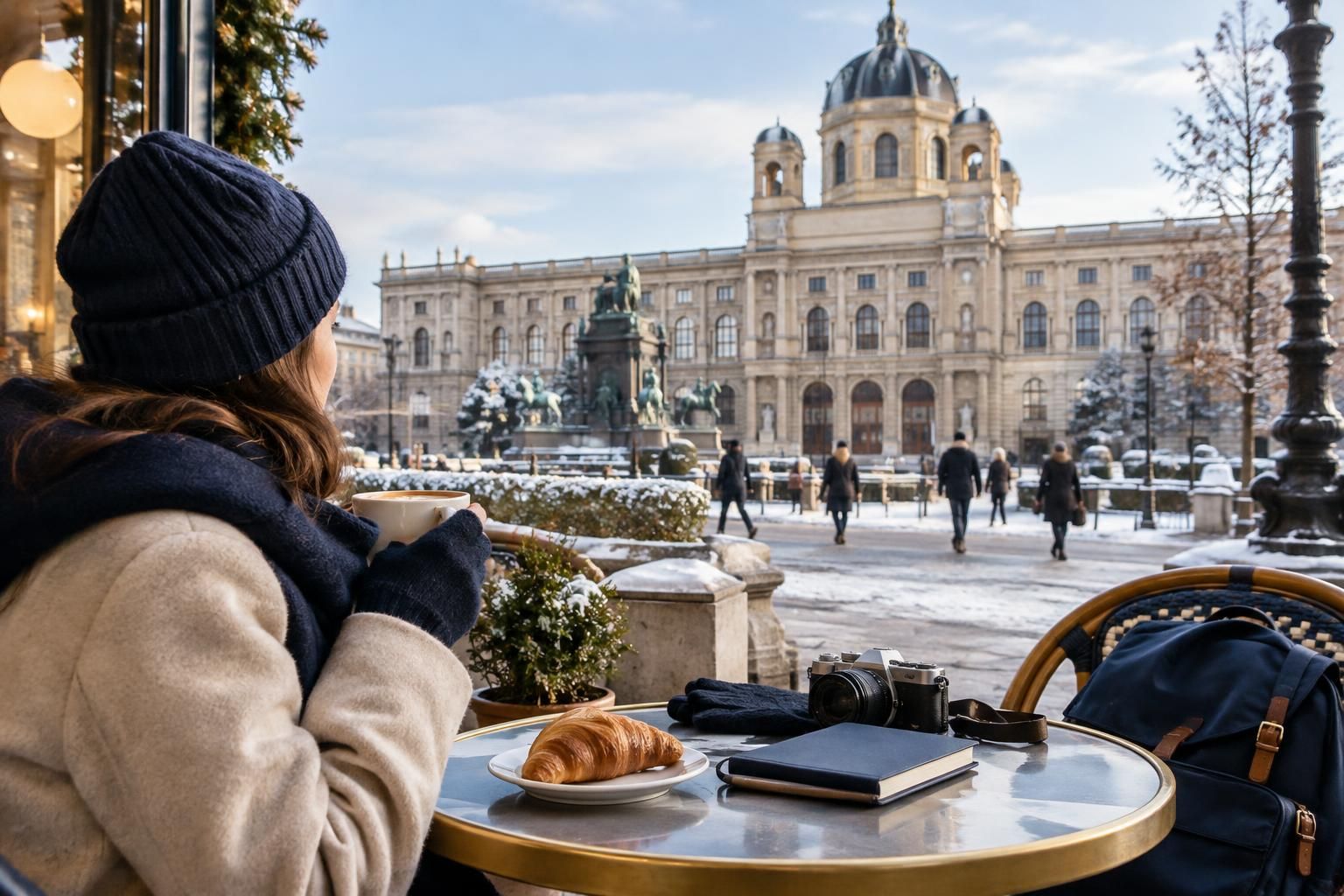
Vienna suits a winter city break because much of its appeal lies indoors: art collections, palace interiors, concert halls and cafés where sitting down is part of the experience. The planning challenge is not finding enough to do, but avoiding an exhausting sequence of grand buildings and cold walks. Rather than organizing the trip around seasonal markets or a packed sightseeing checklist, build each day around one substantial indoor visit, a daylight neighborhood walk and an unhurried meal. Three or four nights can give you room to enjoy that rhythm without treating every hour as an appointment.
Choose your dates for the trip you actually want
First decide whether you want a festive atmosphere or a quieter, culture-focused break. Seasonal events can add interest, but they should be a bonus rather than the foundation of an evergreen itinerary. If a particular concert, exhibition or market matters to you, confirm its dates before committing to transport and accommodation. Do not assume that a winter attraction operates throughout the season.
Plan for limited daylight and weather that may make long outdoor sessions uncomfortable. Put your most important architecture walk or park visit near the middle of the day, leaving museums and meals for either side where their opening hours permit. A three-night stay works best with two clear priorities; add a fourth night if you want a palace visit, several major collections or a slower arrival day.
Pick accommodation by route, not just by neighborhood name
The Innere Stadt is a natural choice if you want historic surroundings and short walks between central sights. Neubau can suit a trip weighted toward museums and independent shops, while Josefstadt offers another base to consider close to the center. These are starting points, not guarantees of convenience: the position of the individual building matters more than the district label.
Compare each property with your likely museum entrances and public transport stops. A seemingly short walk becomes less appealing when repeated in rain with wet shoes. Check whether reaching the room involves stairs, whether there is somewhere to hang damp coats, and whether breakfast suits your preferred start. Travelers sensitive to noise should consider room orientation as well as the street: a courtyard-facing room may feel different from one overlooking a busy road.
Build each day around one substantial indoor visit
Choose museums by interest rather than reputation alone. The Kunsthistorisches Museum is a strong candidate for travelers drawn to historic art collections; the Belvedere combines art with a palace setting; the MuseumsQuartier brings several cultural options into one area. Read collection descriptions before choosing, and confirm which building or admission your intended visit requires. A large institution can easily absorb the energy you had mentally assigned to two more stops.
Pair that anchor with something lighter. After a painting collection, try a neighborhood walk rather than another dense gallery. After a palace interior, leave time for lunch and a brief look at the grounds if conditions suit. For a three-day outline, consider one day around the historic center, one around the museum district and one centered on either the Belvedere or Schönbrunn, depending on your interests.
Make daylight walks short, purposeful and easy to leave
Winter walking works better as a series of compact routes than as an all-day ambition. In the center, connect Stephansplatz with nearby lanes and courtyards, then choose a café or indoor visit as your endpoint. Around the Ringstrasse, select a section whose buildings interest you instead of feeling obliged to complete the whole circuit. Palace grounds are optional extensions, not obligations after an already substantial interior visit.
Save a few locations on an offline map, including your accommodation and transport connections. When comparing walking with public transport, account for waiting, station entrances and any changes, not just the distance between stops. Check current tickets and route arrangements before traveling. Keep one low-effort indoor alternative in reserve so that unpleasant weather changes the order of your day rather than derailing it.
Use cafés and evenings to vary the pace
A café stop is most useful when it provides a genuine break: somewhere to sit, warm up and decide what you still want to do. Spread these pauses across the trip instead of queuing for every famous address. Look at the menu before settling in, and distinguish between a coffee-and-cake stop and a meal when planning your budget. Leaving one lunch or afternoon unscheduled gives you flexibility when a museum takes longer than expected.
Treat an evening performance as an anchor, not an extra squeezed onto a full day. Compare the venue, performance length, seating and return journey before booking. If music is not a priority, an early dinner followed by a short illuminated-street walk can be enough. Protect the following morning from an unnecessarily early start after any late evening.
Pack for repeated transitions between cold streets and warm interiors
Choose adjustable layers rather than one outfit that only works outdoors. A warm outer layer, scarf, gloves and comfortable footwear with suitable tread are useful foundations. Shoes should already be comfortable for walking; a winter city break is a poor time to discover pressure points. Bring spare socks and allow space for damp items to dry without packing them immediately against clean clothes.
Keep your day bag small enough to manage comfortably on transport and in crowded interiors. Museum bag and cloakroom policies vary, so check requirements for your chosen visits rather than assuming a backpack can accompany you everywhere. A compact umbrella, charging cable and downloaded booking information can reduce small inconveniences. Leave room in the budget for an occasional transport ride or indoor break when your original walking plan loses its appeal.
A satisfying winter Vienna itinerary needs contrast more than volume: one absorbing collection, some daylight outdoors, a comfortable place to pause and an evening chosen with intention. Book the experiences that genuinely matter, keep the spaces between them flexible, and select accommodation that makes returning for a rest easy. The result is a city break shaped around enjoyment rather than endurance.
AI-assisted evergreen travel guide. Featured image is an AI-generated illustration, not a specific product or booking.