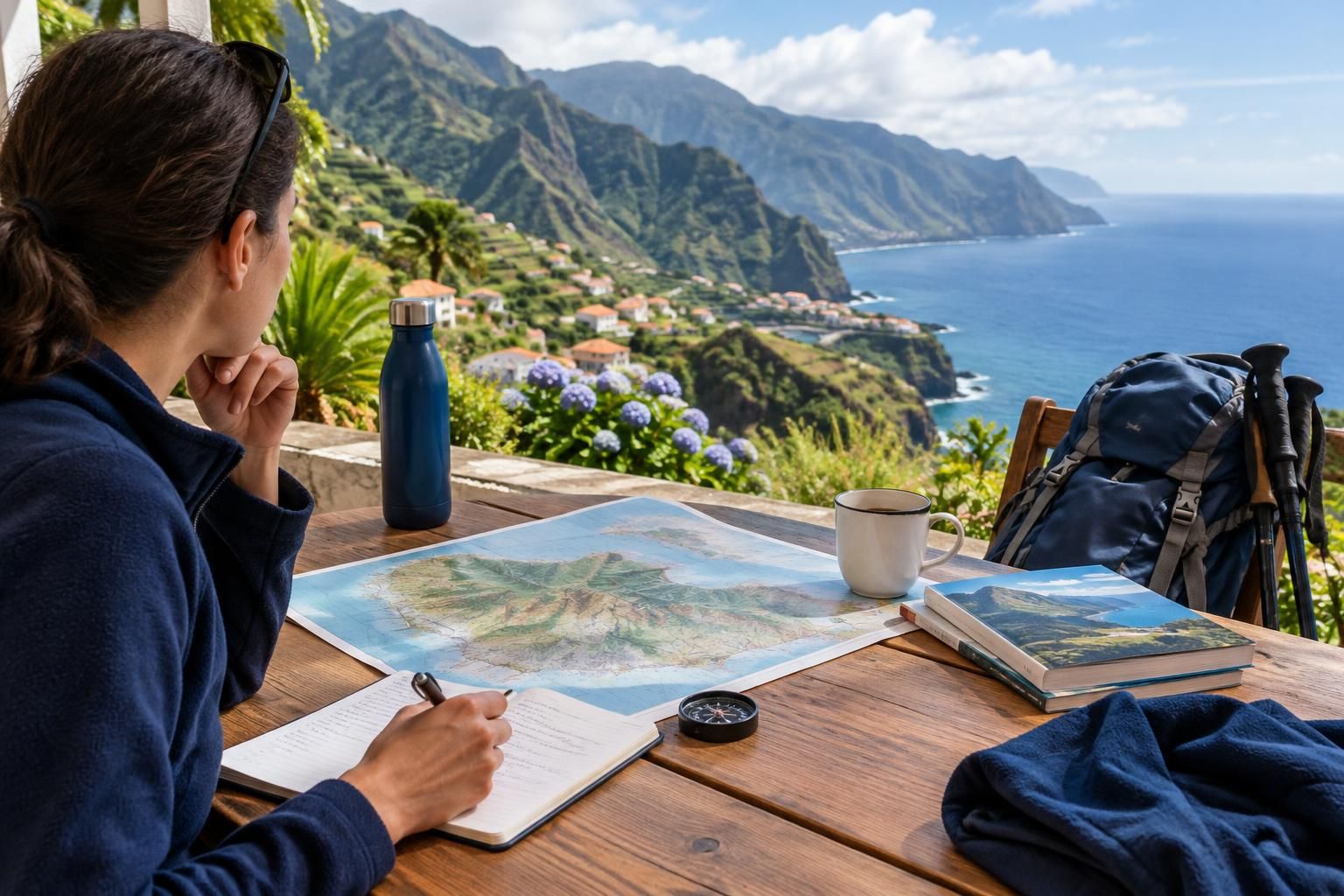
Madeira rewards travelers who enjoy walking, but a good first trip does not need to revolve around long mountain hikes. This Portuguese Atlantic island combines steep landscapes, irrigation-channel paths known as levadas, coastal scenery and a capital that deserves time of its own. The key is to plan around terrain and access rather than collect famous viewpoints. Choose accommodation that suits your evenings, understand how you will reach and leave each walk, and keep enough flexibility to change direction when conditions differ across the island.
1. Decide what kind of walking holiday you want
Start by separating scenic strolling from a hiking-focused trip. If you want short walks between leisurely meals and garden visits, a Funchal base with occasional excursions may be enough. If walking is the main purpose, prioritize transport access, somewhere to dry clothing and several route options rather than choosing a hotel solely for its view.
Think about what you enjoy underfoot. A relatively level levada path can still feel demanding if it is narrow, exposed or interrupted by tunnels. Mountain routes may involve prolonged steps and steep descents, while town walks can include substantial hills. Distance alone is a poor measure of effort here; elevation, surface and exposure matter just as much.
2. Choose one base unless a second solves a real problem
Funchal is a practical starting point for travelers who want restaurants, cultural visits and non-walking alternatives close at hand. Compare accommodation in the central area with stays farther west, considering the actual walk to dinner and your likely excursion pickup points. A map can make a steep street look deceptively convenient.
A second base can make sense if you want quieter evenings and several days focused on one part of the island. Consider the northern coast for village stays and dramatic scenery, or an eastern base for a different coastal setting. Before splitting your stay, count the time spent packing, moving and arranging transport. For a shorter holiday, one well-chosen base often keeps things simpler.
3. Match transport to the shape of each walk
A rental car offers flexibility, particularly for travelers comfortable with steep roads, bends and unfamiliar parking arrangements. It works most neatly with circular walks or routes where you return along the same path. For a point-to-point hike, reaching the starting point is only half the plan: you also need a clear way back to the vehicle.
Without a car, build the itinerary around guided outings, arranged transfers or routes with suitable public transport connections. Do not assume a bus stop near a village also serves a remote trailhead conveniently. Before committing to a route, check both directions of travel, the distance between stops and the path, and what happens if you finish later than expected. A guided walk can simplify logistics without requiring every day to be organized.
4. Build a route shortlist, not a fixed sequence
Create a small menu of walks with different characteristics: a shorter outing, a longer day, a coastal option and an inland route. For each, note ascent and descent, expected terrain, exposed stretches, tunnels, start and finish points, and transport arrangements. Read descriptions carefully rather than treating every levada walk as interchangeable.
Check current access information and local forecasts before setting out, since routes can be affected by maintenance or weather. Conditions at your accommodation may not reflect those higher up or across the island. Keeping alternative plans is more useful than attaching a celebrated hike to a single date and feeling obliged to attempt it.
5. Give a week a rhythm rather than filling every day
For a seven-night stay, a balanced outline might include an arrival day in Funchal, three substantial walking days, one shorter walk combined with a village visit, and two flexible days for gardens, museums or the coast. Place an easier day between the outings you expect to find most demanding.
Keep the order provisional and avoid making your most anticipated walk depend on the last full day. Leave time to enjoy places beyond the trailhead, too. A harbor stroll, a market visit or lunch in a small town can make the trip feel more connected to Madeira than a succession of transfers and hikes.
6. Choose accommodation and packing for practical comfort
Look beyond room photographs. Useful details include space to air damp clothes, breakfast arrangements that fit your departures, parking if needed, and manageable access with luggage. In an apartment, simple cooking facilities can help with early starts and packed lunches; in a hotel, ask about arrangements rather than assuming they are available.
Pack familiar walking footwear, adjustable layers and rain protection, plus a small daypack for water, food and spare clothing. Routes involving tunnels call for an appropriate light, not reliance on a phone alone. Download relevant maps before leaving your accommodation, keep navigation devices charged, and avoid making an unfamiliar route the first test of new footwear.
A satisfying Madeira walking trip depends less on completing a famous-route checklist than on matching each day to your interests, transport and conditions. Choose a convenient base, assess paths beyond their distance, and leave room for both alternatives and unhurried exploration. The island’s towns, gardens and coastal settings are part of the holiday, not merely backup plans.
AI-assisted evergreen travel guide. Featured image is an AI-generated illustration, not a specific product or booking.