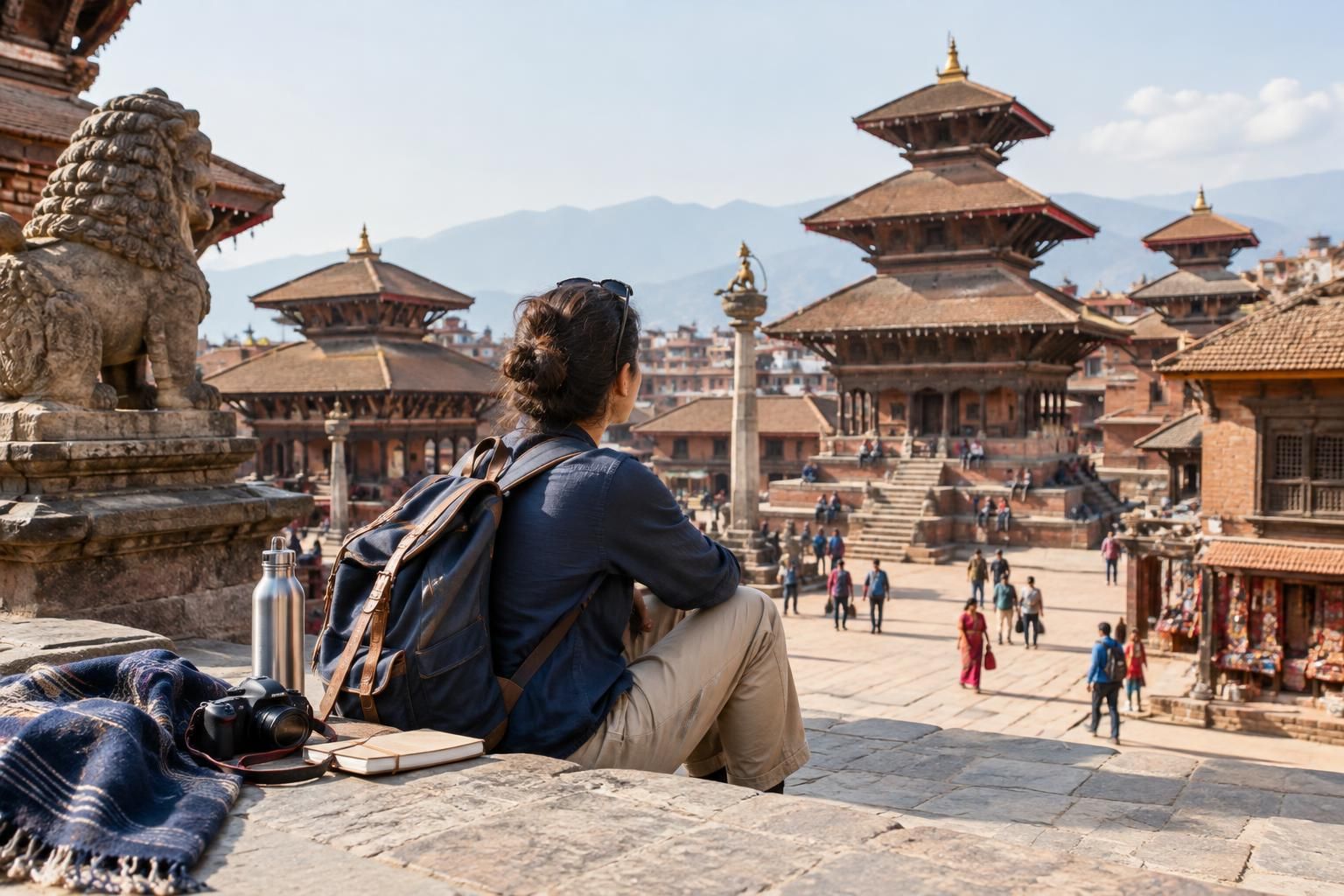
Nepal does not have to mean a trekking itinerary. Kathmandu Valley offers a rewarding trip built around Newar architecture, Buddhist and Hindu sacred places, traditional crafts and everyday neighborhood life. Kathmandu, Patan and Bhaktapur each deserve more than a quick stop between bigger adventures. The key is to resist treating the valley as a checklist: choose a convenient base, group nearby sights together and allow time for traffic, courtyard discoveries and unhurried meals. Here is how to shape a culture-focused visit without adding a mountain trek.
1. Build the trip around distinct neighborhoods
For a first visit, roughly five to seven days gives you room to explore several parts of the valley without moving every morning. Assign separate days to central Kathmandu, Patan and Bhaktapur, then leave additional time for a major sacred site or a neighborhood you want to revisit. These places share architectural traditions, but their streets, squares and atmosphere are not interchangeable.
Organize days geographically rather than by theme. Trying to combine every important temple in one outing can mean spending much of the day in transit. A more satisfying pattern is one main area, one optional stop and a long lunch. Keep your arrival day light, particularly if you are coming off a long international journey.
2. Choose a base for evenings as well as sightseeing
Thamel is a practical Kathmandu option if you value a concentration of visitor-oriented accommodation, restaurants and travel services. Look closely at the immediate lane, though: a room facing a busy street can feel very different from one set back in a courtyard. Patan can suit travelers who want evenings near historic squares and an itinerary focused on architecture and crafts.
An overnight stay in Bhaktapur is worth considering if lingering matters more than minimizing hotel changes. It lets you experience the town outside the rhythm of a day trip. Otherwise, one valley base is usually simpler. Before booking, ask about vehicle access, stairs, heating or cooling arrangements, and whether the room faces a street or an internal courtyard. Traditional buildings can have steep staircases and layouts that are less convenient with bulky luggage.
3. Make transport part of the plan, not an afterthought
Distances on a map can look modest while journeys still absorb a substantial part of the day. Build generous buffers between neighborhoods and avoid stacking tightly timed commitments across the valley. For a focused outing, an arranged car and driver may be useful; for a flexible point-to-point trip, a taxi can be simpler. Clarify the route, waiting arrangements and total charge before setting off.
Walking is most rewarding within a chosen district rather than as the default connection between every attraction. Streets may involve uneven paving, steps, busy crossings and limited separation from vehicles. Comfortable shoes and a small day bag make exploring easier. If step-free access or minimal walking is important, ask accommodation staff or a prospective guide about the specific route rather than relying on the distance alone.
4. Visit sacred places as living spaces
Swayambhu and Boudhanath offer different settings for encountering Buddhist heritage, while Hindu temples and shrines are woven throughout the valley. Choose a manageable selection instead of trying to see them all. Allow time to observe how people use a place: a square may be a route to work, a gathering point and a setting for worship at the same time.
Carry a light layer for modest coverage and follow posted guidance about shoes, photography and access. Some spaces may be reserved for worshippers or have site-specific restrictions, so do not assume that an open doorway is an invitation to enter. Ask before photographing people, especially during rituals. A local guide can add context to symbolism and architectural details; agree beforehand whether you want a historical overview, a craft-focused walk or a slower introduction to religious traditions.
5. Give crafts and food their own time
The valley is particularly rewarding when you look beyond monumental buildings. In Patan, consider a walk focused on metalwork and architectural detail; in Bhaktapur, make room for pottery-related streets and squares. Where workshops welcome visitors, ask before entering or photographing the work. If you hope to buy something, compare materials, workmanship and packing needs rather than letting the sightseeing schedule rush the decision.
Use meals to break up walking rather than squeezing them into gaps. Momos, dal bhat and Newar dishes offer different starting points for exploring local cooking. Ask what a dish contains and how large the portion is before ordering several unfamiliar items. A food-focused walk or cooking session can provide structure, but leave some meals unplanned so you can pause in the neighborhood you are already enjoying.
6. Pack for urban exploring and flexible days
Pack for the season and your accommodation, not for an imagined expedition. Useful basics include comfortable walking shoes, adaptable layers, sun protection, a compact rain layer and a bag that leaves your hands free. Courtyards and shaded interiors can feel different from exposed squares, so removable layers are more versatile than one heavy outfit.
Keep your final full day relatively open. Weather, traffic, a compelling museum or a conversation in a workshop can all change how much you want to fit in. Save essential visits for earlier in the trip and use the spare time for a return visit, a quieter walk or shopping. If you are connecting onward, avoid depending on a cross-valley sightseeing excursion immediately before departure.
A culture-focused Kathmandu Valley trip works best when you explore fewer areas more deeply. Choose accommodation around the evenings you want, give each historic center its own time and treat transport as a real part of the itinerary. The result is a Nepal visit shaped by streets, craftsmanship and living traditions rather than trekking distances.
AI-assisted evergreen travel guide. Featured image is an AI-generated illustration, not a specific product or booking.