Meals can become the most memorable part of a trip, but deciding where to eat three times a day can also consume surprising amounts of time. Book everything and your itinerary starts revolving around reservation times. Leave everything open and you may spend your hungriest moments comparing menus across town. A better approach is to give food a light structure: identify the meals that matter most, make everyday eating convenient and leave space for discoveries. This works for a short city break, a road trip or a longer stay in one place.
Give each day a meal anchor, not a full dining schedule
Start with the shape of your sightseeing day rather than a list of restaurants. If you expect to spend the morning in a museum district and the afternoon beside the waterfront, choose one of those areas for your main meal. Avoid adding a cross-city journey solely for an ordinary lunch unless the restaurant itself is a priority.
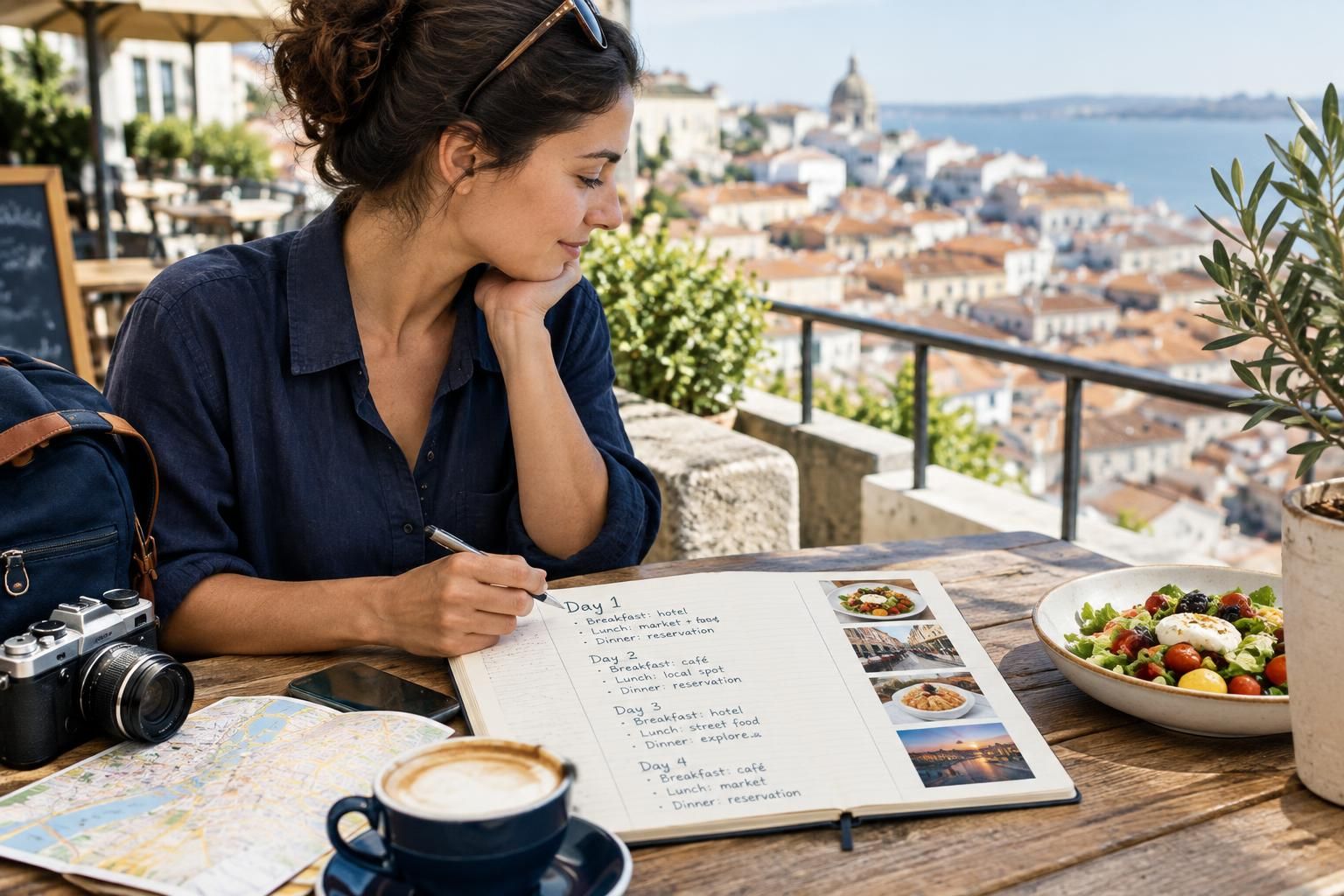
An anchor meal is simply the meal you plan around. It might be a leisurely lunch after a busy morning, an early dinner before a performance or breakfast near your accommodation before a day trip. Leave the other meals relatively simple. One deliberate food experience often gives a day enough character without turning every stop into another appointment.
Decide which meals deserve a reservation
Reserve selectively for experiences you would genuinely regret missing: a particular style of regional cooking, a celebratory dinner or a meal with a larger group. A reservation is also useful when your day has a fixed commitment afterward, provided you allow enough time to eat and travel onward. Check booking conditions before committing, especially where deposits or cancellation charges apply.
Keep arrival evenings and complicated travel days flexible when possible. Delays, fatigue and an unexpectedly late check-in can make a tightly timed dinner feel like another connection to catch. If you do book, keep the restaurant close to where you expect to finish the day. Record the reservation time, location and any cancellation deadline alongside your transport and accommodation details.
Build a small shortlist around places you will already be
For each main sightseeing area, save two plausible meal options rather than twenty. Choose places serving different needs, such as a sit-down restaurant and a quicker counter-service option. Add one convenient fallback near your accommodation for an evening when you do not want another journey. This turns your shortlist into a decision tool rather than a second itinerary.
Note why each place made the list: regional dishes, a menu that suits your group, outdoor seating or proximity to your afternoon plans. Save its location and enough menu information to recognize whether it fits your budget. Treat opening times, menus and reservation arrangements as details to confirm closer to the visit, not permanent facts.
Budget by meal type instead of repeating the same daily allowance
A flat food allowance can be awkward when one day includes a special dinner and another involves a picnic. Instead, divide your expected meals into simple categories: quick breakfasts, casual lunches, everyday dinners and a small number of higher-priority experiences. Allocate more to the meals you care about and simplify the rest without treating every inexpensive meal as a compromise.
Remember the spending between meals, too. Coffee stops, drinks, snacks and station purchases can change the overall picture. Before choosing accommodation with breakfast or cooking facilities, consider how you will actually use them. A kitchen offers little value if you plan to leave early each morning and dislike shopping on holiday. Conversely, easy breakfasts in your room may make a longer stay noticeably simpler.
Match food plans to your travel companions
Discuss eating preferences before the trip becomes busy. Useful questions include whether everyone wants breakfast, how long they enjoy sitting over lunch and which dietary requirements or strong dislikes affect restaurant choices. Distinguish requirements from preferences so the group knows what must be accommodated. Where ingredients matter, communicate directly with the venue rather than relying only on a brief menu description.
You do not need to share every meal. One traveler might enjoy a long breakfast while another prefers an early walk and something quick afterward. Agreeing to meet for lunch can be more enjoyable than forcing identical routines. For shared meals, rotate who chooses or agree on a few priorities in advance, so the most enthusiastic food planner does not automatically control every decision.
Leave room for discoveries and keep a fallback
An appealing bakery or a neighborhood you want to linger in can be a good reason to change an unreserved plan. Use your shortlist as support, not a checklist. Before making a detour for food, weigh the whole cost: travel time, transport spending and what you would give up elsewhere. A promising nearby lunch may fit the day better than a destination restaurant.
Keep a modest backup for moments when plans unravel: a familiar snack, a refillable water bottle and knowledge of where you can buy a straightforward meal near your base. If you plan a picnic, account for carrying food, storage needs, weather and somewhere suitable to sit. On departure days, favor convenient meals over ambitious detours, leaving enough time for your onward journey.
A useful travel food plan removes repeated decisions without removing choice. Pick a few meals worth organizing, connect everyday eating to your route and keep convenient alternatives close at hand. You will have room for both the dinner you anticipated and the lunch you discover simply because you stayed in a neighborhood a little longer.
AI-assisted evergreen travel guide. Featured image is an AI-generated illustration, not a specific product or booking.