A cycling holiday in the Netherlands does not have to mean riding between hotels with all your belongings. Staying in one place and taking short rides can be a more comfortable introduction, especially if you cycle occasionally rather than every week. You can unpack once, explore a different landscape each day and leave room for museums, markets or a long lunch. The key is to plan around the riding experience you want, not simply the distance you think you should cover.
Choose your base for easy departures, not just famous sights
Start by deciding what you want beyond cycling. Utrecht suits a trip combining city time with rides toward greener surroundings; Leiden offers a smaller-city setting with waterways and potential outings toward the coast; Haarlem can appeal if you want urban sightseeing alongside dune landscapes. Treat these as starting points for comparing routes rather than promises that every nearby ride will be simple.
The accommodation’s precise location matters as much as the town. A central room may be convenient for dinner but involve busy streets before you reach quieter riding. Somewhere closer to the edge can simplify departures, although evenings may require more planning. Before booking, compare the ride from the property to two or three potential routes, and ask about secure bicycle storage.
Plan by riding time and effort, not distance alone
For an occasional cyclist, an initial loop of around 15 to 25 kilometres can be a useful planning example, not a target to meet. Allow a generous half-day if you want photographs, coffee and a village stop. A shorter ride with frequent pauses can be more enjoyable than a longer route that leaves you watching the clock.
Flat terrain does not automatically mean effortless cycling. Headwinds, exposed stretches, unfamiliar junctions and time spent navigating all affect how demanding a day feels. Begin with your easiest route and extend later outings only if the first one feels comfortable. If two people have different fitness levels, plan around the person who wants the shorter day.
Build a balanced stay with three different kinds of day
A four- or five-night stay gives you room to vary the rhythm. Use the arrival day to settle in, collect bikes if practical and take a brief familiarisation ride. Make the first full day a simple loop with one main stop. Save a longer outing for later, once you understand the bicycle, your pace and the conditions.
Include a day that does not depend on cycling. A museum visit, a walking day in your base or an excursion by public transport can provide a welcome change. Keep the order flexible rather than attaching every outing to a fixed date. A windy morning might suit indoor sightseeing, while a more comfortable day can become your longer ride.
Choose a rental bicycle for comfort and simplicity
A comfortable upright bicycle may suit leisurely outings, while an electric bicycle can make longer distances or headwinds more manageable for some riders. Neither choice removes the need to assess your own ability. Consider how confidently you can start, stop, turn and handle the bicycle’s weight, particularly when carrying a bag.
Ask the rental provider about frame sizing, saddle adjustment, gears, braking, locks and what to do if a mechanical problem occurs. Clarify collection and return arrangements before building an itinerary around them. Take a short practice ride before setting off, and make adjustments immediately rather than hoping discomfort will disappear. For an electric bicycle, understand the assistance controls and charging arrangements.
Design routes with rewarding stops and easy ways to shorten them
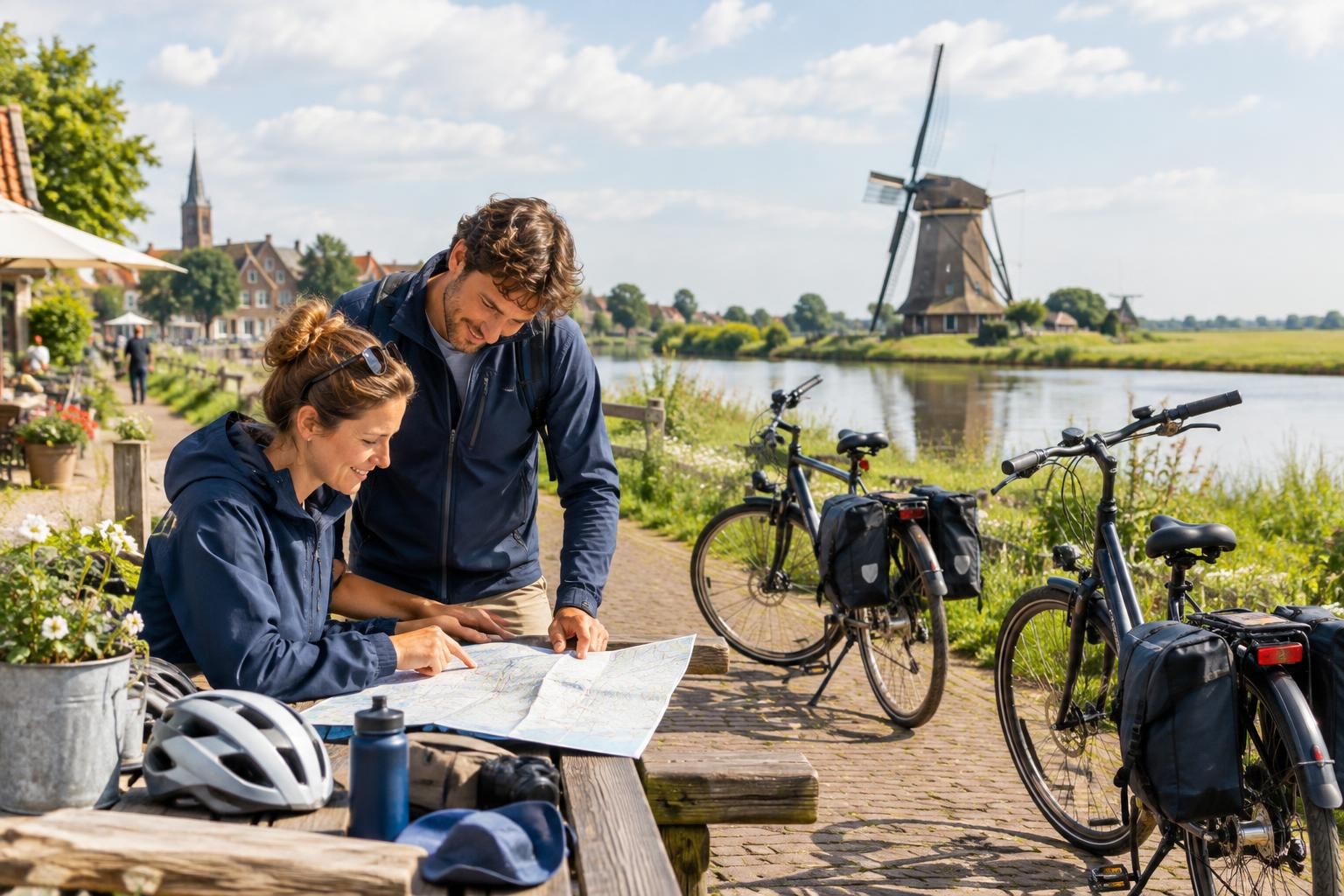
Give each ride a clear purpose: a waterside picnic, a village lunch, a garden visit or a stretch through open countryside. One main destination is usually enough. Add optional stops rather than a chain of commitments, so a slow start does not turn the day into a race.
Dutch numbered cycle-node networks can help structure rides, but inspect the actual route rather than following a string of numbers blindly. Check surface descriptions, urban sections, bridges and any ferry crossings. Where a crossing is essential, confirm its operating details before departure. Download a map for offline use and identify a shorter return option; a loop that can be reduced halfway through is reassuring for a first trip.
Pack for changeable weather without carrying your whole suitcase
For a day ride, prioritise water, a snack, a light extra layer, a weather-resistant outer layer and a charged phone. Carry essential personal items in a small waterproof pouch. A modest pannier or securely attached bicycle bag can keep weight off your shoulders, but check that it fits the rental bike and does not interfere with pedalling.
Keep your main luggage at the accommodation and avoid assuming you can improvise a train journey home with a bicycle. Bicycle carriage conditions can vary by service, time and bicycle type. If public transport is part of your backup plan, check the relevant arrangements in advance. Often, the simpler fallback is a shorter loop and a clear understanding of the rental provider’s assistance procedure.
The most satisfying first Dutch cycling holiday is not necessarily the one with the greatest mileage. Choose a base with several appealing routes, start with a manageable outing and leave space to change plans. With comfortable equipment, purposeful stops and an undemanding day in reserve, cycling becomes a way to notice the landscape rather than an endurance test.
AI-assisted evergreen travel guide. Featured image is an AI-generated illustration, not a specific product or booking.