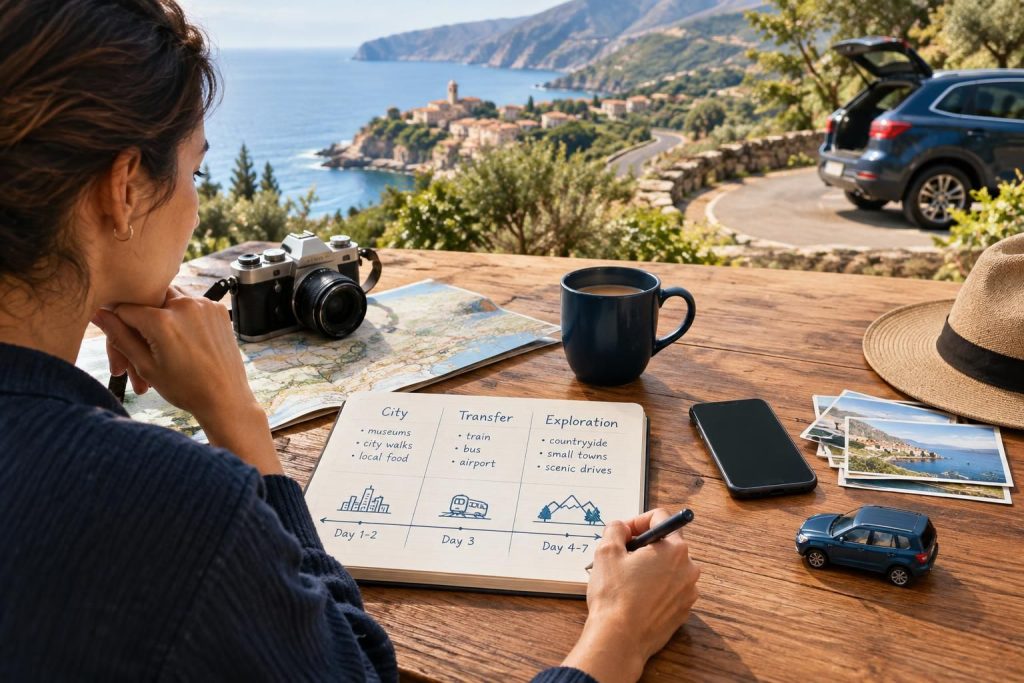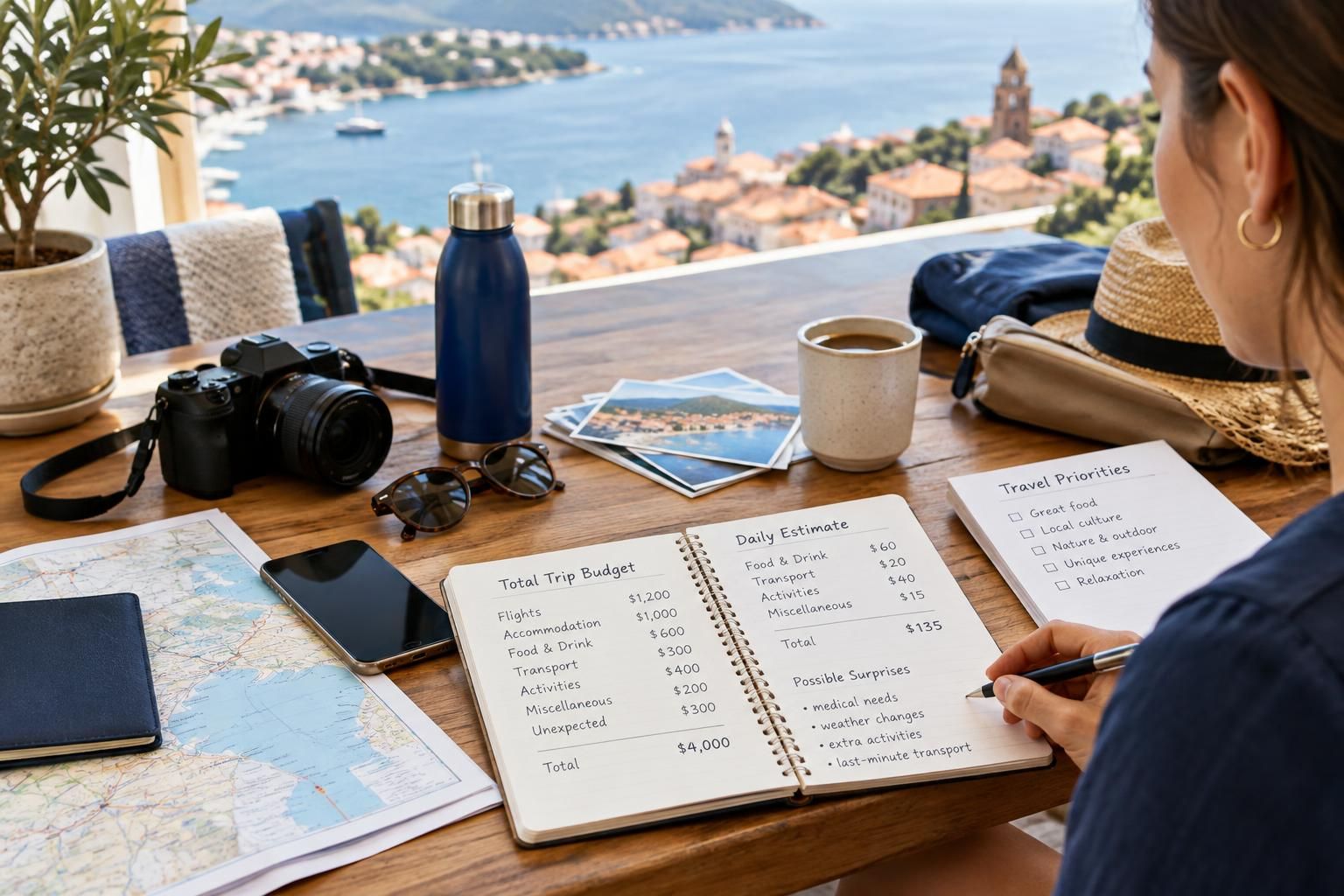
A travel budget is most useful when it helps you make choices, not when it predicts every purchase. Transport and accommodation may form the backbone of a trip, but smaller decisions can change the total: how you reach your hotel, where you eat between activities and whether an appealing excursion needs extra equipment. Building a little flexibility into your plan makes it easier to enjoy those choices without repeatedly recalculating what you can afford. Start with the whole journey, separate essential costs from optional spending and give unexpected expenses their own space.
1. Set a whole-trip limit before dividing it into days
Begin with the amount you are comfortable spending on the complete trip, rather than a daily allowance borrowed from someone else’s itinerary. Include spending before departure, during the journey and immediately after returning. A short break can involve relatively high transport costs, while a longer stay may spread those costs over more days. Neither fits neatly into one universal daily figure.
Divide that total into three broad pots: commitments, flexible spending and a reserve. Commitments include the transport and accommodation you intend to book. Flexible spending covers meals, local journeys, activities and shopping. The reserve is money you do not allocate to planned treats. If the commitments leave too little for ordinary days, adjust the route, duration or accommodation before making bookings.
2. Budget for complete journeys, not just headline fares
Trace the journey from your front door to your first night’s accommodation, then do the same for the return. Depending on your plans, the full cost might include reaching a station, transferring from an airport, storing luggage or taking an onward connection. For a road trip, think beyond the vehicle itself to fuel, parking and any route-specific charges that need checking.
Compare options on a like-for-like basis. A lower fare may not be the better fit if its arrival point requires a complicated transfer or an additional overnight stay. Similarly, compare accommodation totals alongside the facilities you expect to use. A kitchen, laundry access or a location near your main activities may change spending elsewhere. Treat these as trade-offs to investigate, not automatic savings.
3. Estimate daily spending using realistic sample days
Instead of imagining every day as identical, sketch three types: an ordinary sightseeing day, a more expensive activity day and a quieter day. List what each would involve, including meals, local transport, admissions and small purchases. A beach afternoon with groceries has a different spending pattern from a guided excursion followed by dinner out. Your budget should reflect the mix you actually want.
Use those sample days to build a flexible spending allowance for the trip. Keep food assumptions honest: budgeting for self-catering every evening will not help if eating out is part of your reason for travelling. Allow for modest conveniences too, such as a drink during a long wait or transport back after a tiring afternoon. Small, foreseeable purchases belong in the plan rather than being treated as surprises.
4. Separate genuine surprises from overlooked expenses
Before setting your reserve, make one pass through the itinerary looking for costs you can anticipate. Consider laundry on a longer trip, luggage storage, equipment needed for an activity and purchases required before departure. If you plan to use cards or withdraw cash abroad, check the applicable terms rather than assuming every payment method costs the same. Record known expenses in their proper categories.
Then leave a separate buffer for changes you cannot sensibly price in advance: replacing a forgotten item, choosing a different transfer or rearranging part of a day. The right size depends on how complex and flexible your trip is. Multiple destinations and tightly connected bookings create different uncertainties from a single-base stay. Keep this trip buffer distinct from money you need for everyday responsibilities at home.
5. Decide which experiences deserve priority
Choose two or three things you would be disappointed to miss. They might be a particular excursion, a private room or several memorable meals. Give those priorities space in the budget first, then identify areas where you are genuinely happy to spend less. Cutting something you barely value is easier to sustain than repeatedly denying yourself the main reason for taking the trip.
Create a short list of optional upgrades rather than treating every appealing idea as part of the plan. You might choose between an extra excursion and a special dinner once you see how spending develops. Compare complete alternatives: a day trip may involve transport, admission and meals away from your base. Knowing its full shape makes the decision clearer than considering each purchase separately.
6. Track lightly and review at useful moments
Use a simple note or spreadsheet with four lines: committed costs, flexible spending, reserve and remaining funds. Record purchases consistently, including cash, but avoid building a system so detailed that you abandon it. When travelling with someone else, distinguish shared expenses from personal ones and agree how to record payments before balances become difficult to reconstruct.
Review after the first full day and again around the midpoint. If spending is higher than expected, identify why before making broad cuts. An unusually expensive transfer may be a one-off; a daily pattern of extra journeys may need a change of plan. Adjust optional spending while protecting enough money for remaining essentials, including the journey home.
A workable travel budget combines a clear limit with room to choose. Count the whole journey, model the days you actually want and keep a reserve separate from planned spending. Once those foundations are in place, brief check-ins can replace constant calculation, leaving more attention for the trip itself.
AI-assisted evergreen travel guide. Featured image is an AI-generated illustration, not a specific product or booking.