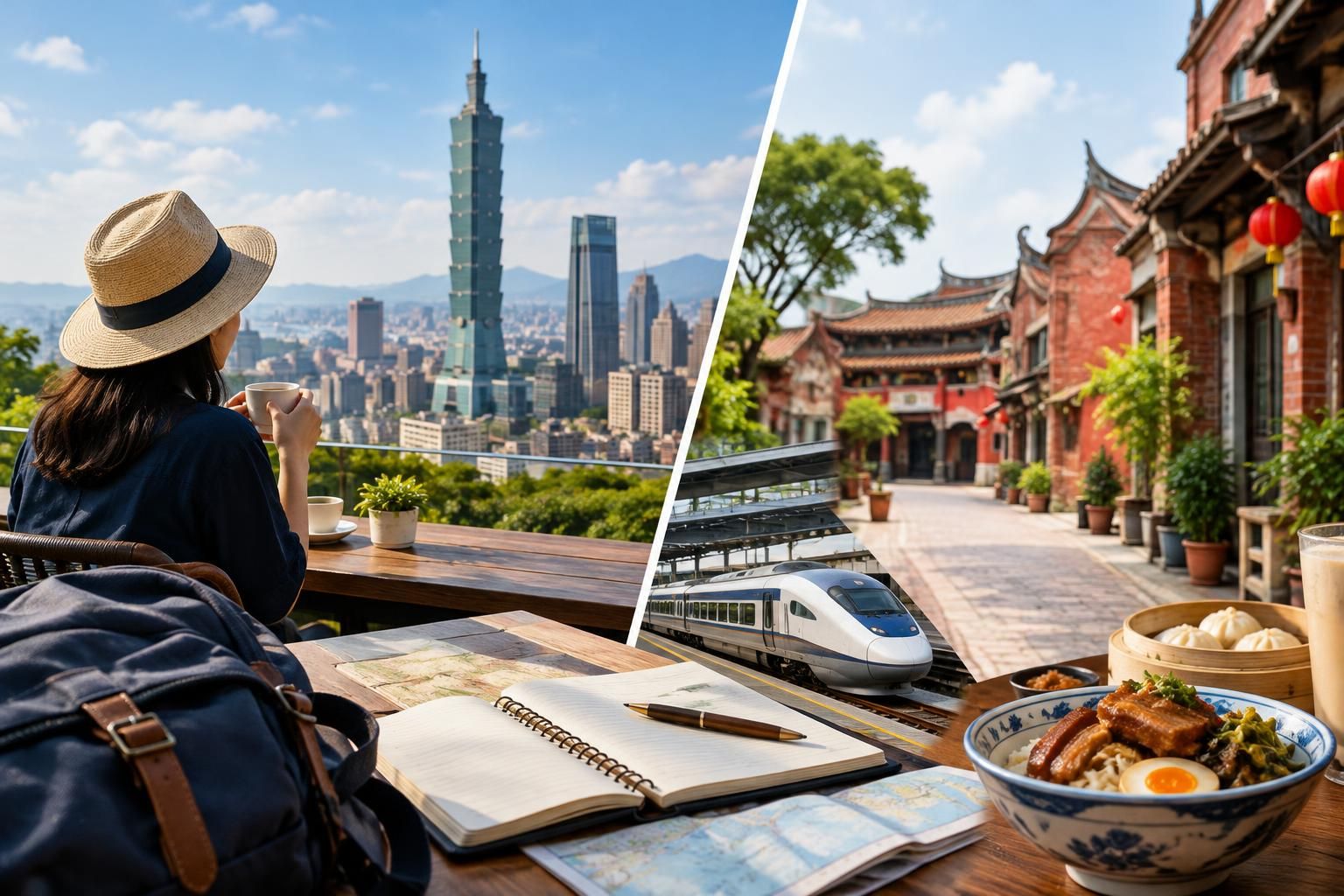
Taiwan rewards travelers who leave room between the sights. A temple courtyard, a breakfast stall or a shaded lane can be as memorable as a major attraction. For a first visit, splitting your time between Taipei and Tainan offers a satisfying contrast without turning the trip into a succession of hotel changes. Taipei provides a metropolitan introduction, while Tainan encourages a slower exploration of historic neighborhoods and regional food. The key is to treat them as two distinct bases rather than stops on an island-wide checklist.
Build the trip around two different rhythms
For an eight-night trip, consider five nights in Taipei and three in Tainan. This gives the larger capital more room while preserving two full days in Tainan. If food, temples and unhurried wandering matter more than day trips, a four-and-four split can work better. Arrival and departure days are rarely equivalent to sightseeing days, so count usable mornings and afternoons rather than simply nights.
Avoid adding another overnight stop just to make the itinerary appear more complete. Each move requires packing, station navigation and a new check-in. A two-base trip still offers variety: urban neighborhoods and nearby hills around Taipei, followed by old streets, temple architecture and a different food culture in Tainan. Travelers with fewer than six nights may enjoy staying in Taipei and saving the south for another visit.
Choose accommodation for the journeys you will actually make
In Taipei, prioritize a straightforward walk to a metro station over proximity to one famous sight. Around Taipei Main Station, onward transport is a major advantage, but the station complex can make an apparently short map distance feel longer. Zhongshan suits travelers interested in browsing, cafés and neighborhood walks; Da’an offers another useful base for combining parks, food and everyday city life.
In Tainan, the West Central District is a useful starting point for comparing accommodation because many historic streets and food stops are clustered there. Look beyond the neighborhood name: check the actual walking route, luggage access, stairs and whether your room faces a busy road. A characterful lane-side property may appeal to a light packer, while someone with a large suitcase may prefer easier vehicle access.
Understand the station choice before booking the train
Taiwan’s high-speed railway and conventional railway are different systems, and the distinction matters especially in Tainan. The high-speed station is outside the historic center, while the conventional Tainan railway station is closer to central neighborhoods. A faster intercity journey does not automatically produce the simplest door-to-door trip. Compare the main rail leg alongside the transfer to your accommodation.
High-speed rail can suit travelers who value a shorter intercity journey; conventional rail may appeal when central arrival is more important than speed. Before purchasing, confirm the departure station, arrival station, service type and any reservation conditions. Keep the transfer day relatively open, with perhaps a neighborhood meal and a short walk after check-in rather than a tightly timed attraction.
Give each city a manageable daily structure
In Taipei, group activities geographically. One day might combine older streets around Dadaocheng with nearby riverside time; another could focus on a museum or landmark followed by an evening food outing. If you want a day trip, choose one that matches your interests rather than collecting several familiar names. Hillside scenery, hot-spring neighborhoods and coastal settlements involve different journeys and energy demands.
In Tainan, organize walks around small clusters rather than trying to cross the city repeatedly. Explore central temple streets on one day and consider Anping as a separate outing. Give each day one main anchor, such as a historic district or museum, then leave space for food and discoveries along the way. Check individual attraction arrangements before finalizing the sequence, especially if one particular visit is essential.
Use food as a planning tool, not a checklist
Taipei and Tainan both reward curious eating, but chasing a long list of dishes can consume the day. Pick one or two food priorities per city and let the rest emerge from your route. In Taipei, that might mean a breakfast stop and an evening market visit. In Tainan, dishes such as milkfish preparations, savory rice pudding or danzai noodles can provide an introduction to local traditions.
Spread food stops across the day rather than saving every appetite for dinner. Order modestly at first, particularly when sharing several dishes, and keep some flexibility if a stall is closed or a queue feels disproportionate. Travelers with allergies or strict dietary requirements should prepare clear ingredient questions and avoid assuming that a dish’s appearance reveals its broth, sauces or garnishes.
Pack for walking, weather changes and the transfer day
A compact suitcase or manageable backpack makes station changes and narrow accommodation entrances easier. Bring comfortable walking shoes, a lightweight rain layer, sun protection and clothing that can be layered. Taiwan’s north and south can feel different on the same trip, so check forecasts for both cities close to departure rather than packing for one island-wide expectation.
Keep a small day bag ready with water, a portable charger and the details needed to reach your accommodation. Save station names and lodging addresses in both English and Chinese where available. Build a weather alternative into each base, such as an indoor cultural visit or a shorter neighborhood outing. That gives you options without forcing a complete itinerary rewrite.
A Taipei-and-Tainan itinerary works best when you preserve the contrast between the two cities. Use Taipei for varied urban exploration and selective excursions, then give Tainan time for slower streets and food-led wandering. Choose accommodation around real transport needs, compare rail journeys door to door, and resist filling every gap. Two well-chosen bases can deliver a rich introduction to Taiwan without making movement the main event.
AI-assisted evergreen travel guide. Featured image is an AI-generated illustration, not a specific product or booking.