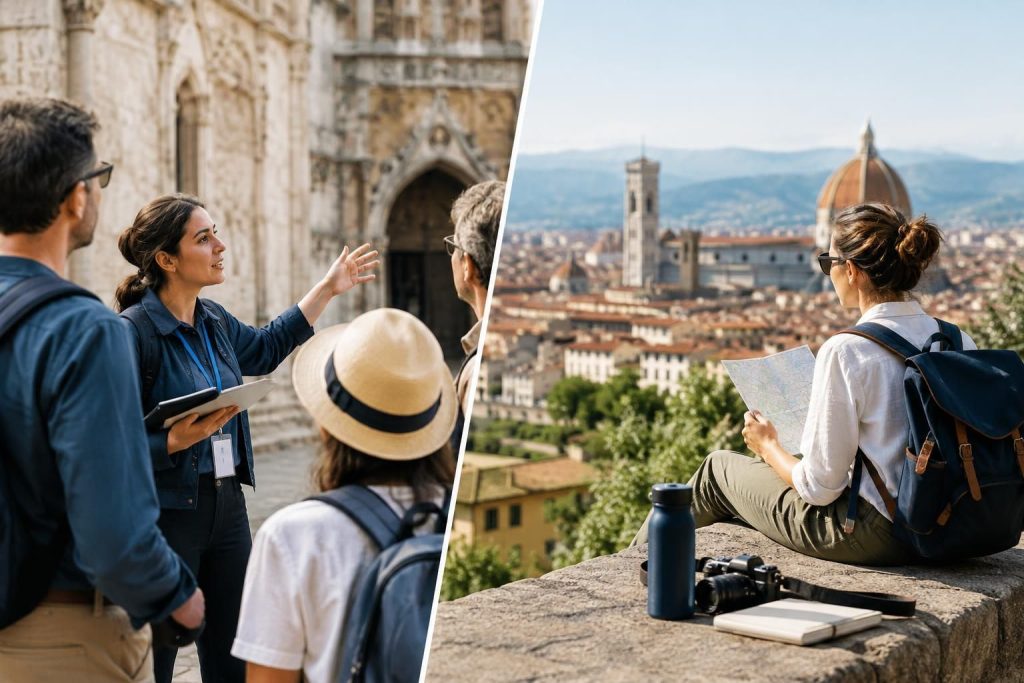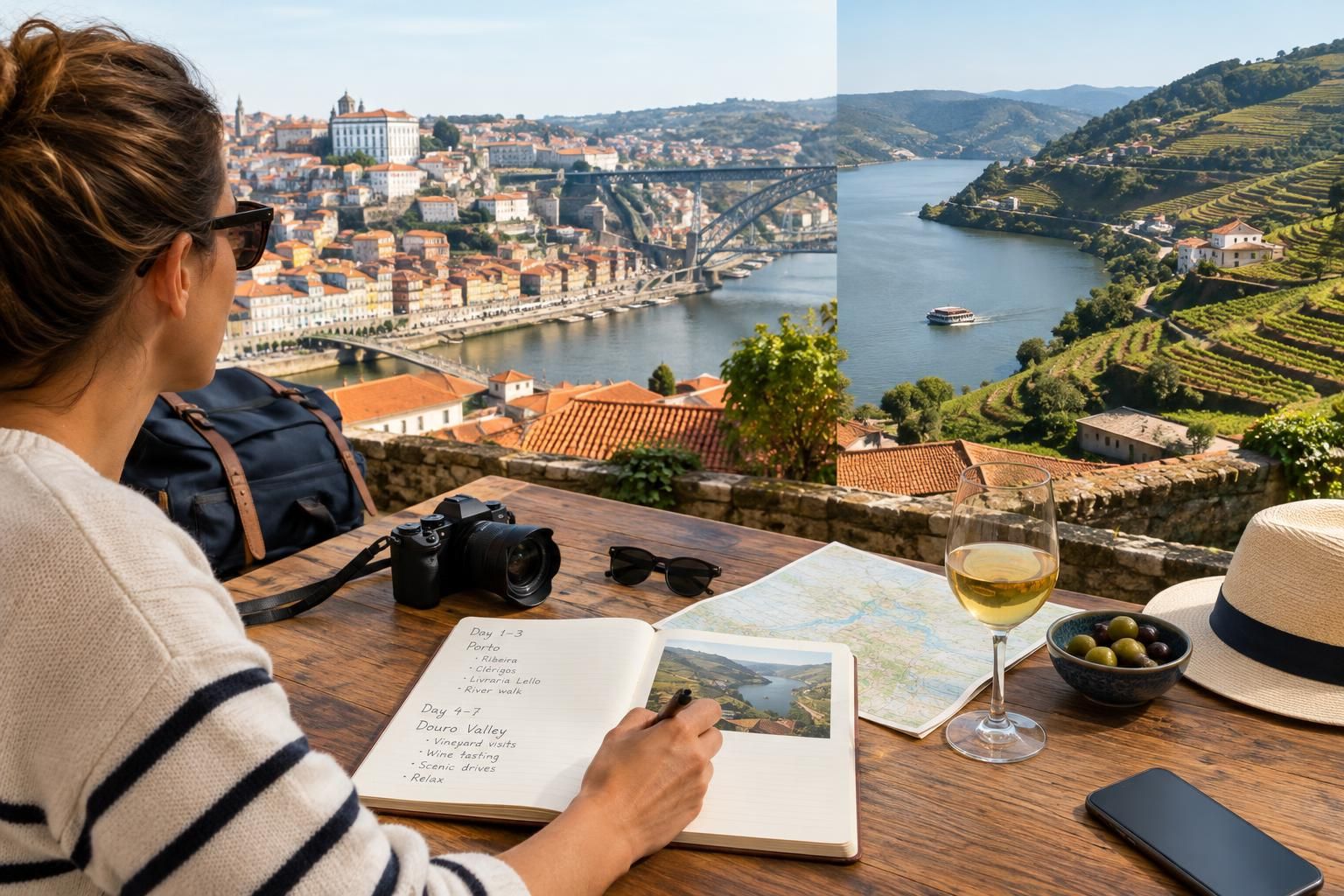
Porto and the Douro Valley make a rewarding pairing because they offer contrasting ways to spend a day. In Porto, the pleasure lies in walking between tiled streets, neighborhood cafés and river viewpoints. Farther inland, terraced slopes and riverside villages encourage a slower rhythm, with fewer stops and longer lunches. The planning challenge is not fitting everything in, but choosing accommodation and transport that suit both settings. For a weeklong holiday, two bases usually create a better balance than repeatedly returning to the city after long excursions.
Divide the week according to how you want to spend your days
A useful starting point is four nights in Porto and three in the Douro Valley. This gives the city enough time for neighborhood walks, an indoor attraction and an unstructured afternoon, while making the valley more than a sightseeing detour. Reverse the split if your priority is countryside accommodation, photography or quiet time rather than urban exploration.
Count usable days rather than nights alone. A late arrival and an early departure can shrink a week considerably. Keep your arrival day simple, and treat the move between bases as part of the holiday rather than a day that must also contain several visits. If your journey home begins in Porto, compare the convenience of a final city night with the effort of another hotel change.
Choose a Porto neighborhood with the hills in mind
Porto’s compact-looking map can disguise steep climbs. Staying near the river suits travelers who want waterfront atmosphere, but reaching sights higher in the city may involve substantial uphill walking. Areas around the upper center can work well for varied daily routes, while a location farther from the busiest visitor streets may appeal if quiet evenings matter more than immediate proximity to landmarks.
Check the actual approach to an accommodation, not just its distance from a station or riverfront. Steps, cobbles and a sloping final stretch matter when carrying luggage. Inside older buildings, confirm lift access and the floor of the room. Travelers sensitive to noise should also consider whether windows face a busy street, restaurant terrace or internal courtyard.
Decide which kind of Douro base fits your trip
The central choice is between staying in a settlement and staying on a rural estate. A base such as Peso da Régua or Pinhão gives you a town or village setting from which to organize outings. These are useful places to investigate if arriving by rail, although the convenience of individual accommodation depends on its position relative to the station, restaurants and river.
A hillside property offers a different experience: landscape becomes the main attraction, and spending an afternoon at your accommodation can feel purposeful rather than idle. The trade-off is access. A property described as being near a village may still require a drive for dinner. Before choosing, establish how you will reach it with luggage, where you will eat and whether you can comfortably remain there between excursions.
Use transport to solve the countryside access problem
Rail can provide an appealing transition from Porto toward the Douro, with river scenery forming part of the journey. However, reaching a valley station is not the same as reaching a hillside stay or vineyard. Compare the complete route, including the final transfer, rather than choosing solely on the main journey. Check services and transfer arrangements for your dates before committing to accommodation.
A rental car gives more control over rural stops, but narrow, winding roads can make short map distances feel longer. Avoid building days around repeated crossings between opposite slopes. If wine tasting is part of the plan, separate it from driving by arranging suitable transport or a non-drinking driver in advance. Another workable combination is rail between bases, followed by one organized countryside outing.
Build days around one anchor experience
In Porto, choose one main commitment each day and let walking routes connect the rest. A historic interior or museum can anchor one morning; an exploration across the river in Vila Nova de Gaia can shape another day. Leave room for ordinary pleasures such as browsing food shops, sitting in a square or revisiting a viewpoint in different light.
In the Douro, one vineyard visit, a river outing or a scenic drive can be enough structure for a day. Wine does not need to dominate the trip: the landscape, village walks and regional food provide plenty of interest without multiple tastings. Group nearby activities together, and resist scheduling a boat excursion, distant lunch and several estate visits into the same afternoon.
Plan for weather, luggage and the real cost of rural stays
Season changes the character of this pairing. Warmer periods make shade, room cooling and relaxed midday plans more important; cooler or wetter weather increases the value of comfortable indoor spaces. A countryside property chosen mainly for its terrace may feel very different during rain. Keep a flexible city activity and a low-key valley day available rather than making every experience weather-dependent.
Pack shoes with reliable grip for slopes and uneven surfaces, a light layer and rain protection suited to your season. Manageable luggage helps with station transfers and older buildings. For budgeting, compare the whole stay: a secluded room may involve extra transfers and fewer dinner choices, while a central base may make simpler meals and independent outings easier. Clarify meal arrangements before arrival.
The strongest Porto-and-Douro itinerary lets the two places feel different. Give Porto room for wandering, choose a valley base that matches your transport plans, and leave countryside days deliberately spacious. A few well-placed experiences, supported by realistic transfers and comfortable accommodation, will usually deliver more than a crowded list of stops.
AI-assisted evergreen travel guide. Featured image is an AI-generated illustration, not a specific product or booking.