A ryokan can bring a different rhythm to a trip through Japan: shoes left at the entrance, dinner given its own place in the evening, and a room that invites you to sit rather than immediately head out again. But the label covers a wide range of accommodation, from simple family-run inns to elaborate retreats. The most useful planning question is not which ryokan is best, but which kind of stay fits your route, budget, and comfort preferences. Treating the inn as part of the destination, rather than merely an overnight stop, helps you make that choice.
Choose the setting before choosing the inn
Start by deciding what you want outside your room. A town-based ryokan can suit travelers who enjoy wandering between small shops, cafés, and neighborhood streets. A countryside property may appeal more if your priority is quiet surroundings and time indoors. An onsen town makes bathing part of the destination, while a city inn can introduce traditional accommodation without adding another stop to your itinerary.
Consider the effort required to get there as part of the experience. Hakone, the Izu Peninsula, and the mountain towns of central Japan offer different landscapes and routing possibilities, but none should be treated as interchangeable dots on a map. Compare the complete journey from your previous accommodation, including transfers and the final walk or local ride, rather than looking only at the nearest railway station.
Give the stay enough space in your itinerary
One night can provide a satisfying introduction if you arrive with time to settle in and leave without an early departure. Two nights may make more sense when the journey is complicated or you want a full day without repacking. Avoid combining a distant sightseeing excursion, a long transfer, and a special ryokan dinner on the same day.
Build the arrival day around one modest activity, such as a short neighborhood walk or lunch near your departure station. If dinner is included, ask the property about its arrival expectations before fixing transport. On departure day, leave room for breakfast and packing. A late arrival followed by an early exit can turn the most distinctive parts of the stay into obligations to squeeze in.
Compare the room, bedding, and meal plan separately
Photographs of tatami floors do not tell you everything about a room. Check whether sleeping arrangements involve futons, beds, or a choice, and whether the bathroom and toilet are private or shared. Travelers who find floor seating uncomfortable should look for chairs or a separate sitting area. If stairs or long internal walks are a concern, ask about the route between the entrance, room, dining area, and baths.
Read meal arrangements as carefully as room descriptions. Breakfast-only and room-only plans can offer flexibility, while a dinner-and-breakfast plan makes the inn the focus of the evening. Compare the total cost with the meals you would otherwise buy, not just with another hotel's room rate. Discuss dietary requirements before booking; a carefully composed meal may allow less last-minute flexibility than a restaurant with an à la carte menu.
Pick bathing arrangements that match your comfort level
Do not assume every ryokan has hot-spring water or that every room includes a bath. Depending on the property, options might include communal bathing, a reservable private bath, or an in-room bathing space. If bathing is central to your choice, establish exactly what the room plan includes and whether additional arrangements are needed.
Communal bathing commonly involves washing before entering the soaking bath and keeping towels out of the water. Follow the property's instructions rather than relying on a single universal etiquette checklist. Bath access, tattoo policies, clothing expectations, and arrangements for children can differ. If you would rather avoid communal bathing, choose a suitable private option from the outset instead of hoping to become comfortable with it on arrival.
Pack a small overnight kit and simplify the journey
A compact bag makes station changes, local buses, and smaller entrances easier to manage. Pack the essentials you want close at hand: a change of clothes, personal toiletries, charging equipment, and anything needed for a comfortable night's sleep. Easy-to-remove shoes are practical where footwear changes are part of moving between spaces. Check which garments and amenities the inn provides rather than assuming every property supplies the same items.
If you are carrying a large suitcase, consider whether leaving it at a confirmed storage point or using a separately arranged luggage service fits your wider itinerary. Neither option should be assumed available. Keep essential belongings with you, and allow for service limitations. The simplest arrangement may be to return to the same city hotel afterward, provided that hotel has agreed to store your bag.
Let the inn shape the evening
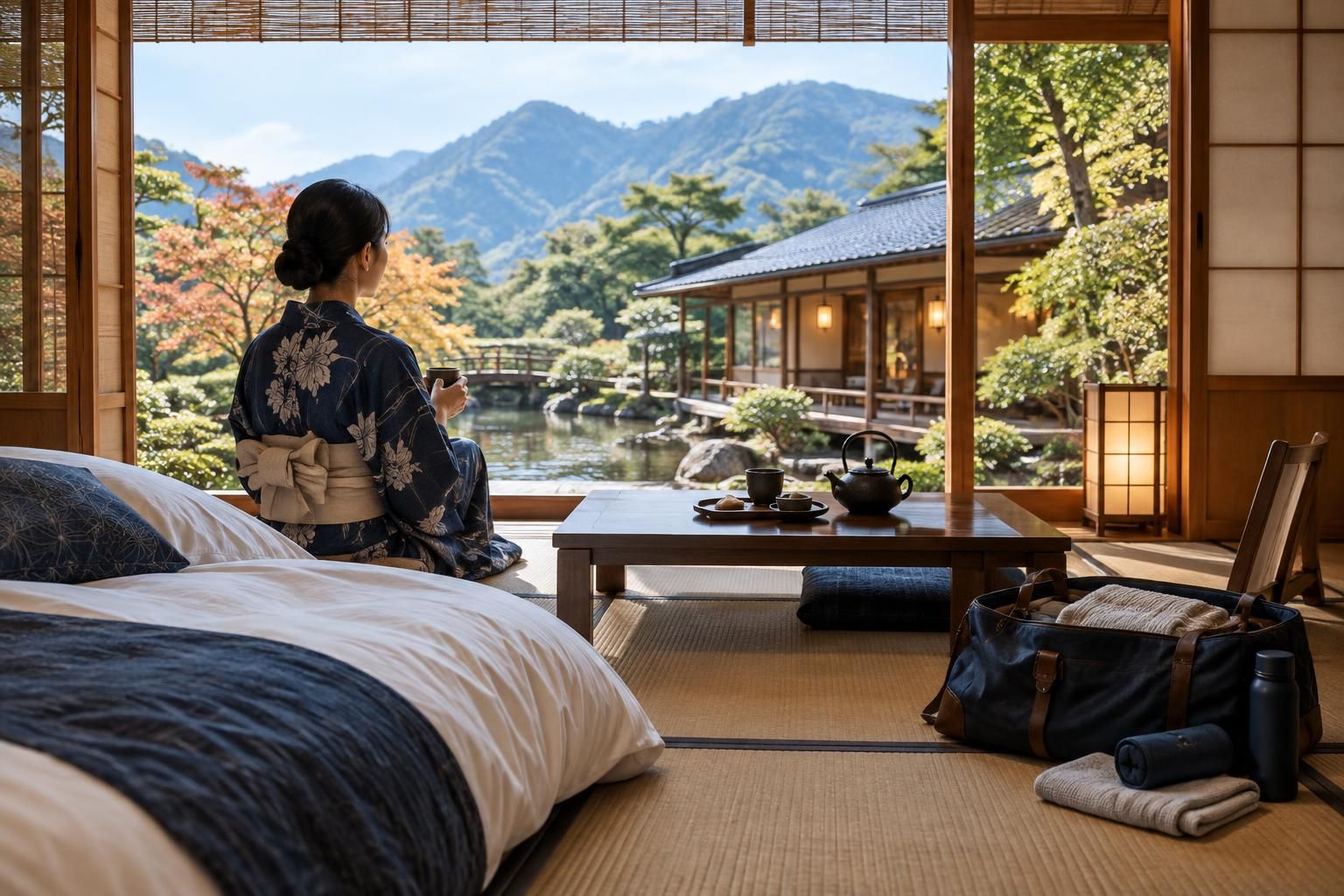
The value of a ryokan stay often lies in the unfilled spaces: tea after arrival, a bath before dinner, or reading beside a window. Choose one or two things you especially want to enjoy, then resist filling every remaining hour. For couples or friends with different interests, agree beforehand whether the evening is intended for shared downtime or independent exploring.
Keep practical communication straightforward. Ask about footwear, meal locations, bedding arrangements, and departure procedures when something is unclear. A few basic Japanese greetings can be a courteous gesture, but you do not need to perform expertise. Being considerate of shared spaces and attentive to the inn's guidance matters more than memorizing an elaborate set of customs.
A well-chosen ryokan stay starts with an honest assessment of how you like to travel. Prioritize manageable access, comfortable sleeping and bathing arrangements, and a meal plan that suits you. Then protect enough time to enjoy what you have chosen. The aim is not to fit every possible tradition into one night, but to make room for a quieter, more deliberate part of your Japan journey.
AI-assisted evergreen travel guide. Featured image is an AI-generated illustration, not a specific product or booking.