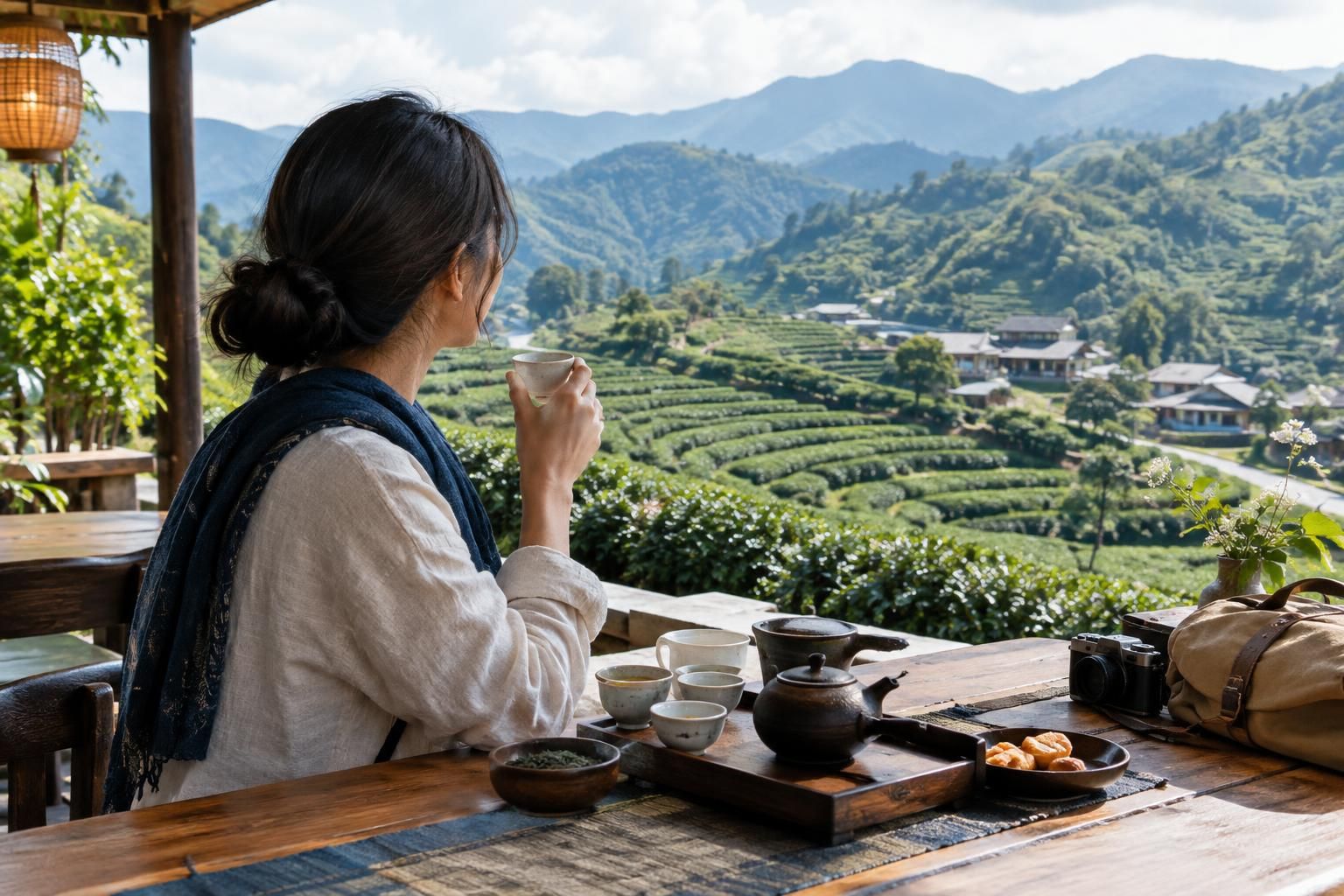
A tea-focused trip offers a different way to experience Taiwan: slower conversations, hillside landscapes and time spent noticing how place shapes flavor. You do not need specialist knowledge or a suitcase reserved for expensive leaves. A few thoughtfully chosen experiences can give the journey a clear theme while leaving room for markets, neighborhood walks and other interests. The key is to distinguish between drinking tea, learning about its production and visiting tea-growing scenery. These experiences overlap, but they require different amounts of time and travel.
Choose the kind of tea trip you actually want
Start with your priorities rather than a list of famous growing areas. If you mainly want to taste different teas and learn how they are prepared, a city-based stay can be enough. If landscapes matter just as much, add a nearby hillside district. Travelers interested in cultivation may prefer a longer countryside visit, while remembering that a farm setting does not automatically mean visitors can observe processing or join harvesting.
Give yourself one simple learning goal: compare a lightly oxidized oolong with a more roasted style, understand repeated infusions, or discover which flavors you enjoy without milk or sugar. Tea names, cultivars and production methods can become complicated quickly. Following one question makes conversations more rewarding than trying to memorize every label.
Use Taipei as a practical starting point
Taipei makes a useful starting base because you can fit tea experiences around an ordinary city itinerary. Plan a seated teahouse visit separately from a shopping stop: the former is about spending time with a pot, while the latter may involve comparing leaves and deciding what to buy. Before settling in, clarify whether you are paying for tea, a tasting, preparation instruction or a minimum spend.
For a first nearby excursion, consider Maokong, known for its hillside tea culture above the city. Treat it as a landscape-and-tea outing rather than another attraction to squeeze between museums. Choose accommodation for convenient city transport, not merely proximity to one tea destination, and check the operating arrangements for your intended route before leaving.
Add Pinglin or a mountain stay, not every tea district
Pinglin is another option near Taipei, associated with Baozhong tea and a setting that combines a small town with surrounding tea-growing hills. It suits travelers who want the subject to extend beyond a teahouse table. Decide whether your main interest is a cultural visit, a village walk or access to a producer, because these can require different transport arrangements. Do not assume a field visible from the road is open to visitors.
For a more substantial mountain component, consider the Alishan area, associated with high-mountain tea. This is a larger itinerary commitment, not a casual substitute for an afternoon near Taipei. Mountain roads, transfer connections and the distance between accommodation and particular farms all matter. Choose either a compact Taipei-centered trip or a longer city-and-mountain journey rather than collecting tea districts at the expense of time in them.
Budget time around the final stretch of the journey
The difficult part of a tea excursion is often the final stretch rather than the intercity journey. A town may be straightforward to reach while a particular farm sits well beyond comfortable walking distance. Before arranging a visit, establish the exact meeting point, the return transport plan and whether the experience takes place at a working farm, a shop or a separate tasting space.
For a five-night trip, one workable pattern is four nights in Taipei with one or two tea outings, followed by a final night positioned for your onward journey. With a longer trip, add a two- or three-night mountain segment instead of changing hotels daily. Leave your arrival afternoon unstructured and avoid placing a remote visit immediately before an important departure.
Make tastings comfortable, curious and respectful
Allow enough time to sit through several infusions rather than treating tea like a quick counter purchase. The same leaves can taste different as they are brewed again, which is part of the experience. Ask straightforward questions about aroma, roasting and preparation, and explain that you are learning. You do not need elaborate tasting vocabulary to describe something as floral, toasted, fresh or pleasantly bitter.
Clarify any tasting fee or purchase expectation at the start, especially when requesting a lengthy comparison. Ask before photographing staff, production areas or other guests. Keep the rest of the day light: a walk and a meal usually complement a tasting better than several more appointments. If you prefer to limit caffeine, plan fewer sessions and ask whether a smaller tasting is possible.
Choose accommodation and purchases that support the trip
In the countryside, prioritize location over a vaguely described mountain view. Ask how you would reach meals and your planned tea visit without a car, and whether luggage storage fits your transfer day. Pack a light layer, rain protection and footwear suitable for uneven paths. A scenic overnight stay loses its appeal if every meal or activity requires an unplanned journey.
Buy modest quantities after tasting, rather than committing to a large package because the setting is memorable. Request a label identifying the tea and basic brewing guidance you can use at home. Keep purchases sealed and protected from moisture and strong smells. Before buying substantial amounts or loose agricultural material, check the destination-specific customs requirements for your return journey.
The most satisfying Taiwan tea itinerary is not necessarily the one with the most farms or the rarest purchases. A city base, one well-planned countryside excursion and time to revisit a tea you liked can create a coherent trip. Add a mountain stay only when you want the slower travel and landscape as much as the tea itself.
AI-assisted evergreen travel guide. Featured image is an AI-generated illustration, not a specific product or booking.