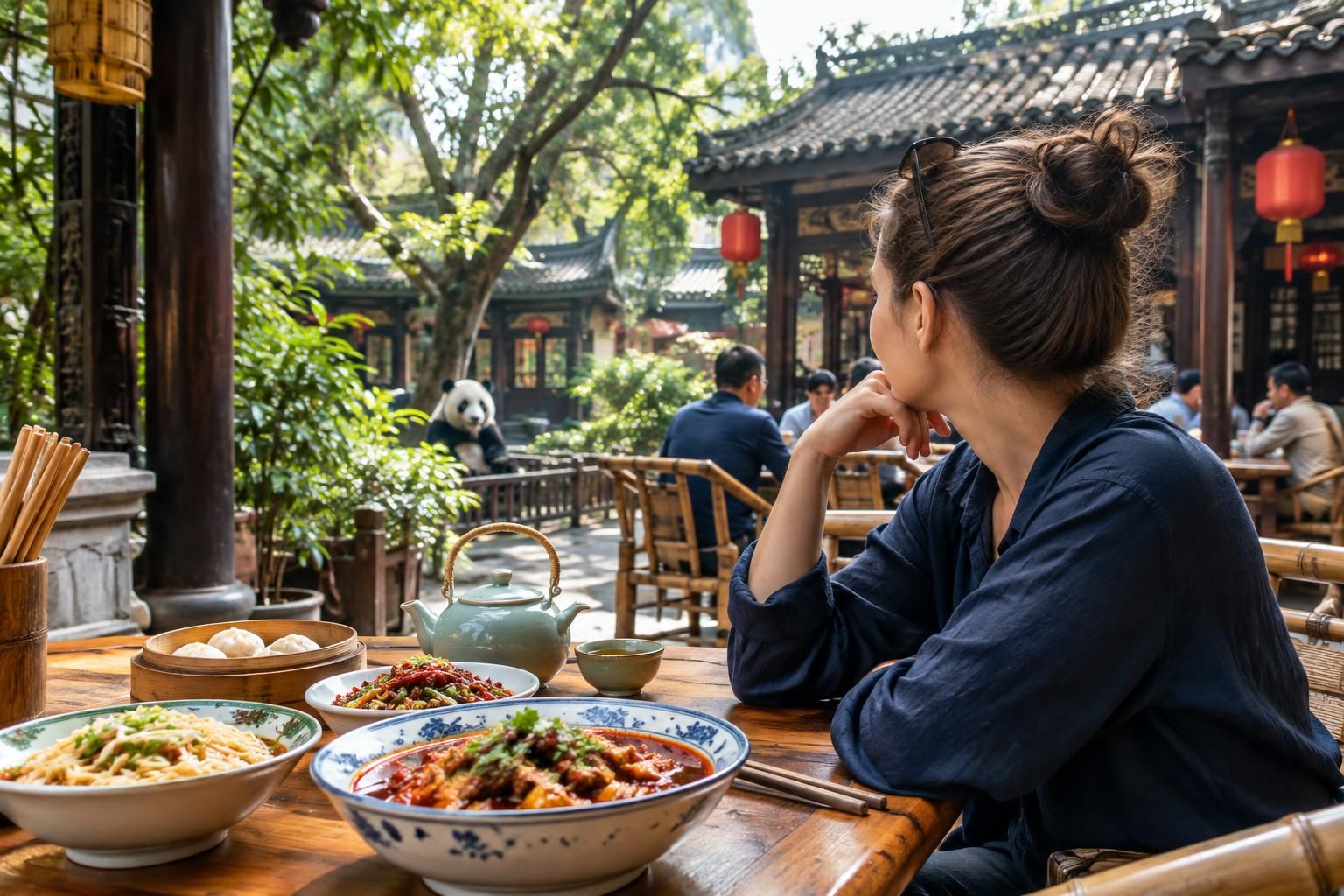
Chengdu rewards travelers who leave room between attractions. The capital of Sichuan offers more than a checklist of pandas and hotpot: neighborhood markets, monastery courtyards and park teahouses give the city much of its character. Four nights provide a useful framework for mixing these quieter experiences with one larger outing. Rather than crossing the city repeatedly, organize each day around a small area and treat meals and rest stops as part of the itinerary.
Choose a Base for Your Everyday Routine
Start with the things you will do twice a day: leave your accommodation and return to it. A central base near a metro station can simplify sightseeing, but check the actual walking route rather than judging distance from a map pin. Wide roads, station entrances and large blocks can make a seemingly convenient address less comfortable with luggage.
The area around Wenshu Monastery suits travelers interested in temple surroundings, tea and traditional snacks. Around Chunxi Road, the atmosphere is more commercial, with shopping and dining woven into the day. For either area, compare street noise, lift access, room size and nearby breakfast options. A room facing away from a busy road may be more valuable than a dramatic skyline view.
Give Each Day One Main Focus
For a four-night stay, make the arrival day deliberately modest: check in, take a short neighborhood walk and find an uncomplicated dinner. Use the first full day for the Wenshu area and a leisurely meal. Give another day to People’s Park and central-city wandering, leaving enough time to sit rather than treating the park as a quick photograph stop.
Reserve the remaining full day for either a major outing or more Chengdu, depending on your interests. This structure creates flexibility if rain, fatigue or an unexpectedly enjoyable neighborhood changes your plans. Avoid assigning a distant attraction to the morning and another to the afternoon simply because both appear on a highlights list. Travel time includes finding entrances, navigating stations and getting your bearings.
Make Teahouse Time Part of the Plan
A Chengdu teahouse works best as a pause, not an attraction to complete. People’s Park is a natural setting for pairing a walk with tea, while other neighborhood venues can offer a different mood. Choose according to what you want: an outdoor seat for watching daily life, a quieter corner for reading or a more structured introduction to tea.
Before sitting down, establish what the quoted charge covers, including whether it is per person and how water refills work. Let the afternoon remain unhurried rather than arranging a tight connection afterward. If people nearby are playing mahjong or socializing, observe without assuming participation is welcome, and ask before taking identifiable photographs.
Build Variety Into a Sichuan Food Itinerary
Hotpot can be the centerpiece of one evening, but it need not define every meal. Balance it with noodles, dumplings, vegetable dishes and simpler breakfasts. Sichuan cooking includes more than chili heat, and exploring different textures and preparations makes several days of eating more interesting. For a group, shared dishes also let less adventurous eaters participate without ordering identical meals.
Communicate preferences before ordering rather than relying on a dish’s appearance. A mild request may still produce food that feels spicy to you, and ingredients such as chili and Sichuan pepper create different sensations. Save translated ingredient notes offline, particularly if you have dietary restrictions, and confirm important details directly. Plan an easy meal after a long outing instead of making every dinner an ambitious food expedition.
Choose One Outing, Not Every Famous Sight
If pandas are your main reason for visiting, give that outing generous space in the itinerary. Choose a facility deliberately, check its visitor arrangements and account for the journey from your accommodation as well as walking within the grounds. Animal activity is not guaranteed, so avoid building the experience around a promised photograph or a particular behavior.
Leshan is an alternative for travelers drawn to monumental heritage and river scenery. Treat it as a substantial excursion, not a small addition between city activities. Compare the complete journey, including transfers at both ends, and check the physical demands of your chosen viewing route. For a slower trip, skip the excursion entirely and use the day for another neighborhood, a museum or a longer lunch.
Prepare for the Small Logistics That Shape the Day
Before departure, review entry requirements for your own circumstances and investigate how you will handle payments, mobile data and navigation in mainland China. Do not assume that every familiar app or payment method will function as it does at home. Keep your accommodation’s name and address in Chinese, save essential booking information offline and have a backup way to communicate your destination.
Pack comfortable walking shoes, a compact umbrella and layers suited to your travel season. A small day bag should hold water, a portable charger and room for a layer without becoming cumbersome in crowded places. Check transport and attraction arrangements close to your visit, especially for anything requiring advance booking. Keep your departure day simple enough that a delayed breakfast or missed turn does not threaten your onward journey.
A satisfying Chengdu stay needs contrast: a lively meal followed by a quiet morning, a major outing balanced with an afternoon over tea. Choose accommodation that makes ordinary journeys easy, limit each day to one main focus and leave a little time unassigned. Four nights then become more than a sequence of sights; they offer space to enjoy the city’s everyday rhythms.
AI-assisted evergreen travel guide. Featured image is an AI-generated illustration, not a specific product or booking.