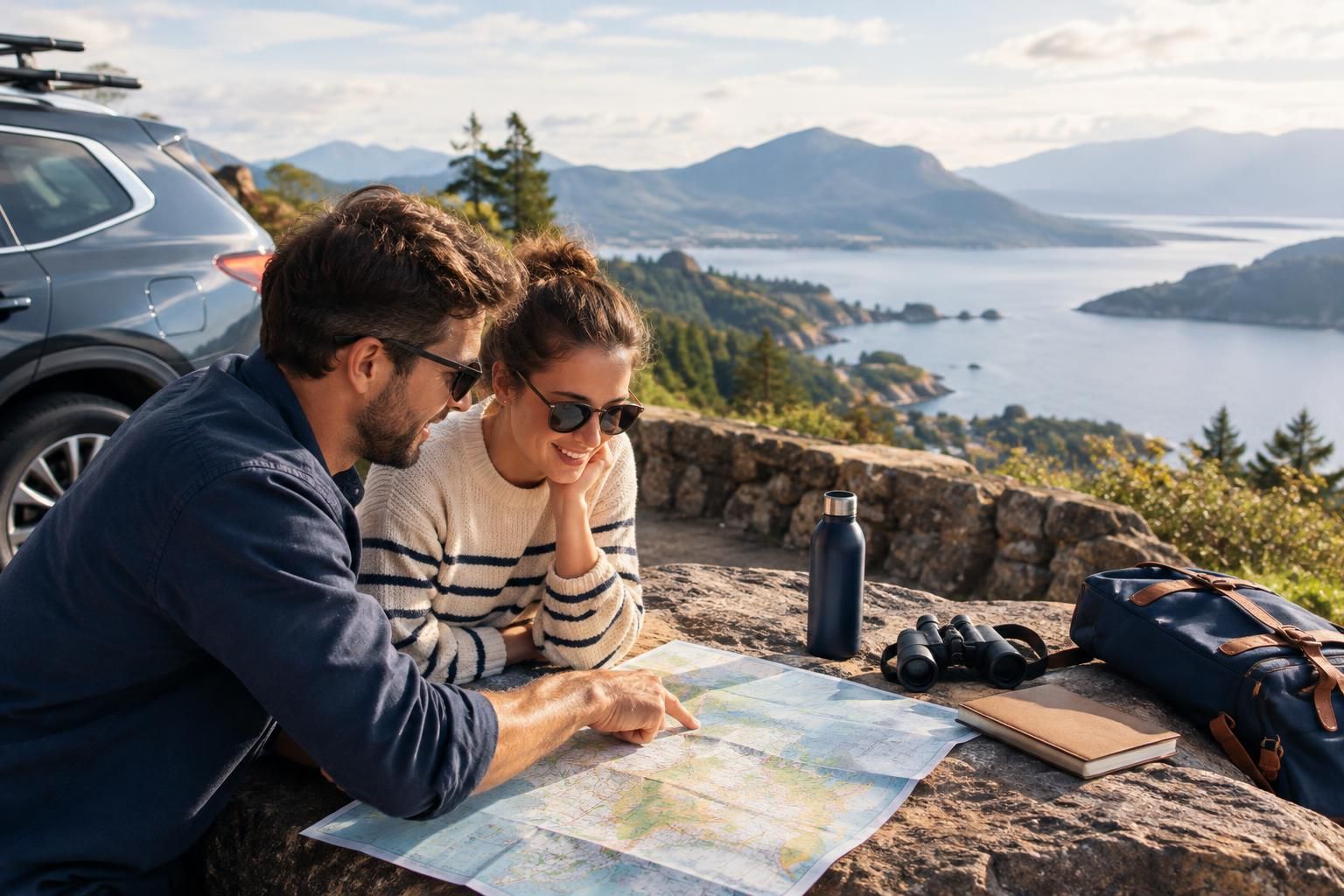
A scenic road trip can look wonderfully relaxed on a map: a coastal road, a few villages and an overnight stop somewhere beautiful. Yet adding every appealing detour can turn the holiday into a sequence of late arrivals and hurried photographs. The solution is not necessarily a shorter route. It is a route with a clear purpose, realistic driving days and enough time outside the car. Start with the experiences you want, then use the road to connect them.
Choose the experiences before drawing the route
Pick two or three priorities for the trip. These might be coastal walks, small-town food stops, mountain scenery or time beside a lake. Make them specific enough to guide decisions. Wanting a leisurely lunch and an afternoon walk suggests a different route from wanting to photograph several landscapes in one day.
Next, identify a small number of anchor places where those experiences can happen. Connect those places before adding optional stops. If a famous viewpoint requires a long diversion but does not support your main interests, leave it off this trip. A coherent route is usually more satisfying than a collection of distant highlights.
Set a driving limit that includes the whole day
Decide how much time you actually want to spend behind the wheel on an ordinary day, rather than how much driving you could tolerate. Treat a map’s estimated journey time as a starting point, not the day’s full commitment. Meals, fuel, parking, luggage and scenic pauses all take additional time.
For example, a day with roughly three hours of mapped driving might also include a village lunch, a short trail and several photo stops. That can occupy most of the usable day. Winding roads or frequent stops may also demand more concentration than distance suggests. Plan fewer activities on days with more demanding driving.
Use overnight bases to create days without driving
Changing accommodation every night keeps a route moving, but it also adds repeated packing, loading and arrival tasks. Consider staying two or three nights in selected bases instead. Choose places where at least one enjoyable day can begin on foot, whether that means exploring a town, walking to the waterfront or relaxing near your accommodation.
A base should work for your evenings as well as your excursions. Compare access to food, parking arrangements and the effort involved in reaching your room with luggage. A remote scenic stay may suit a quiet retreat, while a village base may be better if you want to leave the car parked after returning.
Give each transfer day one main stop
On days when you move between overnight bases, choose one stop that deserves proper time. It could be a garden, a beach, a historic town or a longer lunch. Build the day around that stop, then treat other viewpoints and detours as optional. This prevents a promising route from becoming a checklist.
Separate stops into two categories: quick pauses and experiences. A roadside overlook might be a brief pause; a town visit involves finding parking, walking in and deciding what to do. Avoid giving both the same small slot in your itinerary. When choosing between several experiences, favor the one that adds something different from yesterday.
Match the route to the car and the people inside it
Think beyond whether everyone technically fits. Luggage space, ease of loading, passenger comfort and confidence with the vehicle all affect the trip. A larger car may hold more bags but feel less convenient in compact villages. Before committing to a route, consider whether its roads and parking situations suit the vehicle you expect to use.
Discuss driving preferences early. Some travelers enjoy winding scenic roads; others would rather take a more direct route and spend longer at the destination. If more than one person expects to drive, establish that this is permitted under the relevant rental or insurance arrangements. Keep snacks, water and a spare layer accessible so ordinary stops do not require unpacking.
Build a shorter version of every ambitious day
For each longer driving day, identify what you would remove if you started late, encountered delays or simply wanted to linger somewhere. Keep the essential journey separate from optional loops. A direct route to your overnight base gives you a useful alternative when an afternoon of sightseeing no longer appeals.
Review the trip as a whole before booking: count accommodation changes, longer driving days and days with no essential driving. If almost every day requires an early departure, remove a destination or add time rather than relying on constant efficiency. Include a straightforward final leg, too, so returning the vehicle and reaching your onward transport do not depend on a perfectly timed scenic detour.
The best road-trip plan makes it easy to stop, stay longer and occasionally leave the car untouched. Choose a few meaningful anchors, allow generous time around driving and use overnight bases that support the kind of evenings you enjoy. A route that leaves some places unexplored can give you more time to appreciate the ones you came to see.
AI-assisted evergreen travel guide. Featured image is an AI-generated illustration, not a specific product or booking.