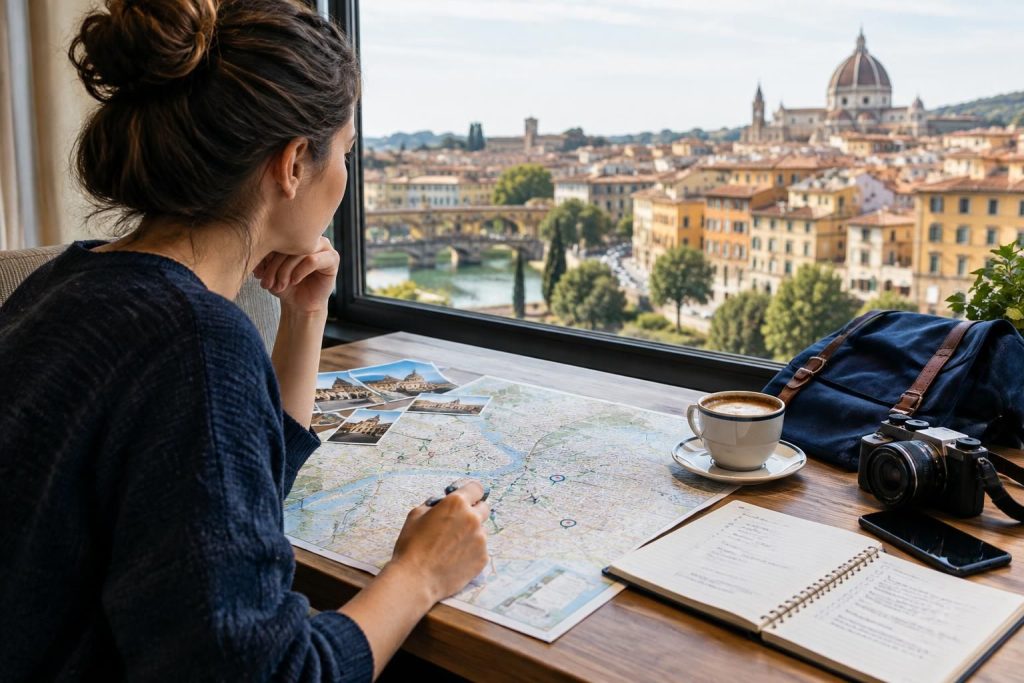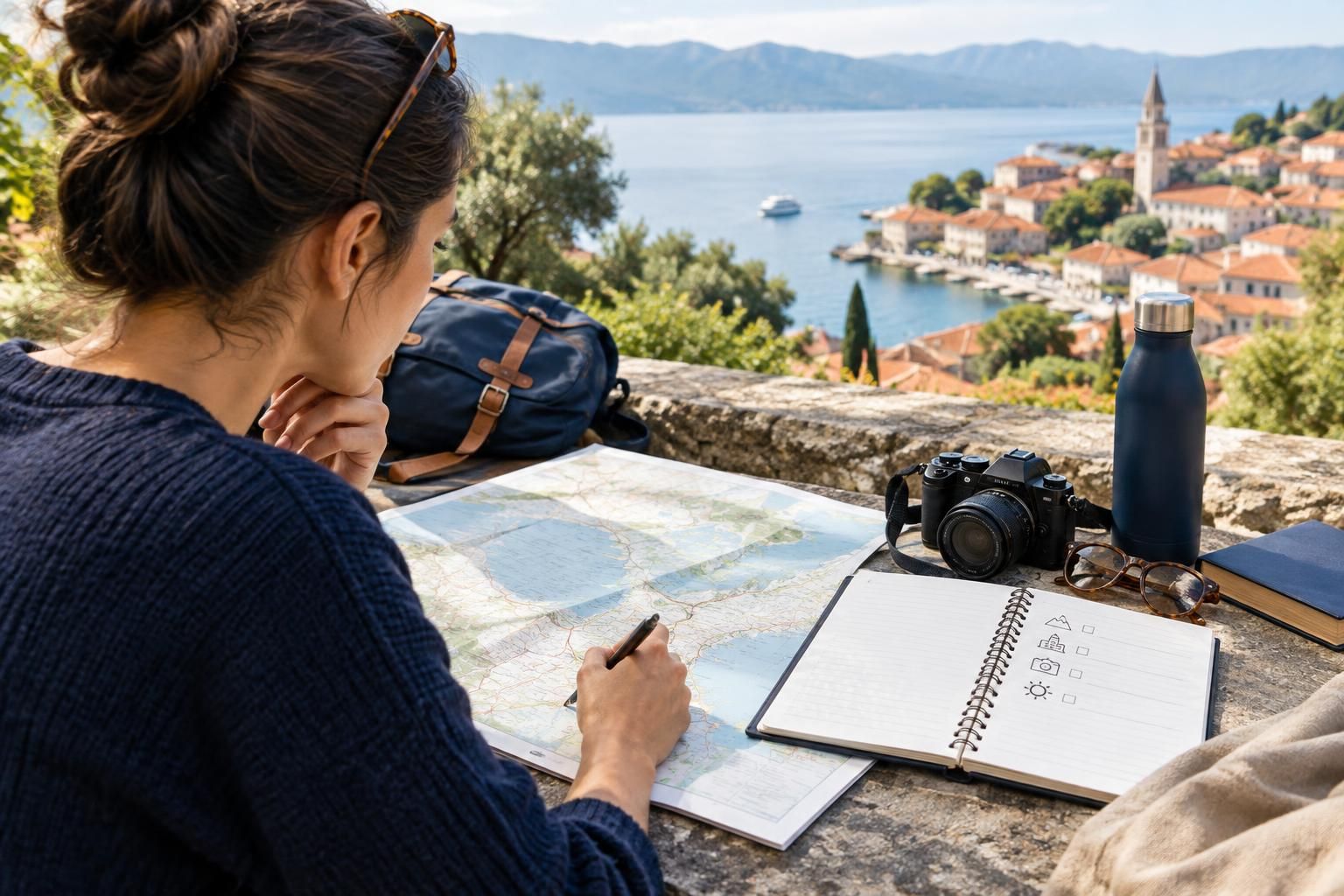
A day trip can add variety to a holiday without the work of changing accommodation. You might swap a city for a coastal town, visit a nearby historic district or spend an afternoon exploring a quieter landscape. The challenge is making the outing feel like a worthwhile change of scene rather than a race back to your base. Start with one clear reason to go, then build the day around the full journey, your energy and a realistic amount of sightseeing.
Choose one main reason to make the trip
Before comparing routes, decide what you want from the day. A particular museum, a walk beside the sea or a leisurely meal in a small town can each provide enough purpose. Avoid choosing a destination only because it appears on a list of popular excursions. Ask what it adds to your holiday that you cannot easily experience near your accommodation.
Use that main attraction as your anchor. If the point is a coastal walk, a distant landmark should not consume the best walking hours. If a gallery is the priority, treat nearby shops and gardens as optional extras. A useful test is whether the outing would still feel worthwhile if you completed only the anchor activity and enjoyed a meal.
Calculate the journey from door to door
The headline journey time rarely captures the whole outing. Include travel from your accommodation to the departure point, time to find the correct platform or stop, transfers and the final walk to your destination. Repeat the calculation for the return. A place that looks close on a regional map may require more effort than somewhere farther away with a direct connection.
Compare transport options by total effort as well as time. A direct train may be simpler than driving when parking adds another transfer. A car may suit scattered rural stops better than a route dependent on several connections. Before committing, check current timetables, service notices and any reservation requirements. Identify a preferred return and a realistic fallback rather than building the day around the final possible departure.
Build a compact route with a clear stopping point
Group activities geographically. One neighborhood explored properly often makes a better day than several disconnected sights. Mark your arrival point, main attraction, meal area and departure point on a map. Look for a loop or a simple out-and-back route that avoids repeatedly crossing town. Check terrain and distances rather than assuming that nearby map markers mean an easy walk.
Divide your ideas into essential and optional stops. Keep the essential list short enough to allow time for sitting down, finding an entrance or taking an unexpected detour. Set a turnaround point for the day: the moment when you stop adding activities and begin moving toward your departure point. This is especially useful when a viewpoint or market tempts you farther from the return route.
Match bookings to the amount of flexibility you need
Some outings benefit from a reserved attraction or organized activity; others work best with very few commitments. If your main reason for traveling requires a timed entry, use that as the fixed point and keep the surrounding plans loose. Avoid placing several nonrefundable commitments close together when a delayed connection could affect all of them.
Read the conditions attached to transport and activity bookings, including change and cancellation terms. Decide whether a guided excursion offers useful simplicity or takes away the flexibility you value. For an independent trip, keep reservation details accessible without relying entirely on mobile reception. Also consider meal timing: allowing space to eat near your route is more practical than crossing the destination for one specific restaurant.
Prepare a smaller version of the same day
A good backup plan does not need to be a second complete itinerary. Instead, create a reduced version of the original outing. You might shorten a walk, skip an optional neighborhood or replace an exposed outdoor stop with an indoor activity nearby. Check forecasts and relevant local notices close to departure, particularly when the main attraction depends on outdoor conditions.
Set your own threshold for canceling or postponing. A substantially longer journey, a missed key connection or the unavailability of your anchor activity may remove the reason to go. Staying near your base can be the better choice when the alternative is spending most of the day in transit. If practical, leave more than one possible day open for weather-dependent excursions.
Pack for the outing and protect the evening afterward
Carry what supports the actual plan: suitable layers, comfortable footwear, water, any personal essentials and enough device power for navigation and tickets. Keep the bag manageable, particularly if the day involves stairs, narrow streets or extended walking. If you expect to shop, think about carrying purchases for the remainder of the route rather than assuming storage will be available.
Include the outing in your wider holiday rhythm. A long excursion followed by an early start can make both days less enjoyable. Keep the return evening simple, with an easy meal option and no demanding reservation. Agree on priorities with companions before leaving, including walking tolerance, spending preferences and whether splitting up briefly would help everyone enjoy the day.
The best day trip is not necessarily the farthest destination you can reach. It is one with a clear purpose, a manageable journey and enough unclaimed time to enjoy being there. Plan around one anchor experience, keep extras optional and know when to turn back. You will give the destination room to surprise you without making the return journey an afterthought.
AI-assisted evergreen travel guide. Featured image is an AI-generated illustration, not a specific product or booking.