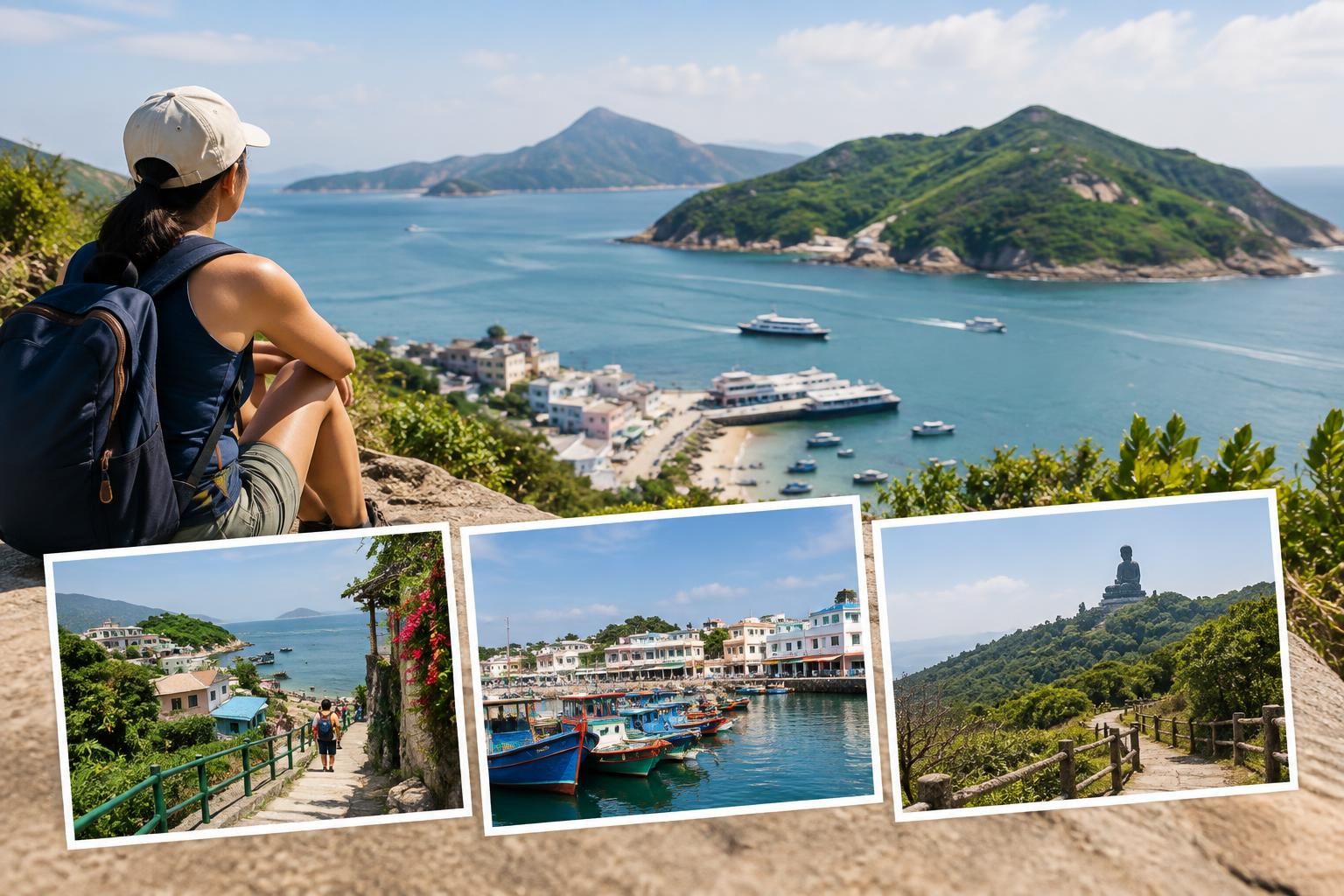
Hong Kong’s islands offer a different rhythm from its dense urban neighborhoods: waterfront villages, wooded paths, beaches and meals that can become the main event rather than a gap between attractions. The planning challenge is choosing an island that matches the day you actually want. Lamma suits a village-to-village walk, Cheung Chau rewards unhurried wandering, and Lantau offers enough variety to require a more selective itinerary. Instead of trying to collect several islands, choose one and leave room for the journey, the weather and a long lunch.
Start with the experience, not the ferry map
Choose Lamma if your ideal outing combines a waterfront village, a moderate walk and a relaxed meal. Yung Shue Wan and Sok Kwu Wan provide useful endpoints for a walking-focused visit. You can also keep the day simple by exploring around one village rather than committing to a crossing. This makes Lamma a flexible choice for travelers who want some countryside without building the entire day around a hike.
Cheung Chau is a good match for a compact outing centered on lanes, food stops, the harbor and time beside the sea. Lantau is the better candidate when one particular landscape or attraction is your priority, such as Tai O’s waterside setting, the Ngong Ping area or a beach stay. Its size makes it less suitable for an improvised attempt to see everything.
Give each island a realistic day-trip shape
For Lamma, decide whether you want a return trip through the same village or a walk between two ferry points. The second option can create a satisfying one-way day, but it also makes the return journey more important. Check the route’s distance, gradients and surface before treating it as a casual stroll. Leave enough energy for the walk back to the pier if you change your mind.
On Cheung Chau, begin with the harbor and nearby lanes, then choose either a beach break or a longer walk around part of the island. On Lantau, build around one main area and perhaps one compatible addition. Tai O and a leisurely village meal can be a complete outing; a beach afternoon need not be squeezed between several sightseeing stops.
Plan transport around the return journey
Ferry planning is about more than finding an outward departure. Confirm the departure pier, arrival village and return options for your exact route. Different services may use different terminals or have different journey times. For Lantau, compare ferry-based access with rail and onward road connections according to your destination; the island does not have one universally convenient arrival point.
Check current timetables and service notices before setting out, particularly when weather is unsettled. Avoid making the last possible departure your only workable return. A comfortable buffer matters if you have dinner reservations, an onward train or a flight to catch. Keep essential journey information available offline, and remember that an island route can take longer than its distance on the map suggests.
Decide whether an overnight stay adds enough
A day trip works well when your main aim is a walk, lunch and a change of scenery. Staying overnight becomes more appealing when you want quiet time before and after the busiest visiting periods, or when beach time matters more than city sightseeing. Cheung Chau can suit a compact village-based break, while a Lantau stay is best chosen around a specific village, beach or activity rather than the island name alone.
Assess accommodation by its exact location and access route. Ask about steps, slopes, the walk from the pier or transport stop, and whether you will need to carry luggage along narrow lanes. Check cooling, bathroom arrangements and nearby meal options. If this is a short escape within a longer Hong Kong trip, consider whether keeping your city room and taking only a small overnight bag is worth the extra cost.
Let weather and walking ability set the pace
Heat, humidity and rain can turn a modest route into a tiring day. Choose footwear with reliable grip, carry drinking water, and pack sun protection plus a lightweight rain layer. A small bag is easier to manage on ferries, village lanes and uneven paths than bulky luggage. Do not assume that every waterfront walk is flat, shaded or suitable for a stroller.
For a mixed-ability group, agree on the minimum shared outing before adding optional walking. A village lunch and short waterfront wander may be enough; stronger walkers can extend the route only if there is a clear meeting plan. During poor weather, replace an exposed walk with a shorter visit or postpone the island day. Check local weather guidance rather than relying on the forecast you saw several days earlier.
Make room for food and everyday village life
An island meal deserves space in the itinerary. Decide whether you want a sit-down lunch or several smaller food stops, and avoid scheduling a long walk immediately after a substantial meal. When ordering seafood or dishes priced by weight, clarify the portion, preparation and total cost before confirming. Travelers with dietary requirements should establish ingredients rather than assume a vegetable dish contains no seafood or meat-based seasoning.
These islands are residential places as well as visitor destinations. Keep doorways and narrow lanes clear, ask before photographing people at close range, and respect signs around temples and private property. Carry rubbish until you find an appropriate bin. The most memorable part of the day may be an ordinary harbor scene, so leave some time that has no attraction attached to it.
Choose Lamma for a walking-led village outing, Cheung Chau for a compact day of wandering and food, or Lantau for a deliberately chosen landscape or longer stay. One well-paced island visit usually offers more than several rushed crossings. Set a manageable route, protect your return buffer and allow the waterfront to be somewhere you linger.
AI-assisted evergreen travel guide. Featured image is an AI-generated illustration, not a specific product or booking.