Kanchanaburi offers a different rhythm from Bangkok: riverside mornings, significant wartime sites and countryside that rewards an overnight stay rather than a hurried checklist. The planning challenge is geography. Accommodation described as being in Kanchanaburi may be in town, along an outlying stretch of river or much farther into the province. Attractions that appear together in an itinerary are not necessarily close together. A three- or four-night visit gives you room to combine history, nature and unstructured time, provided you choose your base around the journeys you actually want to make.
Choose a town base or a countryside retreat
Stay in Kanchanaburi town if you want a choice of places to eat and more flexibility for independent outings. Compare the exact location of accommodation with the railway station, historical sites and restaurants you expect to use. A property near the Bridge over the River Kwai offers a different starting point from one closer to the town’s central memorial sites; neither puts every attraction within a short walk.
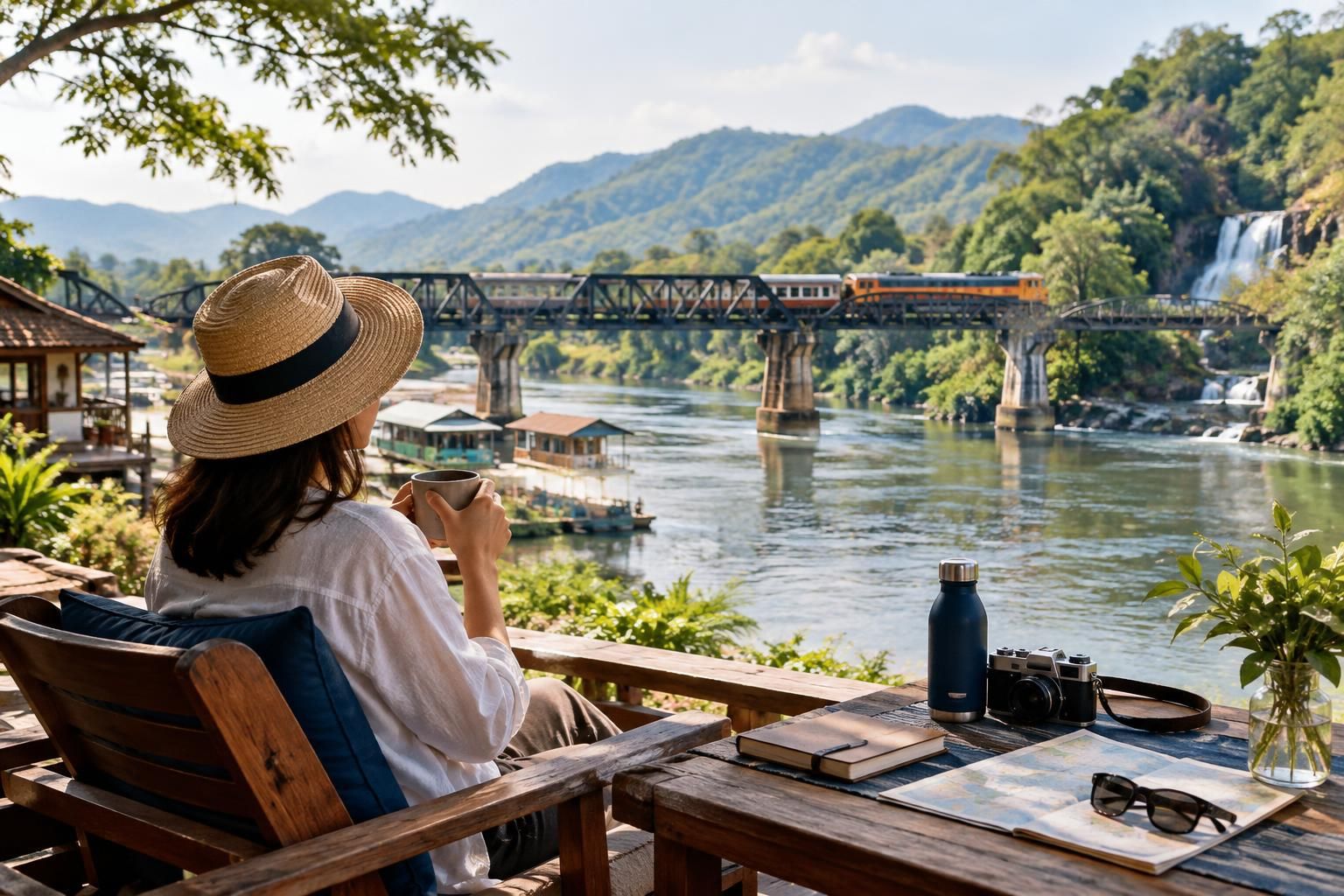
Choose an outlying riverside stay if the accommodation itself is part of the experience. A terrace overlooking the water can justify an afternoon with no sightseeing, but a remote setting may mean relying on arranged transfers and eating most meals on site. For a short visit, one well-chosen base usually creates less friction than changing hotels. Consider a split stay only if town exploration and countryside downtime are equally important.
Give the wartime history time and context
The railway’s history involves Allied prisoners of war and Asian civilian laborers forced to work under Japanese occupation during the Second World War. Begin with a museum or interpretive visit rather than treating the bridge as an isolated photo stop. That context helps connect the railway, cemeteries and landscape, while making space for the human stories behind them.
Group the town’s historical visits into one measured day, with a proper break between stops. A memorial cemetery and an exhibition can be emotionally demanding even when the distances are manageable. Hellfire Pass is a separate excursion outside town, not a quick addition between central sights. If it is a priority, give it a dedicated place in the itinerary and check visitor access and transport arrangements before committing.
Decide whether a train journey fits your trip
A journey along part of the railway toward Nam Tok can make the landscape part of your visit rather than simply a backdrop. It suits travelers who enjoy watching the countryside unfold and are comfortable letting transport shape the day. It is less useful if your main goal is to fit several widely separated attractions into a tight schedule.
Before building plans around a rail excursion, check the operating route, departure options and how you will return to your accommodation. Avoid assuming that you can step off at any stop and easily find onward transport. A partial rail journey paired with a prearranged pickup may suit some itineraries, while a straightforward return journey may be simpler for others. Leave room for the journey itself instead of attaching several timed activities.
Treat a waterfall visit as the main outing
Erawan National Park is a natural focus for a countryside day, with its tiered waterfall setting offering a contrast to the town’s historical sites. Plan around the amount of walking you want, not an obligation to reach every tier. Paths, steps and uneven ground can make the visit more demanding than a casual riverside stroll, especially in warm or wet conditions.
Bring footwear suited to damp surfaces, a compact day bag, drinking water and protection for belongings that should stay dry. Check current park access, swimming guidance and conditions before traveling. Rainfall can change both the appearance of waterfalls and the experience of moving around them. Keep an alternative day available for a museum, a leisurely meal or time at your accommodation rather than forcing a nature outing in unsuitable conditions.
Ask practical questions before booking a river stay
The label “floating room” does not tell you everything about comfort. Ask whether the room is on a raft or the riverbank, how it is reached with luggage, and what bathroom and cooling arrangements it has. If you are sensitive to movement or noise, ask about passing boats, shared decks and the room’s position relative to dining or communal areas.
For rural accommodation, clarify meal arrangements and the cost and availability of transfers before booking. Check whether arrival involves a boat connection and what happens if your inbound journey is delayed. Travelers with mobility needs or young children should ask specifically about steps, walkways and access to the water; attractive photographs rarely explain these details. Pack a small overnight bag if bulky luggage would complicate the final approach.
Build a three- or four-night itinerary with breathing room
For three nights, use arrival day to settle in and explore your immediate surroundings. Devote one full day to town-based history and another to either a waterfall outing or a railway-focused excursion. This keeps the visit varied without pretending that every major sight belongs in the same day. Make departure morning simple, especially if you have an onward connection.
With four nights, add the experience you otherwise would have skipped, or keep a full afternoon free at a countryside property. Arrange longer journeys deliberately: compare a shared excursion with a private vehicle based on pickup location, stop flexibility and total time away. When connecting onward through Bangkok, allow a generous buffer rather than treating an intercity transfer as a precise link to a flight.
The most rewarding Kanchanaburi plan is not necessarily the one with the most stops. Choose accommodation that supports your priorities, give historical visits proper attention and let a countryside excursion occupy a whole day when needed. A little unused time leaves room to appreciate the river rather than repeatedly crossing the province to reach it.
AI-assisted evergreen travel guide. Featured image is an AI-generated illustration, not a specific product or booking.