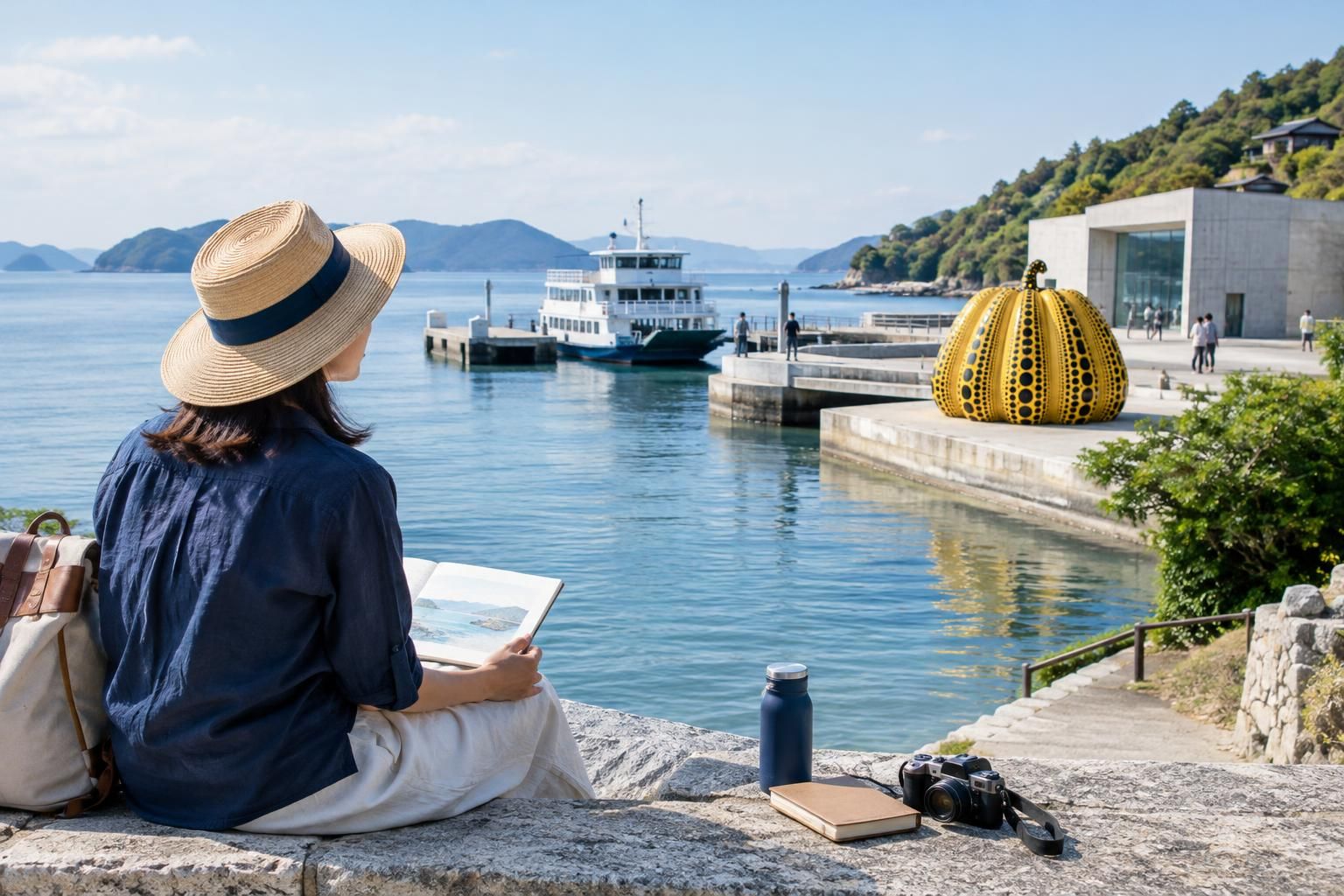
Japan’s art islands reward a different rhythm from a city museum weekend. On Naoshima and Teshima, the journey between artworks can involve a ferry, a hillside road, a village lane or a pause beside the Seto Inland Sea. That setting is part of the appeal, but it also makes an ambitious sightseeing checklist difficult to deliver. A satisfying first visit starts with choosing where to sleep, allowing generous transfer time and accepting that a few well-chosen experiences can fill a day. Think of the islands as places to inhabit briefly, not collections to complete.
Give Each Island Its Own Day
For a first trip, two full sightseeing days provide a useful starting point: one for Naoshima and one for Teshima. Add an arrival or departure night according to your wider route. Three nights offer more flexibility than a compressed overnight visit, especially if you want time for architecture, photography or unhurried meals.
Naoshima suits travelers interested in combining major museum visits with village-based art and coastal walks. Teshima invites a more dispersed day, where rural scenery and movement between sites become a substantial part of the experience. Trying to cover both islands in one day makes the trip revolve around connections rather than the work you came to see.
Choose a Base for Your Evenings, Not Just Your Ferries
Staying on Naoshima puts you closer to the island atmosphere after day visitors leave. It can suit travelers who value quiet evenings and an early start without a mainland crossing. Look closely at the accommodation’s location: a room near your arrival port, a village guesthouse and a property near an art site create very different daily journeys.
Uno, on the Honshu side of the sea, is worth considering if the islands form part of a rail journey through Okayama. Takamatsu, on Shikoku, offers a city-based alternative with more urban activities between island visits. Neither should be treated as interchangeable with an island stay; compare the actual crossings needed for your selected sites.
Before choosing a small guesthouse, establish whether meals are offered, where you could otherwise eat and how you would reach the property with luggage. A kitchen, an included dinner or proximity to dining options may matter more than a decorative room when you return tired.
Build the Itinerary Around Ports and Transfer Margins
Start with a simple map showing your accommodation, arrival port and priority art sites. Naoshima has different arrival points, and the most convenient one depends on your plans. Teshima also requires attention to which port a service uses. Searching only by island name can conceal an inconvenient onward journey.
Once your dates are set, check ferry routes and operating details directly with the relevant operators. Connections, reservation arrangements and the ability to carry bicycles can differ between services. Leave room between arrival and a timed museum visit rather than assuming that disembarking means you are effectively at the entrance.
Avoid making your final island crossing the only connection that can get you to a flight or an important long-distance train. An overnight buffer on the mainland or Shikoku can make the end of the trip less brittle. Keep essential medication, a layer and charging supplies in your day bag rather than buried in stored luggage.
Select Art Experiences Before Filling the Gaps
Choose one or two anchor experiences per day, then add nearby places only if time and energy allow. On Naoshima, that might mean a museum-focused half day paired with the Honmura area. On Teshima, the Teshima Art Museum could be the central experience, with a village walk or coastal pause around it.
Check each venue’s visiting arrangements for your dates, including whether admission needs advance booking, whether entry is timed and what you may bring inside. Do not assume that one ticket covers every site or that neighboring venues follow the same calendar.
Leave space after an immersive installation rather than scheduling another immediately. Some works benefit from stillness and attention more than speed. For companions with different interests, agree on a shared anchor visit and allow separate time afterward instead of making everyone follow an identical museum list.
Match Local Transport to Hills, Weather and Energy
Short distances on a map can feel longer when roads climb or the weather is hot, wet or windy. Walking works best when you select a compact area rather than assuming every site belongs in one continuous circuit. Check bus routes against your intended stops, not simply against the island’s outline.
A rented bicycle can offer independence, and electric assistance may be useful on hills, but cycling is not automatically the easiest choice. Consider your confidence, road conditions, luggage and the practicality of returning the bicycle before departure. If you prefer not to ride, build a smaller itinerary around walking and available transport instead.
Pack comfortable shoes, sun protection, a lightweight rain layer and a refillable water bottle. A small bag is easier to manage than a large backpack during museum visits. In unsettled weather, reduce outdoor ambitions rather than trying to preserve every stop.
Make Food, Luggage and Village Etiquette Part of the Plan
Treat lunch as a planned pause, not something guaranteed to appear between remote sites. Identify possible meal stops and check their operating arrangements near your travel dates. Carry a modest snack, and communicate dietary requirements clearly before booking accommodation with meals.
If the islands sit between larger Japanese cities, consider leaving your main suitcase at a suitable mainland base and taking an overnight bag. Confirm storage arrangements rather than relying on finding an empty locker. In residential lanes, keep voices low, avoid blocking entrances and distinguish public art spaces from private property. Ask before photographing residents or personal spaces.
The strongest Naoshima and Teshima itinerary is selective: a suitable overnight base, a few meaningful art visits and connections with room to spare. Give each island a distinct day, organize meals and luggage early, and let the coast and villages occupy the spaces between museums. You may see fewer individual works, but you will have more attention for the ones you choose.
AI-assisted evergreen travel guide. Featured image is an AI-generated illustration, not a specific product or booking.