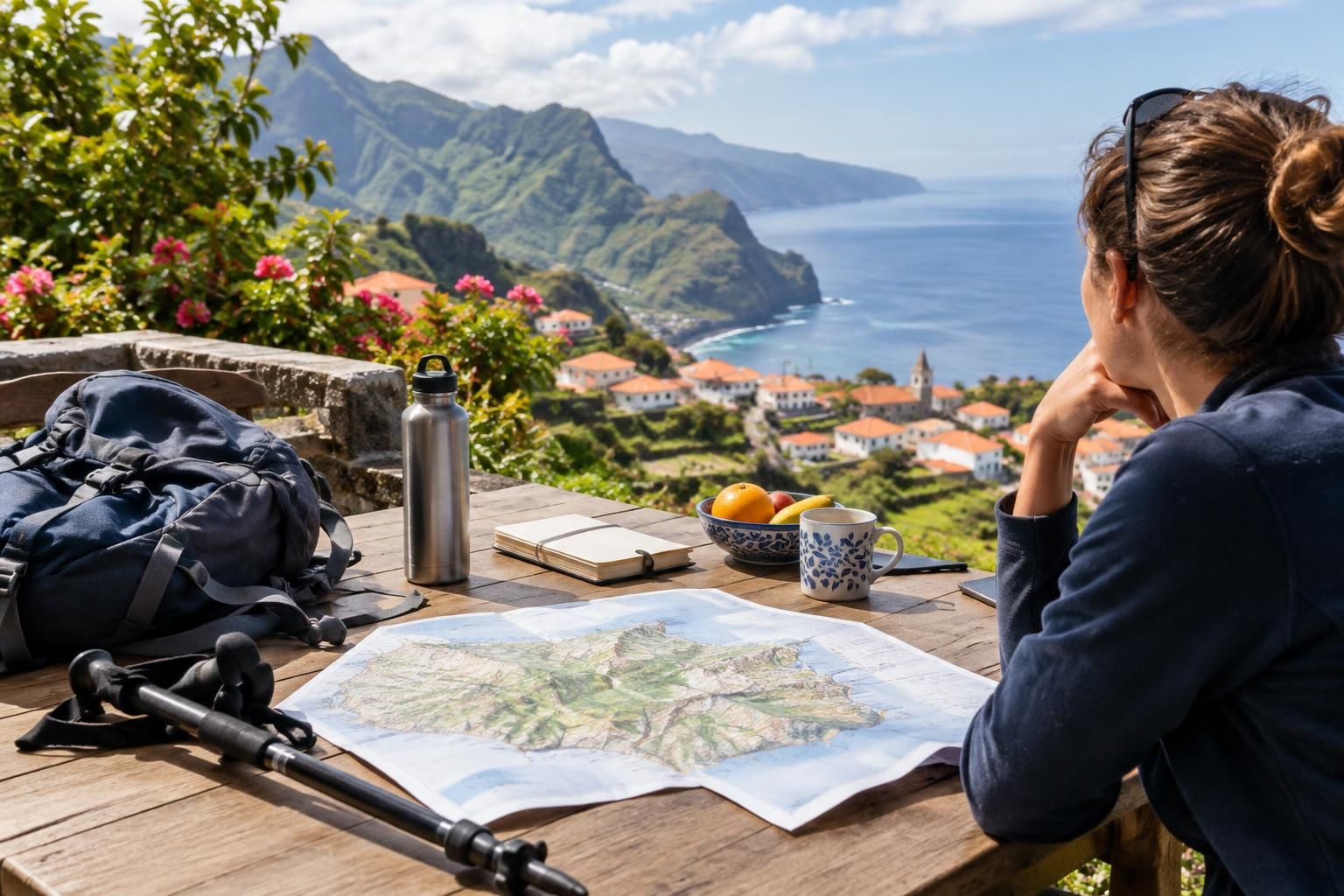
Madeira appeals to walkers for its forest paths, water channels, mountain scenery and Atlantic views. Yet a short route on a map is not necessarily an easy outing: steep access roads, uneven steps, tunnels and exposed sections can matter more than distance. For travelers who enjoy walking but do not want a demanding expedition, the best approach is selective rather than ambitious. Build the holiday around a few carefully chosen outings, straightforward transfers and enjoyable alternatives. A week can combine shaded forest walks, coastal scenery and Funchal’s gardens without turning every morning into an endurance test.
Define what a comfortable walk means to you
Before choosing routes, separate distance from difficulty. A level path beside a levada, one of Madeira’s water channels, may still be narrow or have an exposed edge. A short coastal route may involve repeated climbs. Think about your preferences for surfaces, steps, drops, tunnels and the amount of time spent walking without somewhere convenient to stop.
Create a simple personal checklist: preferred walking duration, acceptable ascent, comfort with heights and whether you want an out-and-back route or a one-way journey. Use detailed route descriptions rather than photographs alone. If members of your group have different preferences, choose outings that suit the least confident walker and save optional extensions for days when separating is practical.
Choose a base for the evenings as well as the trailheads
Funchal is worth considering if restaurants, gardens and non-walking days are central to the trip. Its urban setting gives a mixed-interest group more ways to spend time apart without reorganizing the whole holiday. However, being in Funchal does not mean every walking area is nearby, so compare the likely transfers for your preferred outings before booking accommodation.
A smaller coastal base may suit travelers who prioritize quieter evenings and have arranged a car or transfers. Places such as Machico or Ponta do Sol offer different settings, but the exact accommodation location matters as much as the town name. Check the gradient between your lodging, meals and transport pickup points. A lovely hillside apartment can add a substantial climb after a walking day.
Build a varied shortlist instead of chasing famous routes
Choose walks by landscape and practical fit, not by how often they appear in travel photographs. A useful shortlist might include one forest outing, one levada walk, one coastal option and an easy town or garden day. This gives the week variety without requiring you to tackle a mountain ridge simply because it is well known.
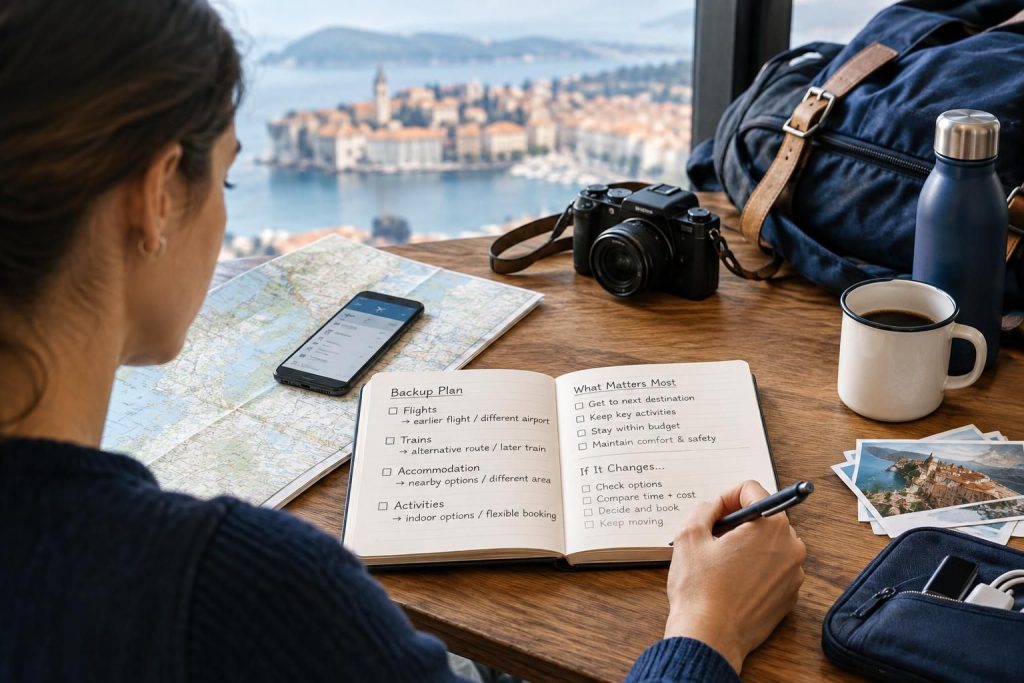
For each candidate, record the start and finish points, ascent and descent, surface, exposed sections and transport arrangement. An out-and-back route can simplify collection, but turning around halfway does not necessarily remove the most difficult section. Confirm the route’s condition and access close to the day, and keep a genuinely different alternative rather than a second walk affected by the same weather.
Match transport to the shape of each walk
A hire car offers flexibility for circular routes and walks that return to their starting point. It is less convenient for a one-way outing unless you arrange a return transfer. Mountain roads and parking arrangements can also add effort before the walking begins. Decide whether you want to handle those logistics or would prefer someone else to manage the journey.
Prearranged transfers or guided outings can be useful for linear routes and for travelers who do not want to drive. Ask about the actual walking pace, group size, terrain and pickup arrangements rather than relying on labels such as easy. Public transport may suit some town-to-town outings, but do not assume a service reaches a trailhead or connects conveniently with the finish. Check both directions before committing.
Leave room for weather changes and ordinary pleasures
For a seven-night stay, begin with three main walking days rather than filling every available day. Add an easy arrival day, a flexible sightseeing day and space for a postponed outing. Conditions can differ between the coast, forest and higher ground, so avoid treating the forecast for your accommodation as a complete picture of the island.
Rest days need not feel like gaps. Explore Funchal’s streets and gardens, spend time in a coastal town or plan an unhurried lunch followed by a short waterfront stroll. These quieter days also help a mixed-ability group enjoy the same holiday. If a walk is unsuitable on the day, replace it with something worthwhile instead of trying to preserve the itinerary at all costs.
Pack for changing conditions and keep the budget realistic
Bring familiar walking footwear with dependable grip, a small daypack, a waterproof layer and an extra layer for cooler conditions. Carry water, food and a charged phone, with route information available offline. If considering a route with tunnels, understand their length and conditions and whether suitable lighting is needed; choosing a tunnel-free alternative may better match the holiday you want.
Budget for the whole outing, not just accommodation and a car. Transfers, guided walks, parking and meals away from your base can influence which plans feel comfortable. Avoid making every day depend on a paid excursion: alternate organized walking days with independent town visits and gentle local exploration. Accommodation with somewhere to dry damp clothing can be more useful than an extra decorative feature.
A rewarding Madeira walking holiday does not require a collection of difficult routes. Choose terrain that genuinely suits you, make the return journey as clear as the outward one and protect a few days from fixed commitments. With a comfortable base and a varied shortlist, walking becomes one part of the island experience rather than a daily obligation.
AI-assisted evergreen travel guide. Featured image is an AI-generated illustration, not a specific product or booking.