A family trip to Taiwan does not need to cover the island to feel varied. City neighborhoods, temple courtyards, railway journeys and coastal scenery can offer plenty of contrast without a different hotel every night. The most useful planning decision is not which attractions to include, but how often everyone can comfortably pack, transfer and settle in again. A rail-based route works best when you choose a small number of bases, account for the journey beyond the station and treat unstructured time as part of the itinerary.
Start with two bases, then decide whether you need a third
For roughly a week, Taipei plus one other city makes a practical starting point. Taipei can anchor neighborhood walks, museums and short excursions. Tainan offers a contrasting focus on historic streets, temples and food, while Kaohsiung suits families drawn to waterfront spaces and a different urban setting. Choose between them according to your interests rather than adding both automatically.
With ten days or more, a third base becomes easier to justify, but it should contribute something distinct. Taichung might support a particular museum visit or an onward countryside stay. It need not be included simply because it lies between other stops. Sketch the trip in nights, not sightseeing days: a two-night stay usually provides only one full day without luggage or checkout obligations.
Compare door-to-door journeys rather than train times
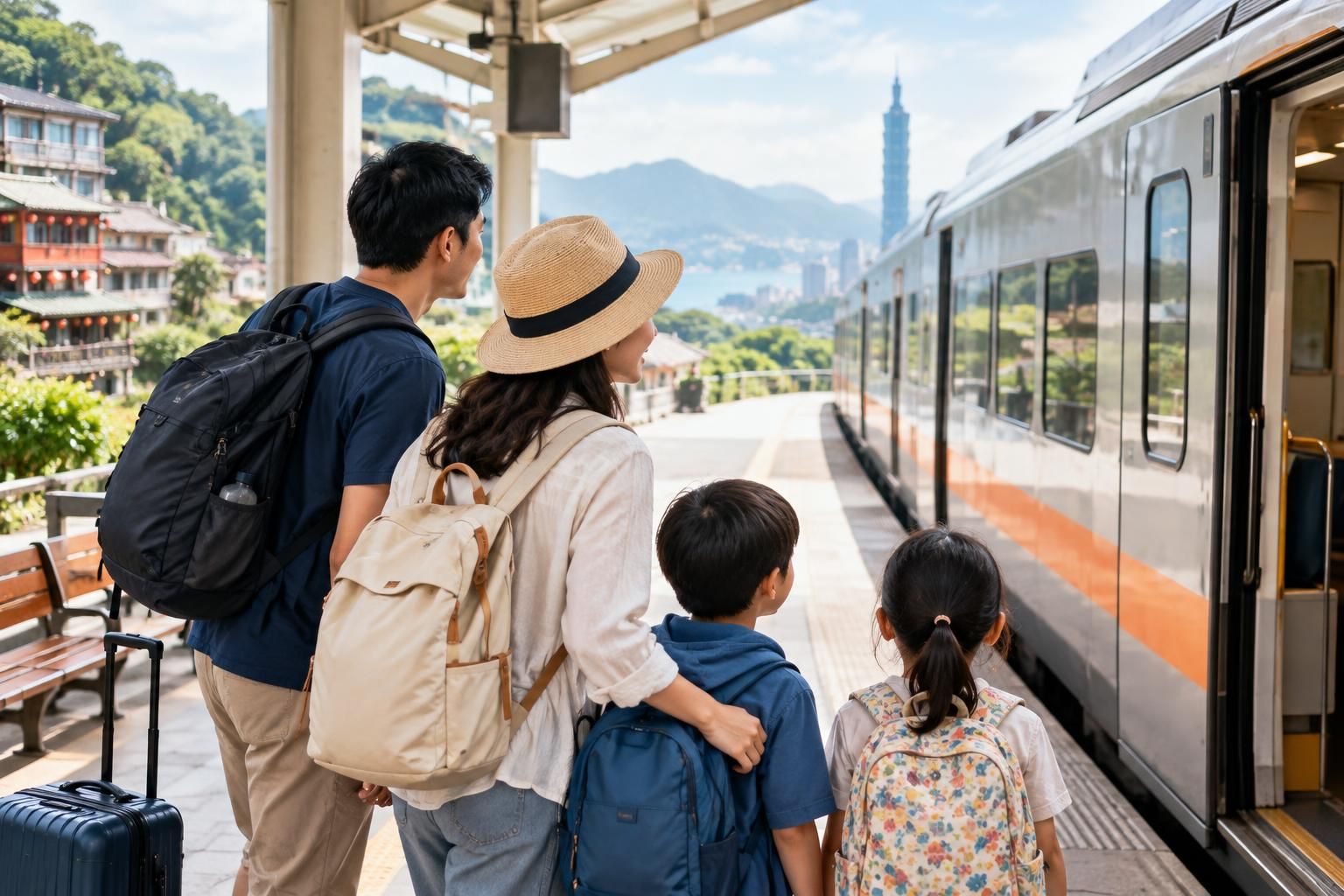
Taiwan has both high-speed and conventional rail, but the quickest train ride is not always the simplest family journey. High-speed stations can sit away from the neighborhoods visitors want to explore, adding another transfer. Compare accommodation-to-accommodation travel, including station access, waiting time, the onward ride and the walk with bags.
Before choosing a service, check its current reservation arrangements, seating options and luggage guidance. For children who need predictable breaks, a reserved seat may matter more than shaving time off the journey. Keep snacks, spare clothing and one quiet activity accessible rather than buried in the main suitcase. Avoid scheduling an essential attraction immediately after arrival; even a straightforward transfer can consume the family's energy for the afternoon.
Choose accommodation for the evening routine
A station-adjacent hotel is useful only if its surroundings also work for your family. Look for an uncomplicated walking route, nearby meal options and somewhere to buy breakfast supplies. An address across several busy roads may be less convenient than one slightly farther away on a calmer street. Examine the actual approach rather than judging distance alone.
Room layout deserves as much attention as location. Confirm the beds provided, whether children count toward occupancy and whether there is space to open luggage without blocking the room. Families with early bedtimes may value a separate sleeping area more than a view. Laundry access can reduce packing, but check whether it is in the property or requires a separate outing. Request quiet-room preferences without assuming they can be guaranteed.
Build days around one anchor activity
Give each full day one main purpose: a museum, a historic neighborhood or a waterfront outing. Add nearby extras only if everyone still has energy. In Taipei, for example, a museum visit and an easy neighborhood meal can form a complete day; there is no need to cross the city again just to fill the evening.
Balance adult interests with something children can actively notice or choose. At a temple, that might mean looking for animal carvings while respecting worshippers and any photography restrictions. On a neighborhood walk, let each child choose a snack stop. Alternate concentrated indoor visits with places where the family can pause. A playground break is not lost sightseeing time if it makes the rest of the day enjoyable.
Make food stops flexible rather than ambitious
Markets can be engaging family outings, but a crowded evening food crawl is not every child's ideal dinner. Visit before everyone becomes tired and hungry, and keep a simpler fallback meal in mind. Sharing a few small dishes can encourage curiosity without turning dinner into a test of adventurous eating.
Carry a written explanation of any dietary requirements in an appropriate local language, and discuss ingredients directly rather than relying on appearance. Families dealing with allergies should make their own suitable arrangements before travel. Keep familiar snacks for transfers and delayed meals. When planning an evening market visit, consider the return journey too: a short outing close to your accommodation can be more successful than a famous market across town.
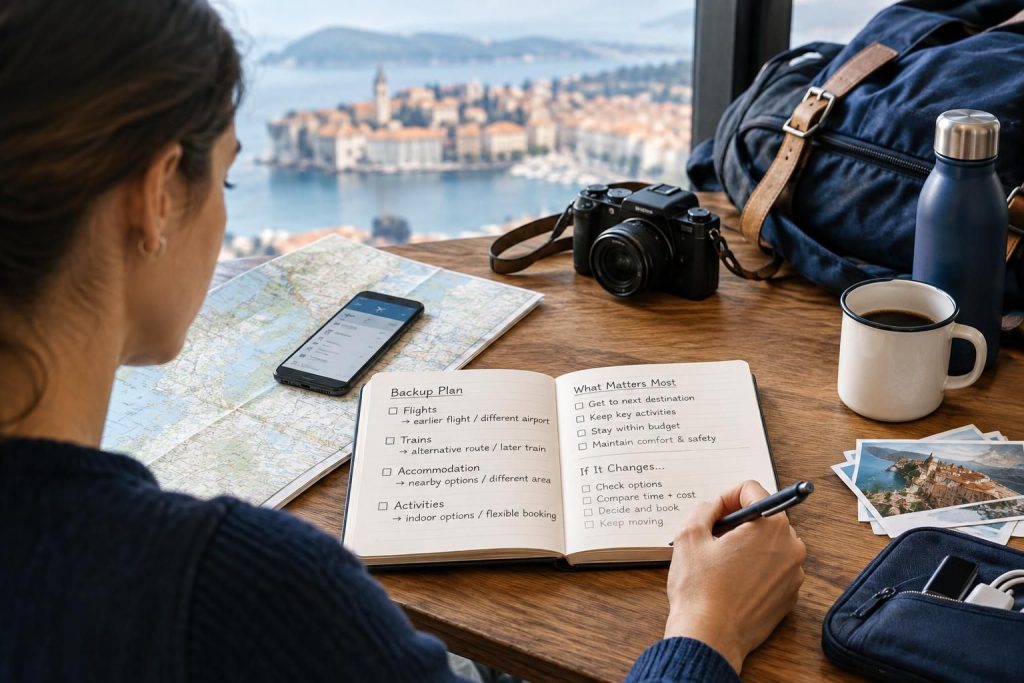
Leave room for weather and changing energy levels
Heat, humidity and rain can change how much walking feels reasonable. Group outdoor activities into manageable stretches and identify an indoor alternative near each base. Avoid making every wet-weather option another long journey. A nearby museum, a quiet afternoon at the accommodation or a relaxed meal can preserve the day without forcing the original plan.
Pack for easy transitions: light layers, compact rain protection, comfortable footwear and a small day bag with spare clothes. If using a stroller, consider its folded size and how easily one adult can manage it alongside luggage. Before departure, check forecasts, transport notices and attraction information, then adjust the route rather than treating the first itinerary as a commitment.
The strongest family itinerary in Taiwan is usually the one with fewer moves and more breathing space. Choose bases that offer genuinely different experiences, compare complete journeys and protect the routines that help your children travel well. Two satisfying stops, comfortable rooms and flexible afternoons can deliver more memorable days than a longer list of destinations.
AI-assisted evergreen travel guide. Featured image is an AI-generated illustration, not a specific product or booking.