Northern Brittany rewards travelers who enjoy watching a place change rather than moving somewhere new every morning. Around Saint-Malo, tidal views, granite streets, sheltered waterfronts and open headlands offer plenty of variety within a relatively compact area. A week gives you time to explore the coast without turning every day into a driving circuit. The key decisions are where to sleep, whether a car will genuinely help and which outings deserve a full day. Plan around a handful of contrasting places, then leave enough space to respond to wind, rain and the simple appeal of staying longer over lunch.
Choose a base for your evenings, not just your day trips
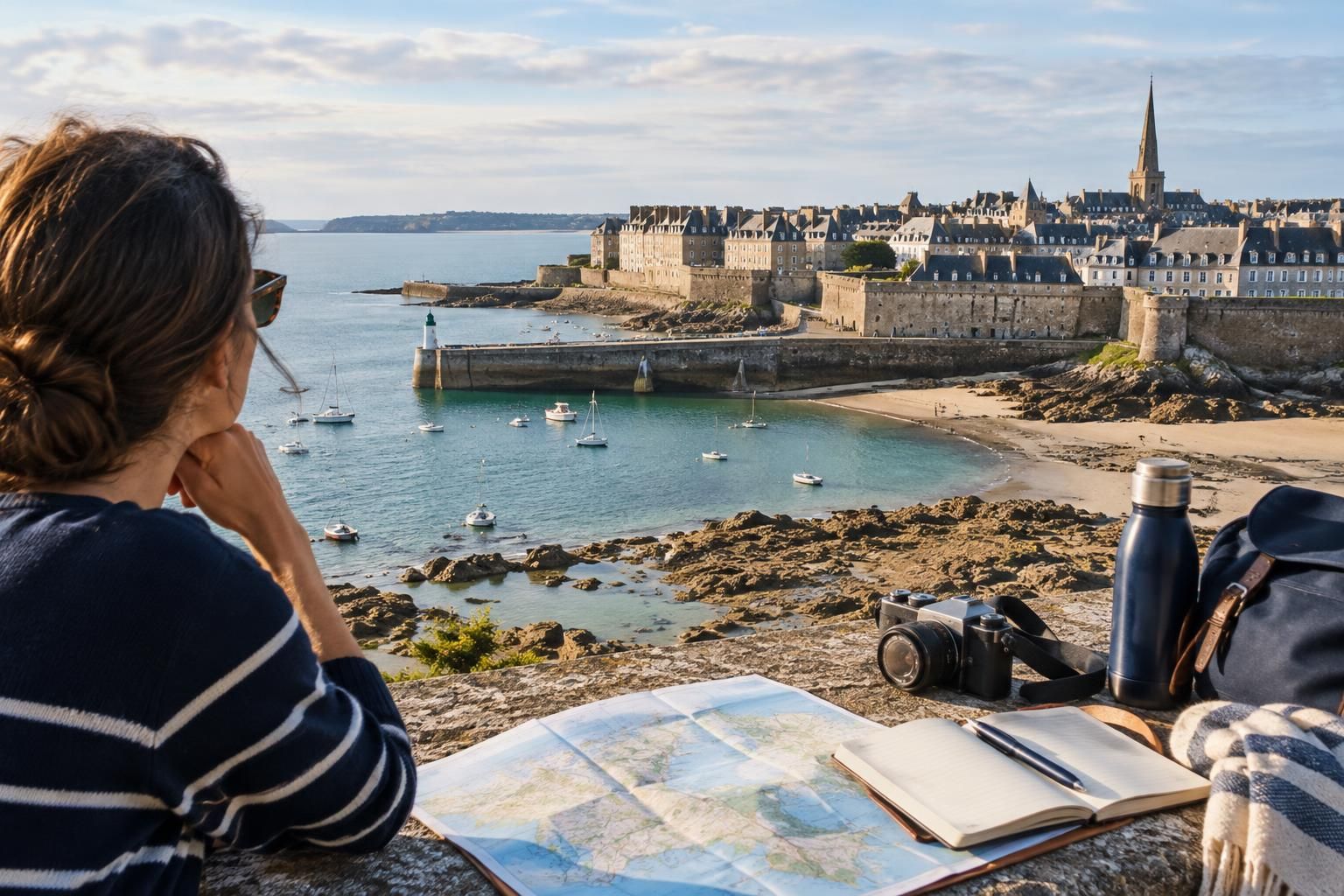
Saint-Malo suits travelers who want their main sightseeing on the doorstep. Staying inside the walls makes it easy to explore the historic streets early or return after a day out. The trade-offs can include street noise, stairs and less straightforward luggage access. Accommodation outside the walls may offer a different balance of space, parking and access to the seafront or railway station.
Dinard is worth considering if beach walks and waterfront evenings matter more than being beside Saint-Malo’s old town. Cancale offers a smaller coastal-town setting with a strong food focus, but requires closer attention to onward transport. Pick one base for the week unless you actively enjoy changing hotels; these places work better as alternatives than as a checklist of overnight stops.
Decide whether you need a car for the whole week
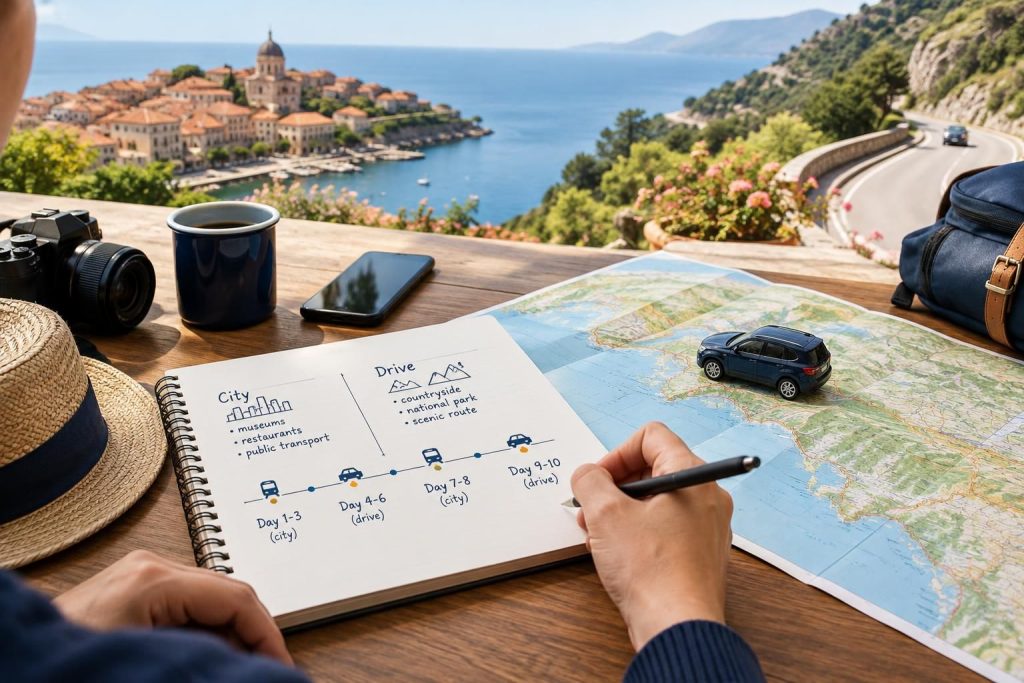
A car is most useful for combining rural accommodation, smaller coastal stops and headland walks. It is less useful on a day devoted to Saint-Malo itself. Compare the total cost of hiring, parking and fuel with a plan built around public transport and perhaps a shorter rental period. Before choosing accommodation, check the actual journey between the station, your lodging and the places you most want to visit.
For a car-light holiday, make Saint-Malo your anchor and investigate individual connections to Dinard, Cancale and Dinan. Do not assume that a short distance on the map means a simple journey. Water crossings may be attractive where offered, but should not be the only link holding a tightly timed day together. Check operating details for your dates and retain a land-based alternative.
Give Saint-Malo more than a quick circuit of the walls
Use your first full day to understand the city rather than immediately leaving it. Combine a manageable stretch of the ramparts with the streets below, a waterfront pause and time on the seafront. Walking the entire perimeter need not be a single task: steps, exposed sections and repeated stops can make a short-looking route take longer than expected.
Keep a second, lighter Saint-Malo session for later in the week. Returning under different light or at a different tide can feel more rewarding than adding another distant attraction. If mobility or stamina is a concern, ask your accommodation about step-free approaches and choose street-level routes rather than assuming the ramparts will suit everyone.
Pair outings by character rather than collecting towns
Cancale works well as a food-and-coast day: allow time for its waterfront, a leisurely meal and, if conditions suit, a separate coastal viewpoint or short walk. Pointe du Grouin is a possible landscape-focused addition, but it need not be squeezed in after a long lunch simply because it is nearby.
Dinan offers a useful contrast to the coast, with historic streets and a riverside setting. Treat the hill between the upper town and port as part of the day’s effort budget. Dinard, by comparison, suits a gentler waterfront outing. Giving each place a clear purpose helps you avoid three similar stops followed by a tired drive home.
Make tides and weather part of the plan
The tidal range around Saint-Malo changes the appearance and use of the shoreline dramatically. A beach seen from above may look entirely different later in the day. Consult local tide information and posted guidance before considering any exposed shore route. Do not treat another visitor’s movements, an old photograph or a route shown on a general map as confirmation that a crossing is appropriate.
For ordinary sightseeing, flexibility is more valuable than chasing a particular tidal moment. Keep an exposed coastal walk interchangeable with a town-based day. On wet or windy days, shorten outdoor sections and use indoor visits or longer meals as anchors. Check opening arrangements separately rather than assuming every attraction is available whenever the forecast turns.
Build a loose seven-night rhythm and pack for it
A balanced week might include an arrival evening, a full Saint-Malo day, separate outings to Cancale and Dinan, a Dinard day and two flexible days. Use the flexible time for a coastal walk, a return to a favorite place or simply a slower morning. Mont-Saint-Michel is a possible larger excursion, but it changes the scale of the day; substitute it for another outing rather than adding it to an already full circuit.
Pack comfortable shoes with dependable grip, a waterproof outer layer and clothing you can adjust as conditions change. A small day bag is useful for water, an extra layer and whatever you need between meals. For self-catering accommodation, check kitchen equipment before planning ambitious market cooking. A simple breakfast and occasional easy supper can leave more energy for exploring than an elaborate food itinerary.
The strongest Saint-Malo-based holiday is not the one with the most coastal stops. Choose a base that makes everyday life easy, reserve transport effort for outings you genuinely want and let tides and weather influence the order of your days. With a few contrasting excursions and room to return somewhere you liked, a week in northern Brittany can feel varied without becoming restless.
AI-assisted evergreen travel guide. Featured image is an AI-generated illustration, not a specific product or booking.