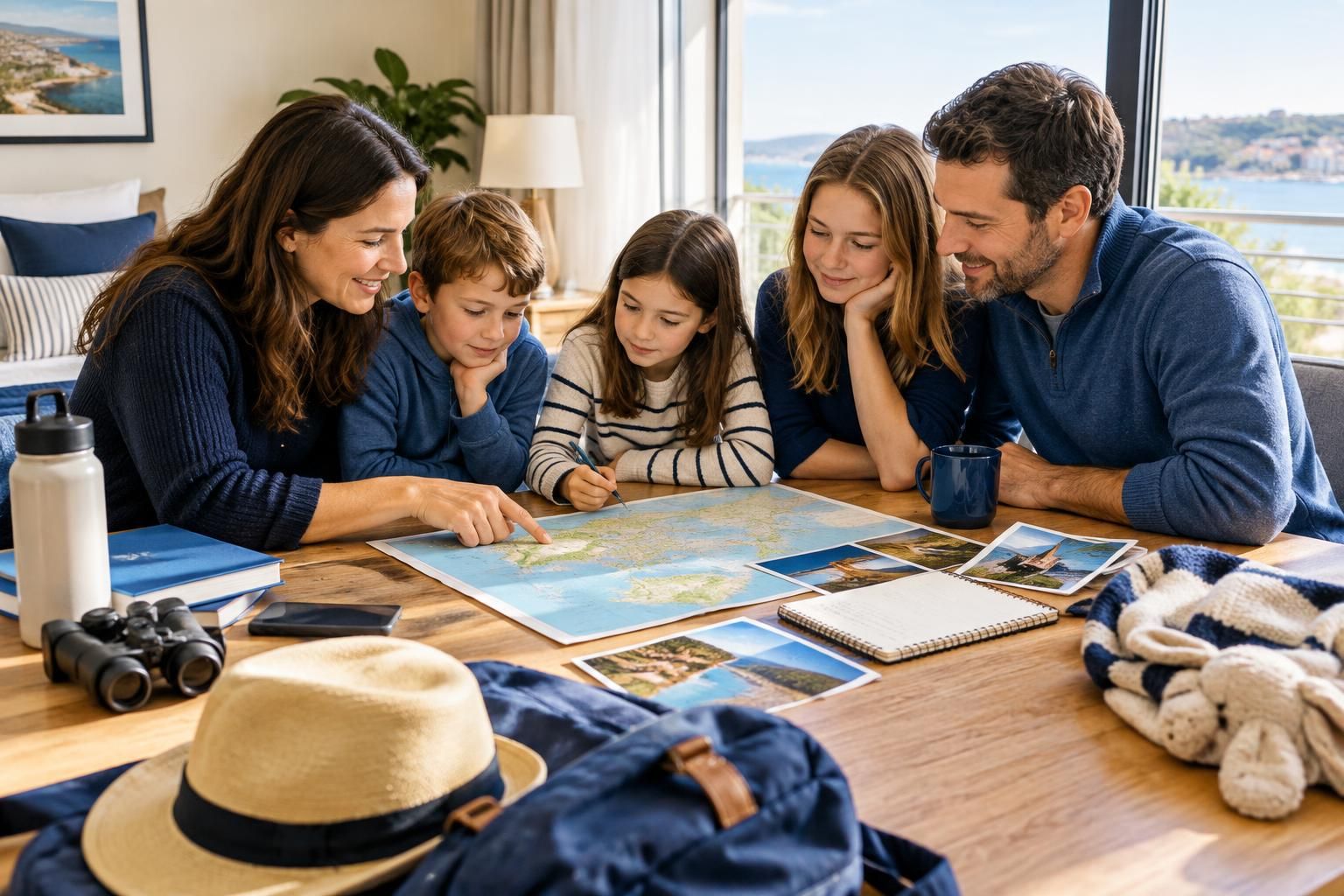
Planning a family trip becomes more complicated when one child wants a playground, another wants an ambitious outing and the adults hope to enjoy the destination too. The answer is not to find activities that delight everyone equally. It is to build a trip with shared highlights, manageable compromises and room for different interests. Start with the youngest traveler’s practical needs, but do not let those needs determine every experience. A few deliberate choices about your base, daily rhythm and occasional separate outings can make a mixed-age family trip more satisfying.
1. Gather preferences without promising a perfect trip
Ask each traveler to name one thing they would love to do, one thing they would rather avoid and one ordinary comfort that matters. Younger children might choose a boat ride or somewhere to play; an older sibling might want a particular museum, a shopping afternoon or time with a camera. Adults should contribute preferences as well. Family travel does not require removing every adult interest from the itinerary.
Turn those answers into a short set of priorities rather than a long wish list. Explain which choices are firm, which depend on conditions and which are optional. Give children bounded decisions: choosing between two outings is more useful than asking them to design an entire day. Avoid automatically making the oldest child the helper or asking the youngest to tolerate every ambitious plan.
2. Choose a base that supports ordinary family routines
Compare destinations through the shape of a normal day. A compact town with a waterfront, a small museum and places to pause may suit mixed ages better than somewhere whose main attractions require lengthy transfers. Look for a mix of short outings and more substantial experiences. A beach destination can include a harbor walk or craft activity; a city stay can combine major sights with gardens and neighborhood wandering.
Accommodation deserves the same practical scrutiny. Check the actual sleeping arrangement, not just the number of guests a room accommodates. Consider where adults or older children can spend time after an early bedtime, whether food preparation would help and how easily you can return between outings. Separate sleeping space may be more valuable than an impressive view. Include the cost and effort of daily travel when comparing a central property with a larger place farther away.
3. Plan days around one shared anchor
Choose one main experience for each full day, then treat everything else as adjustable. An aquarium visit might be the anchor, with a nearby lunch and waterfront stroll as additions rather than obligations. This makes it easier to shorten the day without feeling that the itinerary has failed. Alternate more demanding outings with days that need fewer transitions, queues and decisions.
Build pauses into the route before anyone needs them urgently. Identify places where sitting, eating or playing would fit naturally, rather than assuming that the family can keep moving until the next attraction. If a younger child needs a quiet afternoon, consider a morning highlight followed by optional activities near the accommodation. Avoid filling every pause with entertainment: some children need less input, not a different activity.
4. Find experiences with several ways to participate
The most useful shared outings allow different levels of engagement. In a historic district, a younger child could look for animal carvings while an older child follows the architecture or takes photographs. At a market, one person might enjoy choosing picnic ingredients while another is interested in local crafts. A garden can offer space to wander alongside details worth studying. Nobody needs to complete exactly the same task.
Before committing to a structured activity, check its format, duration and any stated participation requirements. A subject that interests everyone may still be a poor fit if the experience involves long periods of listening or little opportunity to leave early. Keep the surrounding day simple when trying something unfamiliar. Bring a small, familiar diversion for waiting periods, while leaving space for children to notice the place itself.
5. Use separate outings deliberately
When more than one responsible adult is traveling, occasional split plans can give everyone a better experience. One adult and an older child might visit a larger museum while another adult takes a younger child to a nearby park. Agree on the meeting place, approximate timing, communication method and who carries essential belongings before separating. Choose a reunion point that works even if one group finishes early.
Rotate adult responsibilities so that separate outings do not repeatedly leave one person doing only the practical care. If one adult is traveling with several children, look instead for shared settings with different activities close together, and keep supervision central to the choice. Older children can contribute ideas and carry their own belongings when appropriate, but should not become the default solution to childcare.
6. Test the itinerary against a difficult afternoon
Before booking, imagine that everyone is tired halfway through an outing. Can you return easily? Is there somewhere straightforward to eat? Would leaving early waste a large part of the trip budget? These questions reveal fragile plans. Prioritize flexibility where it matters most, and read cancellation conditions before choosing between otherwise similar bookings. Keep optional activities separate from experiences the family considers essential.
Make a simple daily outline that older children can understand, with the main outing, likely meal breaks and return plan. Pack shared essentials so they remain accessible rather than scattered across several bags. At the end of each day, ask what everyone wants more or less of tomorrow. Small adjustments, such as a later start or fewer stops, are usually easier than redesigning the whole trip.
A successful mixed-age family trip is not one where everyone enjoys every minute equally. It is one where each traveler has something to anticipate, practical needs are respected and compromises feel reasonably balanced. Choose a workable base, build days around one shared highlight and leave enough flexibility to respond to the family you are traveling with.
AI-assisted evergreen travel guide. Featured image is an AI-generated illustration, not a specific product or booking.