Delhi, Agra and Jaipur make an appealing introduction to northern India: a layered capital, a city shaped by Mughal architecture and a Rajasthan gateway known for forts, courtyards and crafts. Their familiar Golden Triangle label can make the route sound like a compact sightseeing circuit. In practice, station transfers, road journeys, hotel changes and the energy of each city deserve as much attention as the monuments. A rewarding itinerary starts by deciding how much movement you enjoy, then leaves space between the major sights. For many first-time visitors, eight nights offers a useful planning framework rather than a race through three cities.
Start with nights, not a list of attractions
A balanced starting point is three nights in Delhi, two in Agra and three in Jaipur. This gives Delhi room for both historic districts and a gentler introduction, lets Agra be more than a rushed stop, and leaves Jaipur time for the old city and a separate fort excursion. Treat international arrival and departure days as partial days, especially when flights fall early or late.
With only six nights, consider whether you genuinely want all three cities. Two bases can produce a richer trip than three compressed stays. If the Taj Mahal is essential, Delhi and Agra are a coherent pairing; if markets, crafts and fort architecture are your main interests, Delhi and Jaipur may suit you better. Add a final Delhi night when it makes the journey home less dependent on a same-day intercity transfer.
Choose transport for the whole journey
Compare rail and private road transfers door to door, rather than judging them only by the time spent moving between cities. A train journey also includes reaching the station, locating the correct departure area and traveling onward to your hotel. A car removes some handling of luggage, but traffic and time spent sitting can make a road day feel substantial.
You do not need one transport method for the entire triangle. Rail may appeal for a direct city-to-city leg, while a road transfer can suit a day with a deliberate sightseeing stop. Fatehpur Sikri is one possible addition between Agra and Jaipur, but including it turns a transfer into an excursion. Before booking, check the actual stations, service details, luggage arrangements and cancellation terms for your chosen journey.
Pick accommodation around your daily rhythm
In Delhi, decide whether you want a central base for sightseeing or a quieter neighborhood with places to eat nearby. Connaught Place is a useful area to consider for central orientation; parts of South Delhi may appeal if you prefer a more residential setting. In either case, assess the particular street, access to transport and the final approach to the property, not just the neighborhood name.
In Agra, prioritize an uncomplicated arrival and convenient access to the sights you intend to visit. In Jaipur, compare the atmosphere of an old-city stay with the space and vehicle access offered elsewhere. Heritage-style accommodation can be memorable, but ask about stairs, windows, room layout and noise if these affect your comfort. For a short itinerary, dependable sleep and easy departures matter more than collecting three dramatically different hotels.
Give each city a different purpose
Avoid treating the route as an uninterrupted sequence of large monuments. In Delhi, combine one major historic site with a neighborhood experience: Humayun’s Tomb followed by a slower afternoon around gardens or cafés, for example. Give Old Delhi its own outing rather than squeezing its lanes and markets between distant appointments.
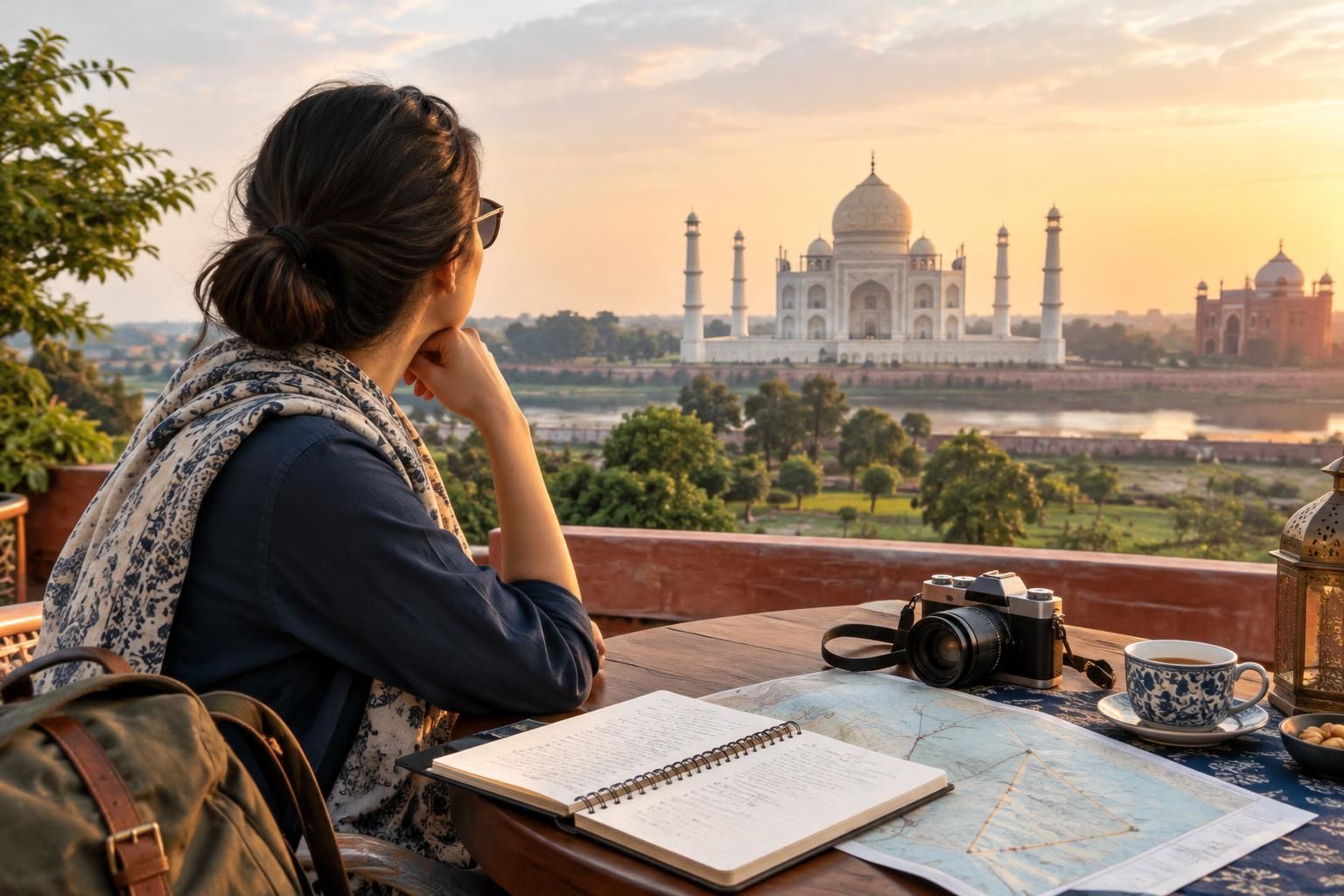
Let Agra concentrate on Mughal architecture, with the Taj Mahal and Agra Fort as the main anchors rather than a checklist to complete in a single burst. In Jaipur, separate the old-city palace and market area from an excursion toward Amber Fort. Add a textile or block-printing experience if the process interests you, and clarify whether an activity is a demonstration, a hands-on session or primarily a shopping visit.
Build days that can absorb heat, crowds and delays
Plan one demanding outing and one lighter activity per full day. A fort visit involving slopes and steps pairs better with a relaxed meal or courtyard break than another extensive complex. Place outdoor walking in the more comfortable part of the day for your travel season, and retain an indoor or low-effort alternative rather than assuming every afternoon will suit sightseeing.
Northern India’s weather varies considerably across the year, so consider temperature, rainfall and daylight when choosing dates. Before fixing the order of your sightseeing, check current opening arrangements and ticket requirements for your priority monuments. Leave transfer evenings lightly scheduled: a delayed arrival should cost you a leisurely dinner, not the only opportunity to see something central to the trip.
Organize the small details before moving on
Keep a simple trip sheet with hotel addresses, station names, booking references and the next day’s pickup arrangements available offline. Confirm whether transport includes sightseeing stops, parking, waiting time and luggage space rather than relying on a broad description such as “full-day car.” Carry bags you can manage during station and hotel transitions.
Pack clothing that works for warm periods, cooler conditions and visits to religious places, with an easy layer for changing levels of coverage. Comfortable footwear matters across uneven paving, steps and large courtyards. Leave some luggage space if textiles or crafts interest you, but avoid making shopping the default filler for every unscheduled hour. An unplanned tea break can be just as valuable.
The Golden Triangle works best when each city has enough time to feel distinct. Choose a manageable number of nights, compare transfers realistically and protect a little unscheduled time every day. The result is not simply a route linking famous buildings, but a varied trip with room for Delhi’s neighborhoods, Agra’s architectural detail and Jaipur’s craft traditions.
AI-assisted evergreen travel guide. Featured image is an AI-generated illustration, not a specific product or booking.