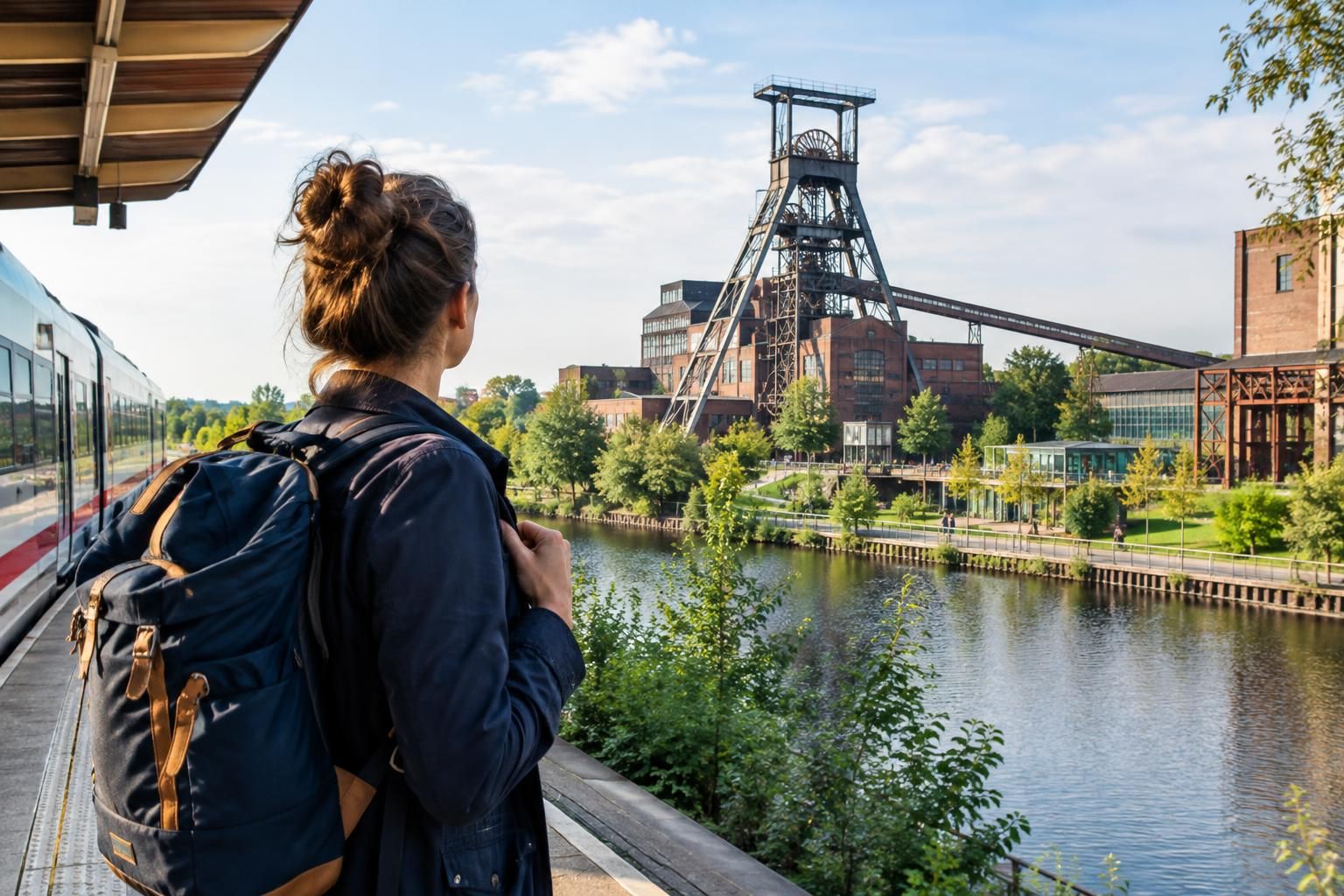
Germany’s Ruhr region offers a different kind of European cultural break: coal mines instead of castles, monumental steelworks instead of medieval squares, and former industrial corridors reclaimed for recreation. Its appeal lies not in one compact historic center but in the relationship between neighboring cities, working neighborhoods and enormous structures built for production. A five-night stay gives you four full days to explore that landscape without changing hotels. The key is to treat the Ruhr as a collection of substantial outings, not a checklist of places that happen to look close together on a map.
Choose a base for your actual itinerary
Essen is a logical starting point if the Zollverein mining complex and the city’s cultural attractions anchor your plans. Duisburg is worth considering if the Landschaftspark Duisburg-Nord industrial landscape is your main priority. Neither choice puts every attraction within walking distance, so compare the complete journey from accommodation to each planned outing before committing.
For a first visit, accommodation near a useful station or interchange can be more valuable than a picturesque address. Look beyond the distance to the main railway station: check whether reaching your hotel involves stairs, a long walk or another local connection. A quieter room, breakfast options and somewhere nearby for an uncomplicated evening meal are useful priorities after days spent crossing large sites.
Build four full days around four clear themes
Give Zollverein one full day rather than squeezing it between city-center stops. Use another day for Landschaftspark Duisburg-Nord, allowing time to appreciate the scale of the former ironworks. A third day could pair Essen’s Museum Folkwang with a neighborhood walk. Keep the fourth for Oberhausen’s Gasometer, a canal-side outing or whichever experience best matches your interests.
This structure creates variety without demanding a different city every morning. Avoid assigning two major industrial complexes to the same day simply because their regional locations appear convenient. Each involves more than looking at a single building, and travel between them can require several stages. Keep arrival day for settling in and departure day free of anything you would regret missing.
Understand what you want from industrial heritage
Industrial sites reward different kinds of curiosity. If you are interested in how coal mining or steelmaking worked, prioritize interpretive displays or a suitable guided visit. If architecture and photography are the attraction, allow more time outdoors to study conveyors, pipework, brick facades and the relationships between structures. Travelers interested in social history can balance machinery with material about labor, housing and everyday life.
At Zollverein, distinguish between exploring the wider complex and visiting particular interiors or exhibitions. At Landschaftspark Duisburg-Nord, think of the outing as time in a large landscape shaped by industrial remains, rather than a conventional museum visit. Before finalizing a day, check which spaces require admission or reservations and whether your preferred activity depends on a guided departure. Access arrangements can vary.
Plan transport from station platform to site entrance
Regional trains help connect the Ruhr’s cities, but the final stretch is often what determines how easy an outing feels. A railway journey may be followed by a tram, bus or walk through a less familiar district. Plan to the visitor entrance rather than merely to the attraction’s name on a map, especially where a former industrial estate has several access points.
Compare individual fares and regional ticket options against your actual journeys rather than assuming one pass is automatically best. Confirm the services and area covered, since local transport products and longer-distance trains need not follow the same ticket rules. Save the outward route, return options and accommodation address offline. A nearly empty phone battery is an avoidable complication after a day of photography and navigation.
Balance big structures with art, water and ordinary neighborhoods
Several consecutive days of furnaces, shafts and machinery can blur together. A contrasting half-day helps each industrial visit remain distinctive. Museum Folkwang offers an art-focused counterpoint in Essen, while a walk beside a canal or through a residential neighborhood shifts attention from monumental production to the region’s everyday scale.
Food stops can provide the same change of rhythm. Leave time for a bakery breakfast, a relaxed lunch or an early neighborhood dinner instead of treating meals as gaps between connections. Do not assume that every large heritage site will have the food choice you want when you want it. Identify a fallback near your transport route, and carry water and a modest snack for long outdoor stretches.
Pack for exposed sites and keep a weather alternative
Large industrial landscapes can mean extensive walking, exposed paths and uneven surfaces. Bring comfortable shoes with dependable grip, a weatherproof outer layer and a compact day bag. If stairs, standing time or walking distance affect your enjoyment, investigate the specific route through each site rather than relying on a general description of the attraction. Do not assume access to elevated structures.
Keep one indoor-focused day movable within the itinerary. In persistent rain, an art museum or substantial exhibition may be more rewarding than hours outdoors; in clearer weather, reverse the order. Photographers should leave time for changing light without making an entire day depend on a particular shot. Check photography restrictions for interiors and equipment before packing bulky accessories.
A rewarding Ruhr break depends less on how many cities you visit than on giving its unusual landscapes enough attention. Choose one well-connected base, make each major industrial site the focus of its day, and alternate machinery with art, neighborhoods and green space. You will leave with a clearer sense of the region than a rushed circuit of station platforms and landmark photographs could provide.
AI-assisted evergreen travel guide. Featured image is an AI-generated illustration, not a specific product or booking.