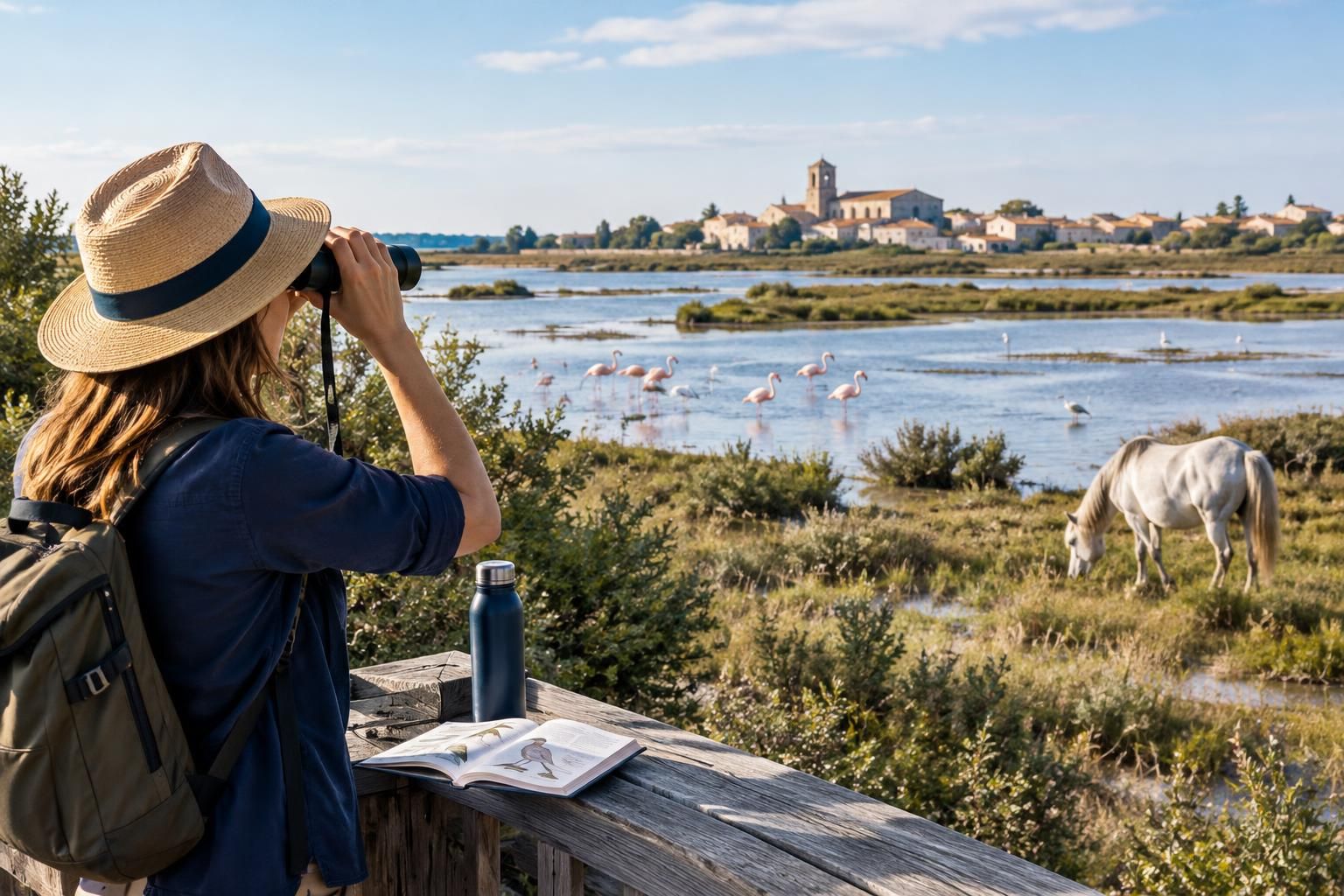
Between the Rhône and the Mediterranean, the Camargue offers a different kind of southern French holiday: broad horizons, reed beds, saltwater lagoons and long stretches of coast rather than a succession of hilltop villages. Flamingos are a signature attraction, but the pleasure of a visit also lies in noticing smaller birds, changing light and the relationship between water, farming and the sea. Five nights give you room to explore without turning every day into a wildlife expedition. The key decisions are where to sleep, how to reach scattered landscapes and how much time you genuinely want to spend outdoors.
1. Choose a base that matches your evenings
Arles suits travelers who want nature outings alongside architecture, restaurants and indoor alternatives. Its Roman heritage and compact historic center give non-birdwatchers plenty to enjoy. The trade-off is that sleeping in town means traveling out to wetland and coastal locations rather than stepping straight into them.
Saintes-Maries-de-la-Mer is a stronger choice if the sea is central to your holiday. It places you in a coastal setting, though excursions elsewhere still need planning. A rural guesthouse can offer quiet surroundings and open views, but check meal arrangements, parking and the actual distance to a village. For five nights, one base usually makes more sense than repeatedly packing and moving.
2. Decide whether a car supports the trip you want
A car is useful for combining scattered observation points, villages and walking areas. Plan outings as compact clusters rather than crossing the region several times in one day. A map can make two places look close even when waterways, limited crossings or indirect roads complicate the journey.
Without a car, narrow the geographical scope. Consider an Arles stay with organized nature excursions, or a coastal stay built around locally accessible walks and activities. Before booking accommodation, check the transport options for your intended dates, including the return journey. Do not assume every wetland attraction is connected by convenient public transport, or that a quiet rural road makes a comfortable walking route.
3. Build five nights around contrasting days
Use arrival day to settle in, buy picnic supplies and take a short local walk. Make the first full day an introduction to wetland habitats, ideally through a managed visitor site or a guided outing. This helps you understand what you are looking at before attempting more independent exploration.
Give another day to the coast around Saintes-Maries-de-la-Mer, combining a beach walk with time in the village. Reserve a separate day for Arles, or consider Aigues-Mortes if its fortified townscape appeals. Keep the final full day flexible: repeat a favorite landscape, book a nature activity or rest. Avoid treating every suggested destination as compulsory; the region rewards lingering more than collecting stops.
4. Make birdwatching enjoyable without specialist knowledge
Start with habitats rather than a species checklist. Open water, shallow lagoons, reed beds and agricultural land offer different things to observe. Binoculars are more useful than relying on a phone camera to bring distant wildlife closer. If you are traveling as a couple or family with mixed interests, choose shorter observation sessions followed by a walk, meal or village visit.
A guide can help beginners notice behavior and distinguish unfamiliar birds, but wildlife sightings are never guaranteed. Keep expectations broad, especially if one particular species inspired the trip. Use designated paths and observation areas, give animals space and avoid approaching nests or feeding wildlife. What looks like empty ground may still be sensitive habitat.
5. Plan for wind, sun and exposed landscapes
Much of the appeal comes from open country, which also means limited shelter in some places. Carry drinking water, sun protection and a lightweight wind-resistant layer even when the day begins comfortably. Closed walking shoes are a practical default for uneven paths; bring a separate pair if you also want time on the beach.
Choose the season according to your priorities rather than assuming there is one perfect month. Warmer periods favor a beach element but can make long exposed walks less appealing. Cooler periods may suit travelers more interested in landscapes and birds than swimming. Insects can affect comfort near wetlands, so pack suitable protection and consider accommodation with screened windows or other ventilation options.
6. Check access before committing to an outing
The Camargue is a working landscape as well as a nature destination. Salt-production areas, farms and protected habitats are not automatically open for independent exploration. Check the access conditions for each intended walk, visitor site or cycling route, including whether advance booking is needed. Satellite images and map labels do not establish public access.
For horse riding, choose an outing matched to your actual experience and ask about instruction, equipment and time spent riding. For cycling, look beyond distance: wind, surface quality and exposure to traffic can matter more than a route's apparently flat profile. Keep one indoor alternative in reserve so poor weather does not force an unsuitable outdoor day.
A rewarding Camargue break needs fewer stops than you might expect. Choose a base for the evenings you want, match transport to a realistic area and leave room to revisit a landscape in different light. With a balance of wetlands, coast and town time, five nights can feel varied without becoming hurried.
AI-assisted evergreen travel guide. Featured image is an AI-generated illustration, not a specific product or booking.