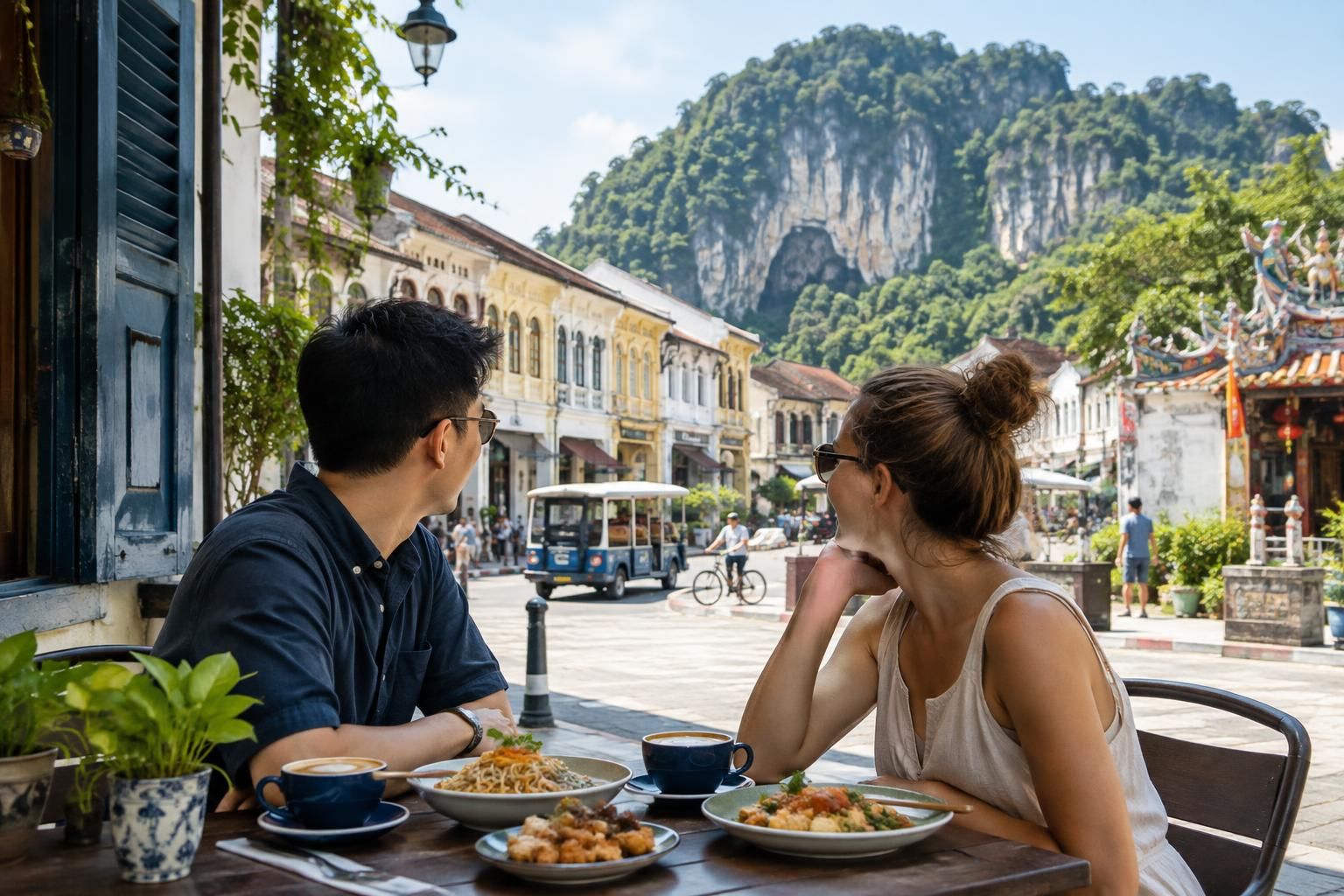
Ipoh suits travelers who enjoy making a destination out of the spaces between major sights: a coffee stop, an old shopfront, a shaded street and a meal worth lingering over. In Malaysia’s Perak state, the city combines a historic center with limestone scenery around its edges. Two nights allow you to experience both without turning a short visit into a sequence of transfers. The most useful planning decision is not how many attractions to fit in, but where to walk and when to arrange a ride. Build your stay around one central neighborhood, one outing beyond it and enough flexibility for heat, rain and appetite.
Decide how Ipoh fits into your wider trip
Ipoh can work as a pause on a journey through Peninsular Malaysia rather than as a separate expedition. If you are considering rail travel between Kuala Lumpur and the north, compare the full journey involved in adding an Ipoh stop: getting to the departure station, the train itself and the transfer to your accommodation. Check services and reservations for your dates before committing to a tightly connected itinerary.
Two nights are especially useful if you arrive during the afternoon. That gives you an easy first evening, one complete day and a final morning. A single night can still suit a food-and-heritage visit, but adding an outlying cave temple may make it feel rushed. Three nights make more sense if you want longer photography walks, several excursions or a slower pace with children.
Choose a base for the evenings you actually want
For a short first visit, accommodation in or near the historic center reduces the number of journeys you need to organize. Ipoh’s Old Town, west of the Kinta River, is a natural starting point for heritage streets and coffee stops. The central area east of the river, commonly called New Town, is another option if the places you want to eat cluster there. Plot a few intended stops before choosing between them.
Look beyond the neighborhood label. A characterful room above a shop may involve stairs, street noise or limited space for luggage. A larger hotel may offer a more predictable room layout but sit farther from your preferred evening walk. Check the actual entrance, lift access if needed, and the route to nearby food options. For a two-night stay, convenience usually matters more than a long list of facilities.
Explore the center in short loops, not one long march
Use the railway station area, historic streets and river crossings to create a compact introduction rather than a comprehensive walking circuit. Choose a few buildings or lanes that interest you, then leave room for unplanned details. Ipoh’s appeal includes shophouse architecture and everyday commercial streets, not just designated photo stops.
Start your longest walk during a cooler part of the day and give the afternoon a different purpose: lunch, a café break or time back at your accommodation. Covered five-foot ways can provide useful shelter, but routes may still include exposed stretches, uneven surfaces and road crossings. Carry a compact umbrella and wear shoes comfortable enough for repeated short outings. If a walk becomes tiring, shorten the loop rather than pressing on to complete a map.
Give limestone scenery its own half-day
The limestone hills around Ipoh offer a change of setting from the center. Cave temples such as Perak Tong or Kek Lok Tong are possible anchors for an outing, but choose according to what you want to experience: temple interiors, gardens, rock formations or a climb where access permits. You do not need to visit several similar sites to appreciate the landscape.
For a car-free stay, arrange transport with the return journey in mind. Compare a driver who waits with separate rides, and consider how you would arrange collection if mobile reception or vehicle availability were inconvenient. Ask about the walking involved before setting out; stairs and outdoor paths can make apparently similar stops very different experiences. Bring water, dress respectfully for worship spaces and follow posted guidance on access and photography. Keep this outing separate from any time-critical departure.
Plan meals around variety rather than a checklist
Ipoh is associated with white coffee, bean-sprout chicken, rice noodles and a broad kopitiam tradition. Use these as starting points, not an obligation to eat everything. A manageable food plan might include a coffee-and-toast breakfast, a noodle lunch and a shared dinner. Leave space between meals so that eating remains enjoyable rather than becoming the day’s logistical challenge.
Save several possible places within each walking area instead of relying on one famous address. Trading days, queues and available dishes can disrupt a rigid plan. Travelers with dietary requirements should ask about ingredients, stocks and preparation rather than judging from a dish’s name. If you want to buy biscuits or other food gifts, leave that until later in the stay so you are not carrying them throughout your sightseeing.
Build a two-night rhythm with a weather buffer
On arrival day, check in, take a short orientation walk and have dinner near your base. Use the full day for your limestone outing during the more comfortable hours, followed by an unhurried lunch and rest. Return to the center for a different evening food area. Reserve the last morning for breakfast, a small shopping stop or a heritage walk you postponed.
Treat that sequence as adjustable. If rain changes the appeal of an outdoor outing, swap it with your central wandering rather than adding more transport to rescue the original plan. Pack light enough to manage your own bags, with a small day bag for water, an umbrella and a light layer for air-conditioned interiors. Keep departure day simple, especially if your onward journey involves a connection.
A rewarding short stay in Ipoh needs only a convenient base, a few well-spaced meals and one deliberate trip beyond the center. Let the heritage streets fill the gaps rather than scheduling every hour. With transport arranged thoughtfully and room to adapt to the weather, two nights can offer a satisfying contrast between urban detail and limestone scenery.
AI-assisted evergreen travel guide. Featured image is an AI-generated illustration, not a specific product or booking.