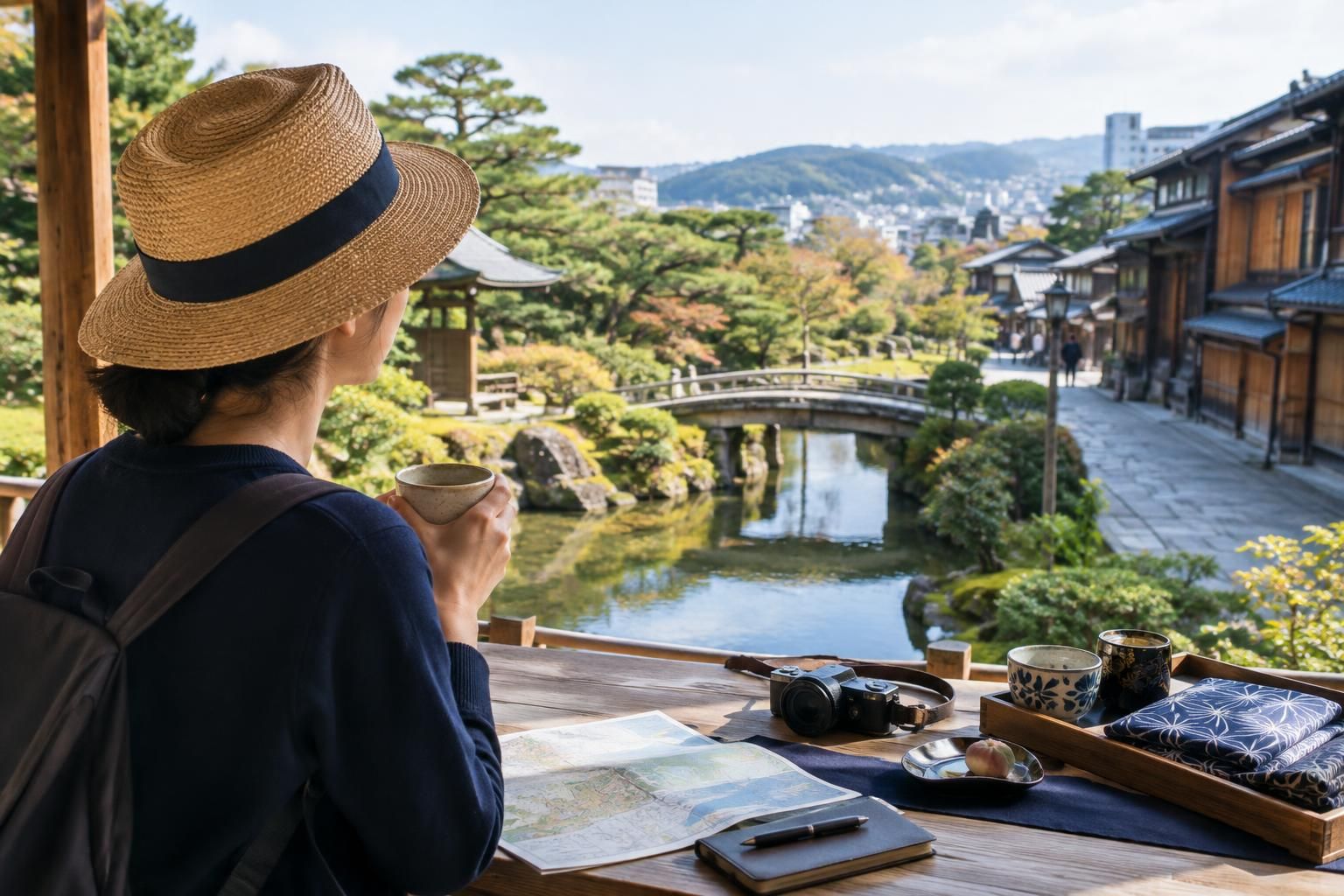
Kanazawa suits travelers who enjoy the details between major sights: a garden path, a canal beside an old residential lane, or an hour spent looking closely at lacquerware. Its appeal is not limited to a checklist of historic places. A well-paced stay leaves room for craft demonstrations, unhurried meals and the occasional retreat from rain. Three nights can provide two full sightseeing days without turning arrival and departure into races. The key is to group nearby places, choose accommodation for the way you actually travel and resist treating every traditional district as an essential stop.
Decide what role Kanazawa plays in your trip
Kanazawa works particularly well as a slower city stay between larger urban destinations. Before choosing dates, decide whether your priority is gardens and architecture, traditional crafts or simply a change of pace. That choice matters more than squeezing in every named attraction. A garden-focused visitor might spend a generous morning around Kenrokuen and the castle grounds, while a craft enthusiast could protect the same amount of time for a workshop and browsing.
For a three-night visit, treat the first evening as settling-in time, the next two days as your main exploration window and the final morning as optional. If arrival involves a long journey, do not attach a prepaid activity to it. Likewise, avoid making your departure depend on completing one last major sight.
Choose between station convenience and a sightseeing base
Accommodation near Kanazawa Station is a practical choice if you have bulky luggage, arrive late or value a straightforward departure. The trade-off is that the station area is not the same setting as the historic districts. You may prefer to use transport for the start and end of each sightseeing day rather than repeatedly walking back to your room.
A base around Korinbo or Katamachi can make sense if you want to return for an afternoon break and go out again for dinner. Accommodation near a historic district offers a different atmosphere, but examine the actual street location rather than relying on a neighborhood label. Check walking routes, steps, lift access and luggage arrangements. For a traditional-style stay, also consider whether floor bedding and any included meal times suit your needs.
Group sights into two manageable walking areas
Use Kenrokuen and the adjoining castle area as the anchor for one day. Give the garden enough time to become more than a photograph stop: paths, water, trees and changing viewpoints reward a slower circuit. Add one nearby museum or indoor visit rather than automatically filling the rest of the day. If gardens are your main interest, this is where to spend your best weather window.
Build another outing around Higashi Chaya and the streets near the Asano River. Historic architecture, small shops and a tea break can form a satisfying half-day without a rigid route. Nagamachi offers a separate setting of lanes and former samurai residences; place it on whichever day best fits your accommodation and energy. Check individual visiting arrangements before planning around access to a particular building.
Use crafts as an experience, not just a shopping list
Kanazawa is associated with traditions including gold leaf, lacquerware and ceramics. Rather than trying to understand all of them in one afternoon, choose a material or process that interests you. A museum display can provide context before you browse, while a hands-on session can give structure to a rainy part of the day.
If booking a workshop, establish the instruction language, session length and what happens to the finished piece. Some activities may involve drying, firing or later collection, which can be awkward before departure. For purchases, think about weight, fragility and practical use at home. One carefully chosen object is often easier to appreciate and transport than several delicate souvenirs bought in a hurry.
Make the itinerary flexible around weather and walking
Build each full day with one outdoor anchor and one indoor alternative. Gardens and historic lanes are more enjoyable when you are not preoccupied with wet clothing, while museums, craft visits and a leisurely meal can absorb an unsettled spell. Keep any fixed reservation separate from a long chain of outdoor stops.
Pack comfortable shoes with reliable grip, a light waterproof layer and a small bag that leaves your hands free. Add warmer layers for a cold-season visit, and avoid assuming every walkway will be equally comfortable in poor conditions. Use buses or taxis when they make the day easier, especially after a long walk. Confirm routes and payment arrangements close to travel rather than building a tight itinerary around assumed connections.
Leave room for meals and skip the unnecessary day trip
Omicho Market can be part of a food-focused walk, but it need not carry the burden of being your only memorable meal. Mix a market visit with meals elsewhere, and avoid making a single restaurant the hinge of your day. If dietary requirements are important, prepare a clear explanation and check ingredients rather than relying on a dish name or appearance.
For two full days, staying within Kanazawa is a strong default. An excursion to another town or rural area means additional transport decisions and less time for the city itself. If a side trip is your main reason for visiting the region, consider adding a night. Otherwise, use spare time for a second garden walk, a different neighborhood or an unplanned afternoon rather than another transfer.
A rewarding Kanazawa stay needs a few well-chosen anchors, not a packed timetable. Pick a base that matches your arrival and walking preferences, group nearby sights and reserve time for one craft interest. With flexible weather plans and no pressure to leave the city for a day trip, three nights can feel comfortably full while still allowing you to notice the smaller details.
AI-assisted evergreen travel guide. Featured image is an AI-generated illustration, not a specific product or booking.