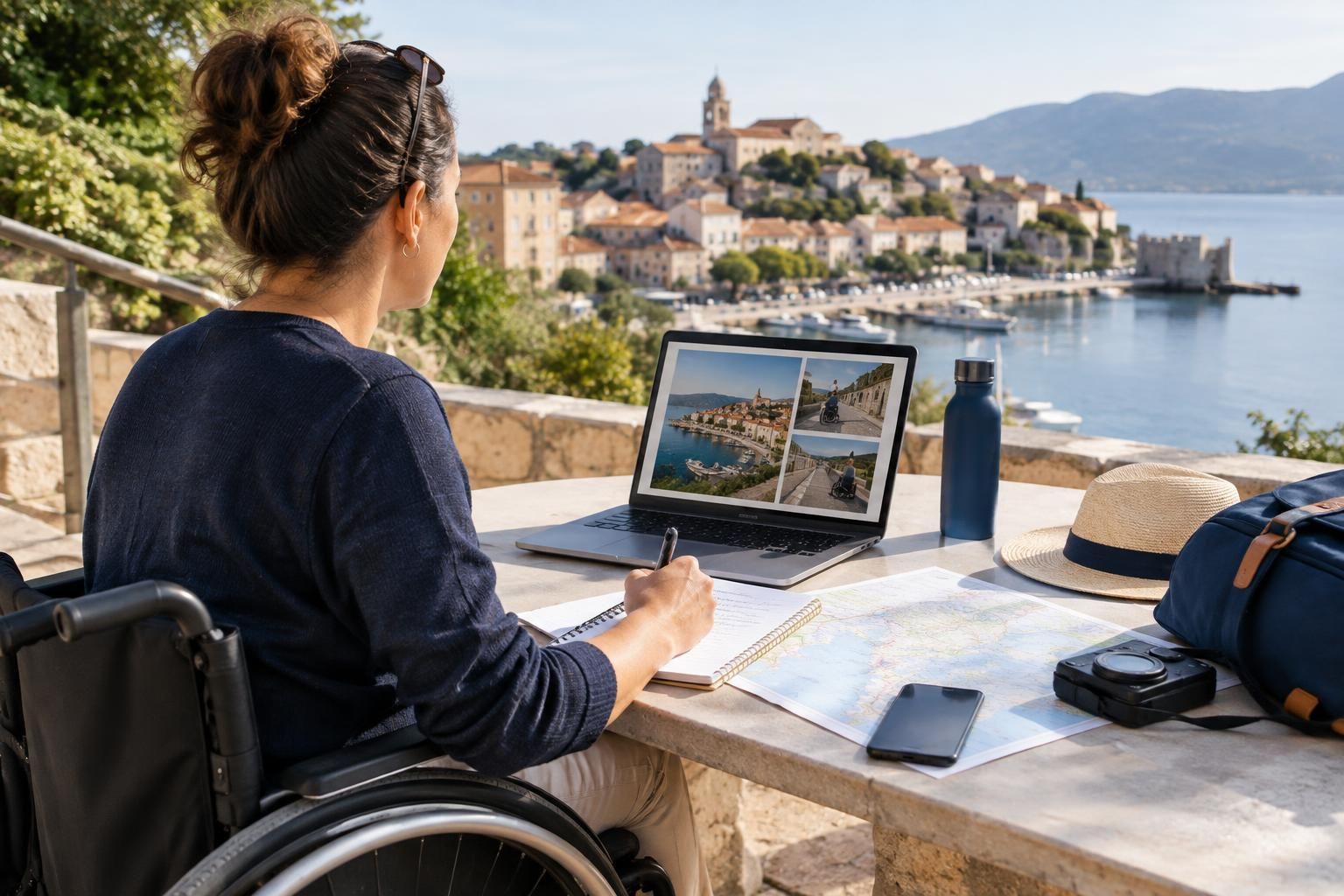
A destination can sound accessible while leaving the most important questions unanswered. A hotel may have a lift but steps at the entrance; a station may offer step-free access only through one particular exit. When avoiding stairs matters, the practical challenge is connecting each part of the trip, not simply finding individual places described as accessible. Start with the journeys and spaces you need, then choose experiences around them. This approach can support wheelchair users, people who find stairs difficult and travel companions planning together, without assuming that everyone has the same requirements.
1. Define what step-free needs to mean for your trip
Before comparing destinations, make a short list of essential requirements and preferences. Step-free access might mean avoiding all steps, avoiding flights of stairs or having a lift available between floors. Slopes, uneven paving, narrow entrances and long standing waits may also affect which options work. If you are planning for someone else, ask them to define these priorities rather than making assumptions.
Turn broad needs into practical questions. Does a mobility device need to fit through a particular doorway? Is a seated shower important? Would a steep uphill route be unsuitable even without stairs? Record relevant equipment dimensions if needed, and separate non-negotiable requirements from features that would simply make the holiday more comfortable. This gives you a consistent basis for comparing options.
2. Compare destinations through a few real journeys
Instead of assessing an entire city, sketch three journeys you would realistically make: the arrival terminal to your accommodation, your accommodation to a main attraction, and an evening outing followed by the return. Look at each connection, including station entrances, changes between services and the final stretch from the stop to the door. A short route on a map is not necessarily the easiest route.
Choose destinations where several appealing experiences can fit within a manageable area. A waterfront district with museums, cafés and gardens might offer a better holiday base than a scattered collection of headline sights. Do not assume that flat terrain guarantees easy access, or that a historic destination is automatically unsuitable. Focus on the particular neighborhoods and routes you would use.
3. Ask accommodation questions about the exact room
Treat an accessible-room label as a starting point for questions, not a complete description. Ask about the route from the street or drop-off point to reception and onward to the room. Useful details include any entrance steps, lift access, doorway widths where relevant, space beside the bed and the bathroom layout. A photograph of the actual entrance or shower can clarify more than a general property description.
Make sure any discussion refers to the room type you intend to reserve. Properties may have rooms with different layouts under similar names. Ask how required features are recorded against a reservation, and keep the written response with your booking details. Also consider breakfast areas, terraces and other spaces you expect to use; a suitable bedroom does not necessarily make every shared facility suitable.
4. Plan transport as a chain, including the last stretch
For each major transfer, consider boarding, traveling and leaving the vehicle or station as separate tasks. Depending on the service, questions might concern platform access, boarding assistance, vehicle space or how a mobility device is handled. Consult the operator about arrangements for your particular journey and equipment rather than assuming that one operator's procedures apply everywhere.
Include the ordinary details that often disappear from an itinerary: reaching the pickup point, moving luggage and getting from the arrival stop to your accommodation. If a taxi or private transfer is an option, establish whether the vehicle configuration suits your needs. Keep a realistic alternative for an essential connection, especially where the preferred route depends on a lift or a single transport service.
5. Build days around suitable experiences, not just famous sights
Create a shortlist of activities that genuinely interest you, then ask about the parts you want to experience. For a museum, that could include access between galleries and seating. For a boat excursion, it could mean the boarding route and onboard facilities. For a garden, surface conditions and gradients may matter more than whether the entrance itself is step-free.
Group activities geographically and avoid filling every gap. One substantial visit, a comfortable meal and an optional nearby stop can make a satisfying day. Check restaurant access separately, including toilets if these are important to your plans. Keep alternatives appealing in their own right, such as a gallery instead of a difficult outdoor route, rather than treating every change as a lesser version of the holiday.
6. Keep a compact access plan and revisit key details
Save the practical information you will need: the appropriate entrance, the agreed room features, transport arrangements and any relevant equipment measurements. Store it somewhere available offline, alongside booking references. Note unresolved questions clearly so that an assumption does not gradually become a supposed fact as planning progresses.
Reconfirm essential arrangements nearer departure, since equipment, routes and allocated rooms can change. Written information helps explain what was discussed, but it cannot guarantee conditions on arrival. Leave enough room in the itinerary to adjust, and agree with travel companions how to handle an unsuitable entrance or unavailable route without making every decision under pressure.
Planning for step-free access is most useful when it replaces vague promises with specific, connected details. Define what works for you, examine complete journeys and choose accommodation and activities around those requirements. The aim is not to investigate every corner of a destination. It is to build a trip with enough suitable choices that practical obstacles do not have to determine the whole holiday.
AI-assisted evergreen travel guide. Featured image is an AI-generated illustration, not a specific product or booking.