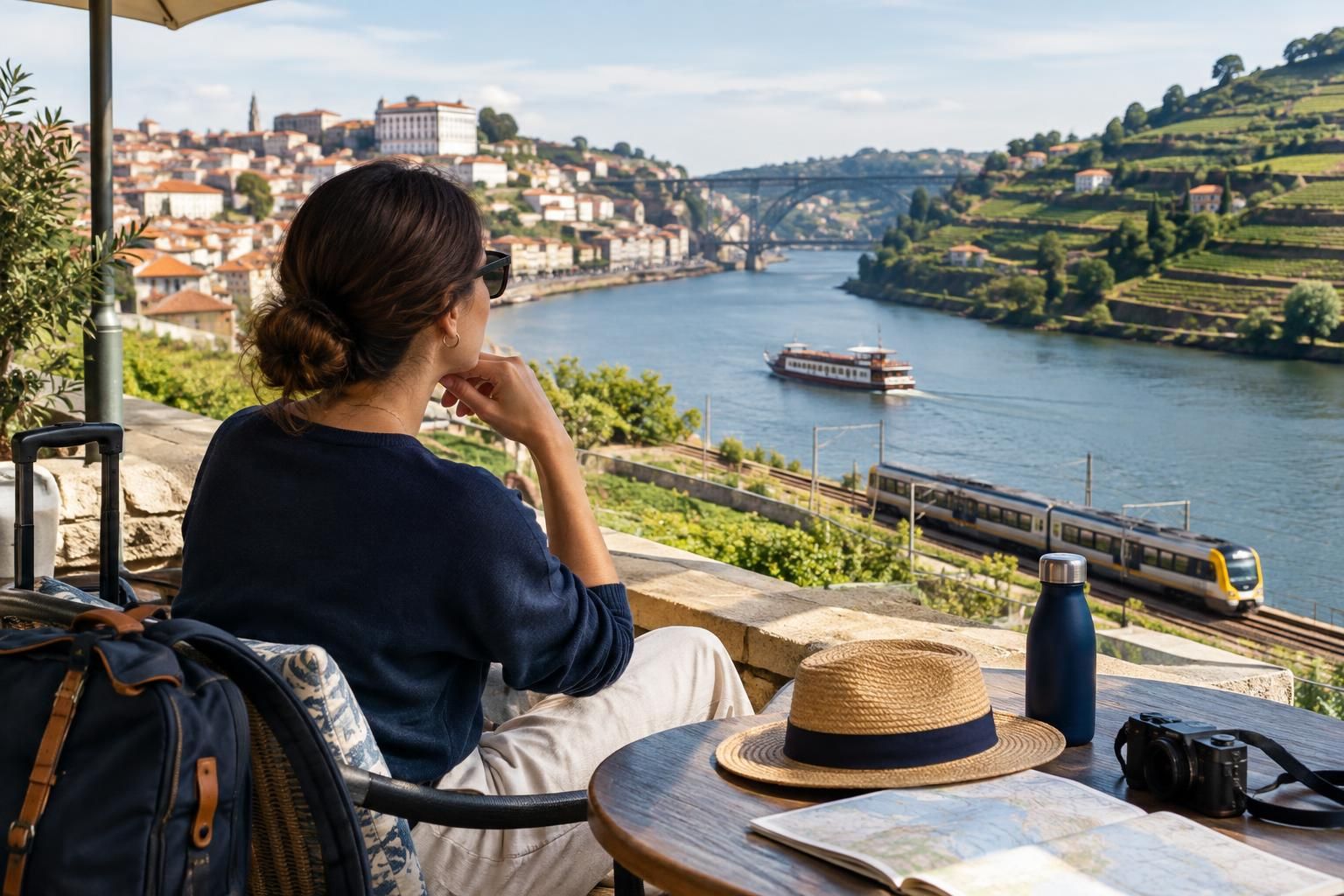
Porto and the Douro Valley make a rewarding pairing: an Atlantic-facing city of steep streets and tiled buildings followed by a landscape shaped by river bends and terraced vineyards. The planning challenge is not finding enough to do, but understanding how differently the two places work without a car. Porto suits neighborhood wandering and public transport; the valley rewards careful accommodation choices and fewer, better-organized outings. For a six-night trip, four nights in Porto and two beside the Douro offer a useful starting point, with enough time to experience both places without turning the holiday into a chain of transfers.
Decide what you want from the valley
Before choosing a rural hotel, decide whether the Douro portion is about looking at the landscape, visiting wine estates, walking, or simply slowing down. These goals lead to different bookings. A terrace overlooking the river may be ideal for reading and long meals, but inconvenient for independent sightseeing. A room in a town may offer fewer sweeping views while making meals and station access easier.
Wine need not be the focus. The railway journey, riverside villages, vineyard patterns and regional food can fill a short stay. If you do want estate visits, select one that genuinely interests you rather than collecting several similar tours. Confirm the visit format, language, access arrangements and transport before committing.
Use Porto as a compact city stay, not a day-trip launchpad
With four nights in Porto, give the city at least two full days. Group activities geographically: spend one day around the historic center and riverfront, and another exploring a different neighborhood or the waterfront toward Foz. Crossing to Vila Nova de Gaia offers a different perspective on the city and an opportunity to explore the traditions associated with port wine.
Porto’s hills matter when choosing accommodation. A short distance on a map can involve a substantial climb, especially with luggage. Compare the actual approach from your arrival point, check whether the building has a lift, and consider whether you would rather stay close to evening meals or transport. Avoid adding several regional day trips if the valley is already your second base.
Choose between a practical town and a secluded property
Peso da Régua and Pinhão are useful places to investigate for a rail-based valley stay. Régua suits travelers who value a town setting and a broader range of everyday services. Pinhão offers a smaller-scale setting among the vineyard landscapes many visitors associate with the Douro. Compare individual locations rather than assuming every property in either area is walkable from the station.
A countryside quinta, or estate property, can provide a more immersive rural stay, but being near the railway line does not necessarily mean easy access. Ask how guests reach the property, where they can eat without driving, and whether transport must be arranged in advance. A secluded room becomes less appealing if every meal requires another transfer.
Treat the railway journey as part of the experience
The Douro railway corridor offers an appealing way to approach the valley, particularly where the route follows the river east of Régua. Build the travel day around that journey rather than squeezing it between a major Porto attraction and a tightly timed rural activity. Check the timetable, departure station and any connection requirements for your dates before booking accommodation around an assumed arrival time.
Keep luggage manageable enough to carry through stations and along uneven streets. For the return journey, leave a comfortable margin before any onward flight or long-distance connection. If departure-day uncertainty would overshadow the valley stay, rearrange the six nights as three in Porto, two in the valley and a final night back in Porto.
Build one complete valley day with space around it
Two nights usually provide one full day in the valley, plus portions of the arrival and departure days. Give that full day a single anchor: a prearranged estate visit, a river excursion, or a guided landscape outing. Leave the remaining time for a slow breakfast, a town walk and an unhurried meal. Combining all three often creates more coordination than enjoyment.
Do not assume vineyard scenery automatically means easy independent walking. Terraces can be steep, roads may have limited pedestrian space, and paths may cross private land. Ask your accommodation for a clearly described route appropriate to your ability, including distance, elevation and return transport. A short, well-understood walk is more useful than an ambitious route chosen from photographs.
Budget for access and pack for contrasting settings
Compare the total cost of each valley property, not just its nightly rate. Include station transfers, transport to activities and realistic meal arrangements. A more central room can be better value than a cheaper rural stay that requires repeated paid journeys. Conversely, a secluded property may justify its cost if staying there is the main experience rather than merely a place to sleep.
Pack shoes with dependable grip for Porto’s sloping streets, a light waterproof layer and sun protection for exposed riverside areas. Seasonal conditions can change the feel of the trip: warmer weather favors shade and a gentler midday pace, while shorter days make early starts more useful. Check accommodation heating or cooling, outdoor facilities and meal arrangements against your own priorities rather than relying on scenic photographs.
A successful car-free Porto and Douro trip depends on matching the valley base to the holiday you actually want. Choose town convenience for independent movement, or accept planned transfers in exchange for rural seclusion. Keep one main activity for your full valley day, make the railway journey part of the pleasure, and preserve enough Porto time to enjoy the contrast.
AI-assisted evergreen travel guide. Featured image is an AI-generated illustration, not a specific product or booking.