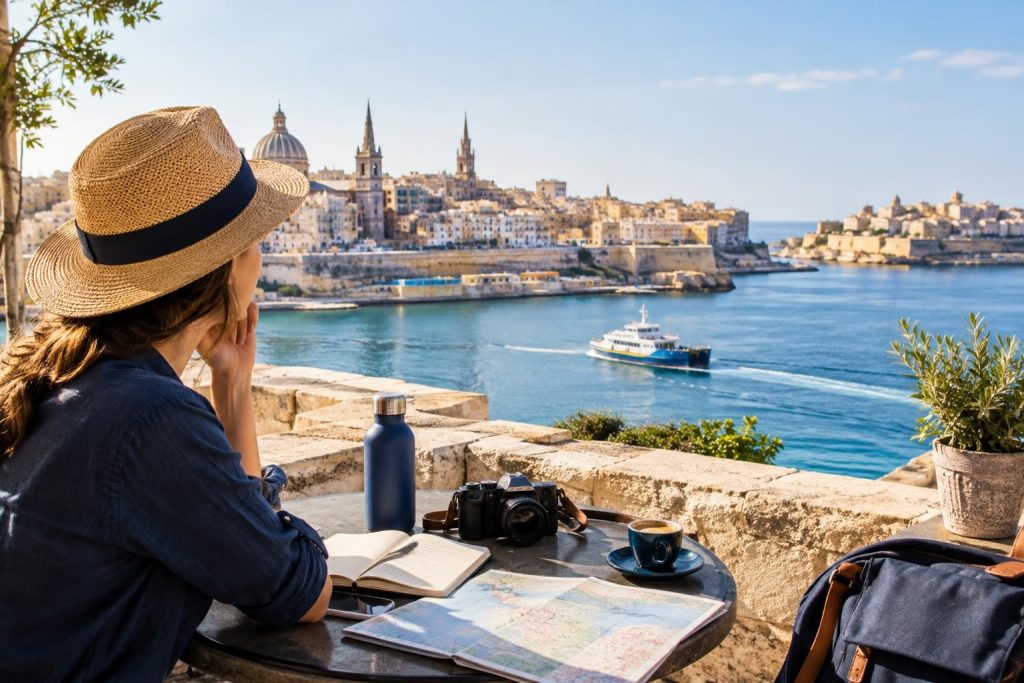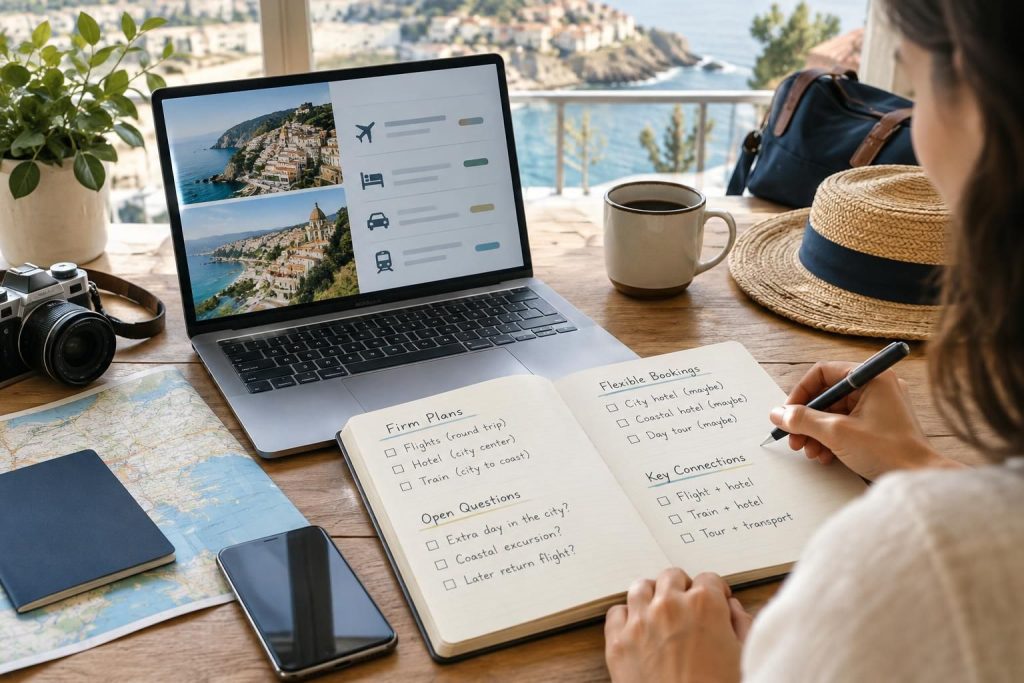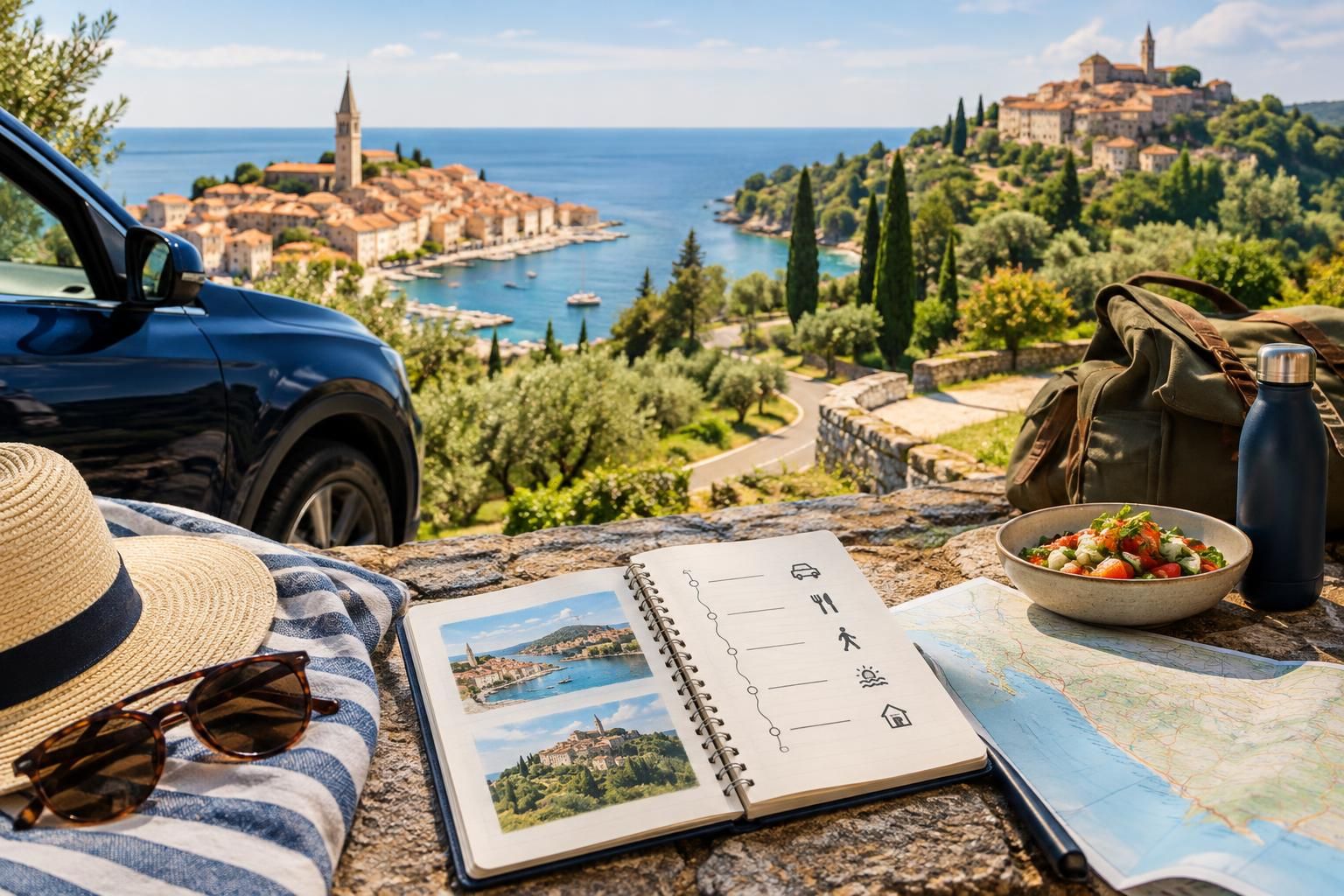
Croatia’s Istrian peninsula rewards travelers who look beyond a checklist of seaside towns. Its western coast offers compact historic centers and rocky waterfronts, while inland roads lead toward wooded slopes, vineyards and hilltop settlements. The contrast makes a satisfying week, provided you resist moving accommodation every night. A rental car is useful for linking smaller places, but it can become a burden inside old towns. Plan around two bases, manageable outings and accommodation with clearly explained parking, and the trip becomes less about navigating and more about enjoying where you have stopped.
Choose two bases that offer genuinely different days
For seven nights, a useful starting split is four nights near the western coast and three inland. Rovinj suits travelers who want waterfront walks and an atmospheric old center; Poreč is another option for combining historic streets with coastal outings. Choose one rather than treating both as essential overnight stops. The purpose of the coastal base is to have several days when the car can stay parked.
For the inland stay, consider Motovun, Grožnjan or accommodation in the countryside nearby. A hill-town address offers character and evening walks, but may involve steep approaches and carrying luggage. A rural property can make parking and outdoor downtime easier, though dinner may require a drive. If unpacking twice sounds unnecessary, choose one central base and accept that coastal evenings or inland dinners will need more planning.
Make parking part of the accommodation decision
Do not interpret an old-town address as convenient car access. Before committing, establish where the vehicle will actually stay, whether parking is included or separate, and how luggage reaches the entrance. Ask about steps, slopes and the walking surface between the parking area and your room. These details matter more than a small difference in room size, especially for families or anyone with limited walking stamina.
Compare a characterful central room with an apartment or guesthouse outside the historic core. The central option favors spontaneous walks and meals; the outer option may offer easier loading, more space and simpler departures. Check for cooling if traveling in warmer weather, and ask about stairs rather than assuming a lift. For a rural stay, distinguish between a village-edge location and somewhere that requires driving for every meal or errand.
Build the week around short clusters, not a peninsula-wide checklist
Keep arrival day local, then give your coastal base a full day before adding an excursion. From Rovinj, choose a separate outing to Poreč for its historic center and Euphrasian Basilica, or to Pula if Roman architecture is a priority. Trying to combine both with several scenic stops creates a day dominated by parking and navigation. Check visiting arrangements for any interior that is central to your plans.
Use the transfer inland as a travel day with one worthwhile stop, not as a spare sightseeing day. During the inland stay, pair a longer visit in Motovun with a shorter wander in Grožnjan, leaving another day for countryside stops or doing very little. Towns that look similar on a map can feel different at walking pace, but you do not need to see every hilltop to appreciate the landscape.
Plan driving days around the last few kilometers
In Istria, the approach to a historic center can require more attention than the main road journey. Narrow lanes, bends, slopes and unfamiliar parking arrangements all consume time. A smaller rental car may be easier to manage than a larger vehicle, provided it comfortably holds your passengers and luggage. Save accommodation access instructions before departure, and navigate to the designated parking area rather than automatically following directions to the front door.
Avoid using map distance alone to judge an outing. Allow room for finding parking, walking uphill and returning to the car, particularly when combining villages. Keep transfer-day luggage out of sight and avoid unnecessary stops with a loaded vehicle. If wine tasting is part of the trip, arrange suitable transport or designate a driver who will not drink; do not leave the decision until after ordering.
Balance stone streets, swimming and slower meals
Historic-town sightseeing can be surprisingly physical: polished paving, steps and exposed climbs reward supportive footwear. Alternate a concentrated morning walk with a waterfront lunch, a shaded break or time back at your accommodation. For coastal downtime, expect variety rather than assuming every swimming spot has sand and a gentle entry. Choose access that matches your group’s confidence and mobility, and assess local conditions before entering the water.
Food can provide structure without turning the week into a reservation schedule. Coastal menus offer opportunities to explore seafood, while inland meals can introduce pasta, mushrooms, olive oil and truffle-based dishes. Ask what is seasonal and how unfamiliar dishes are prepared. Schedule one leisurely meal as the day’s main event, with fewer stops around it. Travelers with dietary requirements should discuss ingredients rather than relying on a dish’s name.
Leave weather and energy some room to change the plan
Long, warm days favor early walks and unhurried evenings, while cooler periods can suit town exploration but make swimming less appealing. Coastal wind, rain and inland heat can each change what feels enjoyable. Keep one flexible day rather than assigning every outing in advance. An indoor cultural visit or a long lunch can replace a countryside walk without making the day feel wasted.
Pack for both halves of the trip: walking shoes, sun protection, a light weatherproof layer and swimwear if relevant. A small day bag is useful when the car is parked away from the center. Before departure, confirm rental conditions, route requirements and the access arrangements for each stay. Recheck any essential attraction or organized experience close to the visit rather than building the whole itinerary around an assumption.
A rewarding Istrian week does not require constant movement. Choose accommodation that makes arrivals easy, give the coast and interior distinct portions of the trip, and let one substantial outing anchor each day. The car then serves its best purpose: connecting places that would otherwise be awkward to reach, while leaving plenty of time to explore them on foot.
AI-assisted evergreen travel guide. Featured image is an AI-generated illustration, not a specific product or booking.