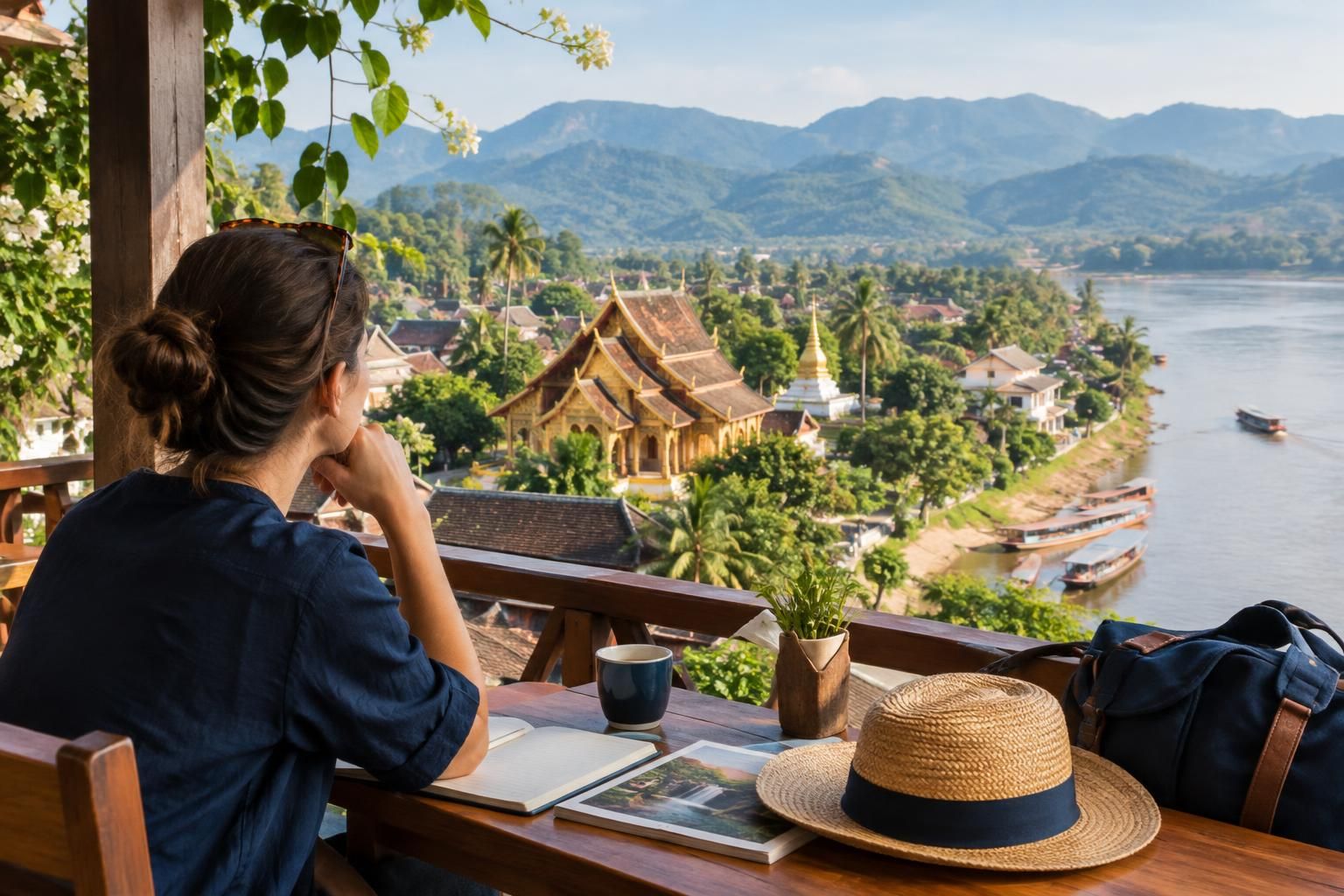
Luang Prabang rewards travelers who leave gaps in their itinerary. Set between the Mekong and Nam Khan rivers in northern Laos, the city combines temple compounds, traditional architecture, small cafés and riverside lanes in a compact setting. Its appeal is not just in individual sights, but in being able to walk out after breakfast without needing a full-day plan. Four nights gives you room for an arrival afternoon, a city-focused day, a countryside excursion and a day shaped by your interests and the weather. The key is to distinguish what is genuinely close together from what requires a separate journey.
Choose a Base for Everyday Walking
The old peninsula, between the two rivers, suits travelers who want temples, cafés and atmospheric streets within easy reach. It is a useful choice for a first visit, especially if you value returning to your room between outings. Compare the exact location rather than relying on an accommodation description that simply says central.
A property farther from the historic core may offer more space or a garden, but consider how often you would need transport. Riverside rooms can be appealing, yet a river view does not automatically mean quiet surroundings. Ask about nearby roads, evening activity, stairs and the route to reception. In warm or wet conditions, a comfortable room and a convenient location can matter more than decorative extras.
Give Arrival and Departure Their Own Breathing Room
Whether you approach Luang Prabang by air, rail or road, treat the final transfer as a separate part of the journey. Do not assume that reaching the airport or railway station means you have reached the walkable center. Establish your transfer arrangements and payment method before arrival, and keep your accommodation address available offline.
Make the first afternoon deliberately modest: check in, find a nearby meal and take a short riverfront walk. Save a distant excursion for a full day rather than attaching it to arrival. On departure, allow room for checkout, luggage collection and the onward transfer. Four nights feels much more generous when neither end of the stay depends on a tightly timed sightseeing commitment.
Build a Temple Day Around Contrasts, Not Numbers
Choose two or three temple visits with different settings instead of trying to enter every compound you pass. Wat Xieng Thong can anchor a peninsula walk, while another temple nearer your accommodation provides a quieter comparison. Leave time to notice rooflines, carved details and the relationship between religious buildings and the surrounding neighborhood.
Temples are places of worship rather than scenery alone. Carry a light layer that covers shoulders, choose clothing that covers knees and follow posted guidance about shoes, photography and access. Give ceremonies and worshippers space. If you encounter the morning alms tradition, avoid treating it as a performance or stepping into the procession for a photograph. Participation is not necessary for a meaningful visit.
Keep the Waterfall Excursion Flexible
Kuang Si is a natural choice for a countryside day, but plan it as an excursion rather than a quick stop between city sights. Compare a shared outing with a private vehicle: the former may suit a lower transport budget, while the latter gives you more control over departure and return. Clarify waiting time, pickup arrangements and what is included before agreeing.
Water levels, trail conditions and swimming access can vary, so avoid building the day entirely around a particular photograph or a guaranteed swim. Wear footwear with grip, take drinking water and bring a change of clothes if you hope to enter the water where permitted. If paths or pools are restricted, respect the signs and let the woodland walk be part of the experience.
Choose One River Experience With a Clear Purpose
The Mekong can feature in your stay without filling an entire day. Decide whether you mainly want time on the water, a particular destination or simply a riverside meal. A short boat outing and a longer journey to the Pak Ou caves are different experiences; choose according to your interest in the destination and your comfort with extended boat travel.
Before committing, ask about the boat layout, shade, boarding steps, flotation equipment, stops and the expected time away. Travelers with limited mobility should discuss boarding specifically rather than assuming a riverside departure is step-free. If a boat trip does not appeal, spend that time along the river instead. Watching everyday activity from a café or walking the bank is a valid alternative.
Leave One Day for Food, Crafts and Weather
Keep your final full day largely unbooked. You might browse textiles, arrange a cooking activity or return to a neighborhood you enjoyed. For a craft purchase, ask where and how an item was made rather than assuming every market stall sells locally produced work. A focused workshop can offer more understanding than several hurried shopping stops.
Plan outdoor walks for the more comfortable parts of the day, with an indoor break available when heat or rain changes your energy. Carry sun protection and a compact rain layer, and protect electronics from sudden showers. Choose meals with similar flexibility: try Lao dishes across several sittings rather than organizing every day around a food checklist. Leave room to repeat a favorite.
A satisfying Luang Prabang stay needs only a few anchors: a well-located room, a thoughtful temple walk, one countryside outing and an optional river experience. Keep the remaining hours open for meals, small discoveries and rest. Four nights then becomes more than a way to cover the main sights; it gives you time to enjoy the setting without constantly preparing for the next departure.
AI-assisted evergreen travel guide. Featured image is an AI-generated illustration, not a specific product or booking.