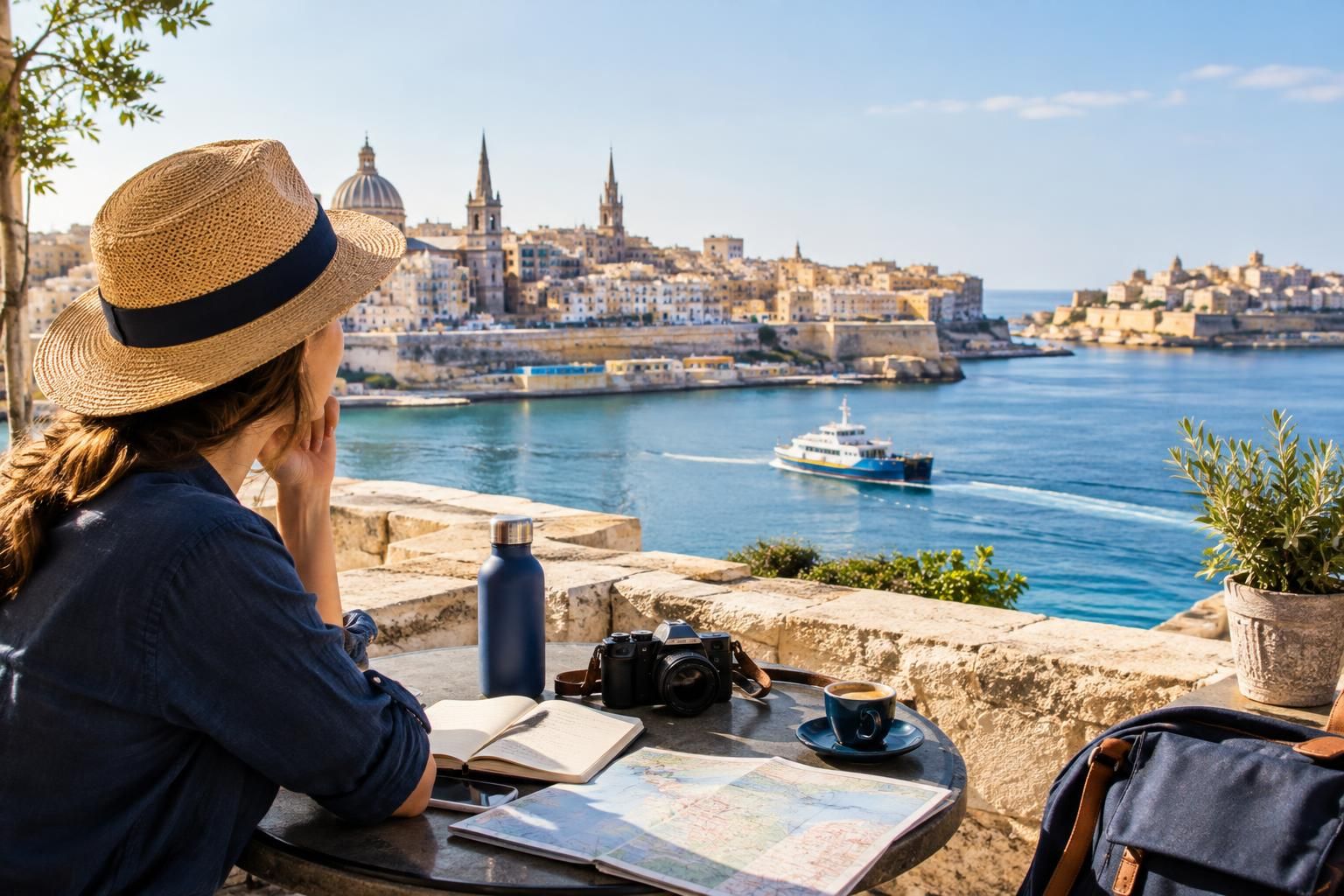
Malta’s compact size can make a week look easy to fill and even easier to overfill. Historic towns, fortified harbors, prehistoric sites and swimming spots sit relatively close together, but short distances do not always mean quick journeys. A rewarding car-free trip starts with a well-chosen base and days organized by area rather than by a checklist of attractions. For a first visit, Valletta and the neighboring harbor communities offer a strong foundation: plenty to explore locally, with opportunities to venture farther when the journey feels worthwhile.
Choose a base for the evenings you want
Valletta suits travelers who want to step outside into historic streets, visit cultural sights between breaks and return to their room before dinner. Its peninsula setting makes orientation straightforward, although slopes, steps and uneven paving can make a short walk more demanding than a map suggests. Compare the actual route from your accommodation to transport stops, not simply the distance.
Across the Grand Harbour, Birgu, Senglea and Cospicua, collectively known as the Three Cities, offer a different rhythm, with residential lanes and waterfront walks. Sliema is another option if a longer seafront promenade matters more than staying within an old fortified town. Before choosing, check how your likely evening journeys work: a picturesque harbor crossing is less useful if its operating pattern does not fit your plans.
Plan journeys by corridor, not by island size
Use buses as the backbone of a car-free itinerary, but avoid building days around several tightly timed connections. Road traffic, waiting and the walk between a stop and an entrance all add friction. Group nearby places into one outing: Valletta sights together, the Three Cities together, and Mdina with neighboring Rabat rather than with a distant coastal stop.
Where passenger ferries serve your route, they can make a harbor journey part of the experience. Check the relevant operator’s timetable and service notices before relying on a crossing, particularly for a fixed appointment. Keep a land-based alternative in mind and leave generous margins before flights or reserved visits. An occasional taxi can be a practical way to simplify an awkward connection without turning the whole holiday into a driving trip.
Give Valletta and the Three Cities separate days
Valletta rewards a day that mixes interiors with outdoor wandering. Choose one substantial cultural visit, such as St John’s Co-Cathedral or an art museum, then leave room for gardens, harbor viewpoints and side streets. Trying to fit every major interior into one day can turn the city into a sequence of admission queues and information panels.
Reserve another day for the Three Cities, beginning with Birgu’s lanes and waterfront before deciding how much farther to walk. The appeal lies partly in changes of scale: broad harbor views give way to doorways, balconies and narrow passages. Travelers interested in maritime or military history can add one focused museum visit; others may prefer a long lunch and time to sketch or take photographs.
Build a week with breathing room
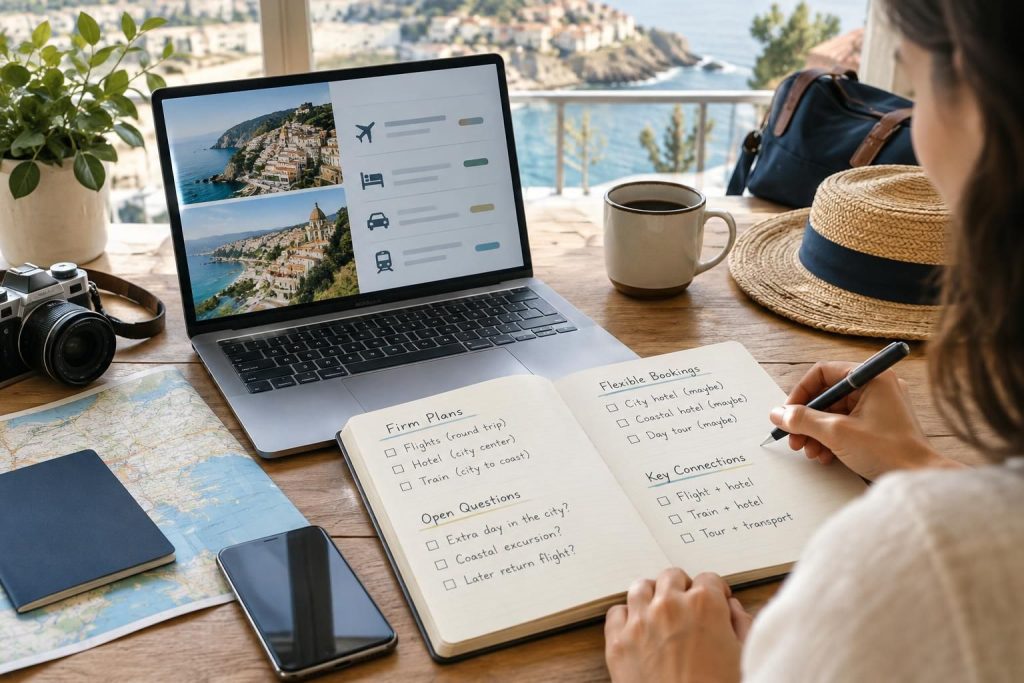
With seven nights and six full days, a balanced structure is two days for Valletta and the Three Cities, one for Mdina and Rabat, one for a prehistoric site or archaeology-focused outing, one for coastal scenery, and one flexible day. Keep arrival and departure days light. This gives the trip variety without requiring a major cross-island journey every morning.
For the archaeology day, choose a main site that matches your interests rather than attempting several widely separated locations. For the coast, decide whether you want a sandy beach, a rocky waterfront or a scenic walk; these are different outings with different footwear and transport needs. Gozo is best treated as a deliberate longer excursion, not a spare attraction to squeeze into an already full day. If it is central to your trip, consider whether a separate stay would serve you better.
Match walking plans to the season and terrain
Warm-weather sightseeing is more comfortable when exposed walks happen earlier or later in the day, with an indoor visit or proper rest in between. In cooler periods, wind and rain can make waterfront wandering less appealing, so keep a museum or leisurely meal as an alternative. Avoid making your only coastal day completely inflexible.
Pack shoes with dependable grip for polished stone, steps and uneven surfaces, plus sun protection, a refillable water bottle and a light layer for breezy crossings. If you have limited mobility, inspect accommodation access carefully: a lift inside a building does not resolve a stepped approach outside. Ask about the route from the street to the room, including entrance stairs and any changes of level.
Spend on convenience where it changes the day
Compare accommodation by the whole trip cost, not just the nightly rate. A cheaper room that requires extra journeys for breakfast, sightseeing and dinner may offer little practical saving. Useful details include nearby food shops, somewhere to sit during a midday break, and windows or outdoor space that suit your preferences for light and street noise.
Set aside separate budgets for cultural admissions, local transport and occasional convenience spending. Prioritize paid visits you genuinely want, then balance them with neighborhood walks and public viewpoints. At meals, look for Maltese dishes such as pastizzi, ftira and seasonal vegetable preparations, while checking ingredients for your dietary needs. Leaving some lunches undecided preserves flexibility when a neighborhood deserves more time than expected.
A successful car-free week in Malta depends less on covering the island than on arranging a few satisfying days. Choose a base that works after dark, group visits geographically and protect one flexible day. The result is room for both Malta’s major historic sights and the quieter pleasures between them: a harbor crossing, a shaded lane or an unhurried waterfront meal.
AI-assisted evergreen travel guide. Featured image is an AI-generated illustration, not a specific product or booking.