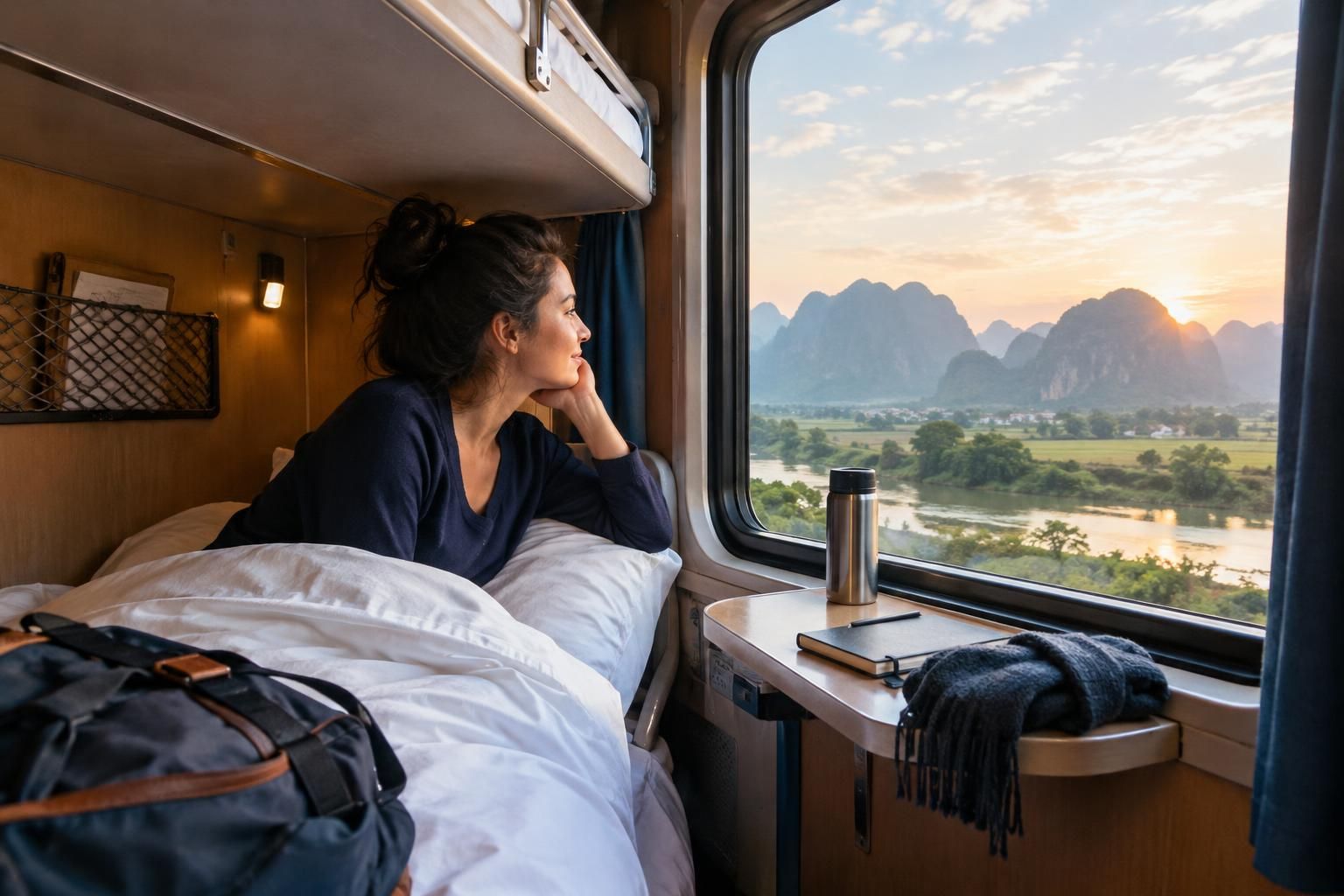
Vietnam’s long shape makes transport a central part of itinerary planning. An overnight train can turn a substantial transfer into part of the trip, with an evening departure, time to settle into a berth and a different landscape outside the window by morning. But it is not automatically the most restful or efficient choice. Cabin arrangements, station locations and the day after arrival matter as much as the journey itself. The best approach is to build one well-chosen sleeper journey into your route rather than treating every long distance as a chance to save a hotel night.
Choose the journey before choosing the sleeper
Start with the places you genuinely want to visit, then see whether a rail journey connects them sensibly. Hanoi, Dong Hoi, Hue, Da Nang and Ho Chi Minh City are useful points to consider along Vietnam’s main north–south rail corridor. They are not interchangeable stops: Hue suits a history-focused stay, Da Nang can serve coastal plans, and Dong Hoi may be an arrival point for onward travel toward Phong Nha.
Compare the complete transfer, not just time aboard. Include getting to the departure station, waiting, reaching your accommodation and any onward road journey. A train arriving in a city you do not intend to explore may add another transfer before your holiday resumes. Choose a segment that fits naturally between two substantial stays.
Also decide whether your priority is sleeping or scenery. Darkness hides much of the route, so an overnight journey is a poor substitute for a particular coastal or countryside view. If the landscape is the attraction, consider a daytime leg and keep the overnight option for a different stretch.
Read cabin descriptions rather than relying on labels
Sleeper terminology can make different arrangements sound more similar than they are. Before booking, check the number of berths in the compartment, whether your place is a bed or a reclining seat, and which berth position you are selecting. Where offered, fewer-berth compartments may feel less crowded, but no cabin description can promise quiet companions or uninterrupted sleep.
A lower berth usually reduces climbing and makes it easier to reach your belongings. An upper berth may suit someone who prefers to settle out of the way, provided the access is comfortable for them. Travelers with restricted mobility should look closely at boarding steps, aisles, ladders and toilet access rather than assuming a sleeper carriage will meet their needs.
Couples, families and friends should check whether the booking places them together. Buying several tickets does not necessarily mean exclusive use of a compartment. If privacy is important, establish how full-compartment reservations work for the specific service before committing.
Build the arrival day around uncertain sleep
The most useful sleeper-train decision may be what you do after getting off. Avoid placing a demanding excursion, long hike or tightly timed connection immediately after arrival. Movement, corridor noise, light and unfamiliar bedding can interrupt sleep even when the journey goes smoothly.
Plan a gentle first half-day: breakfast, luggage storage, a short neighborhood walk and somewhere comfortable to pause. Ask your accommodation about its check-in arrangements and whether bags can be left beforehand, without assuming an early room will be available. If immediate access to a room is essential, discuss an appropriate booking arrangement in advance.
For a short holiday, one overnight journey between longer stays is often easier to absorb than repeated sleeper nights. A room saved is not necessarily a day gained if everyone needs the following afternoon to recover.
Pack a small overnight kit inside your main luggage
Organize your belongings so that boarding does not require opening a large suitcase in a shared compartment. Keep a change of clothes, basic toiletries, tissues, an eye mask, earplugs and a light layer in a smaller bag. Temperature preferences vary, and a layer is easier to adjust than the carriage environment.
Bring drinking water and a simple snack rather than making your comfort depend entirely on onboard purchases. Keep medication and essential personal items accessible. A charged phone and a compact power bank can be useful, but avoid making access to a socket central to your plan.
Choose luggage you can lift and maneuver yourself. Storage space and its position vary, so a bulky rigid case can be awkward even when it technically fits. Keep valuables in a small bag under your control, and leave shoes and loose items where they will not obstruct the aisle.
Make boarding and shared space straightforward
Confirm the departure station, travel date and passenger details carefully, especially for journeys leaving near midnight. Have the booking information accessible offline and allow time to identify the correct carriage without rushing. Use the station named on your ticket rather than assuming the most familiar station name is correct.
Once aboard, arrange your bedding and belongings before settling in. Keep conversations quiet, use headphones and limit bright screens when others are sleeping. Shared cabins work best when everyone can reach their berth and the door without navigating another traveler’s unpacked bags.
Know when another transport choice fits better
A sleeper train is worth considering when the journey itself appeals, the stations suit your route and you can tolerate an imperfect night. It may be a poor fit if climbing into a berth is difficult, uninterrupted sleep is essential or your next day has an inflexible commitment.
Compare rail with a daytime journey or a flight using the same door-to-door approach. Include transfers, accommodation needs and recovery time, not merely the fare. Keep some space between a rail arrival and an important onward departure; combining separate tickets into a tight connection can turn a manageable delay into a major disruption.
A successful overnight train journey in Vietnam begins with realistic expectations. Choose a useful route, understand the sleeping arrangement and protect the morning after arrival. With a compact overnight kit and a flexible first day, the train can become a memorable part of traveling between places rather than simply a night of transport to endure.
AI-assisted evergreen travel guide. Featured image is an AI-generated illustration, not a specific product or booking.