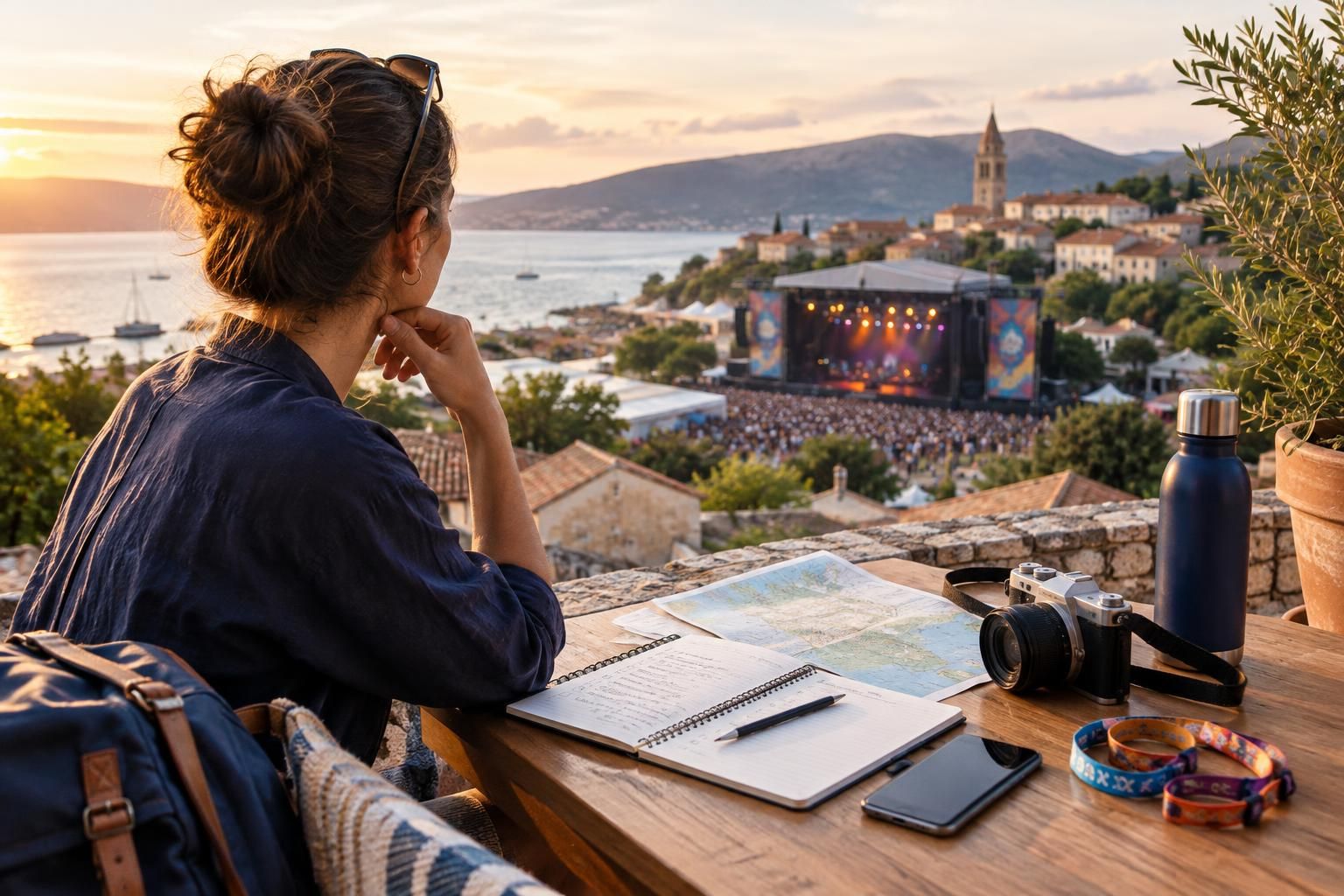
A festival gives a trip an immediate focus: performances to anticipate, unfamiliar food to try or a local tradition to understand. It can also pull every planning decision into its orbit, leaving little room for the destination itself. The most satisfying approach is to treat the event as an anchor rather than a complete itinerary. Whether you are considering a film festival, a regional food celebration or several days of live music, decide how much of the experience you actually want before organizing the rest of your holiday around it.
1. Define the experience you are traveling for
Start with a short statement of purpose. You might want to see two favorite performers, sample regional cooking or experience the atmosphere of a traditional celebration. These are different trips, even if they happen at the same event. A narrow goal helps you distinguish essential reservations from optional extras.
Choose your level of participation: one featured day, several selected sessions or full immersion. For a hypothetical five-night break, two festival days might leave enough room for arrival, neighborhood exploring and a slower day afterward. Do not assume that the longest pass offers the best value for your interests or stamina.
If you are traveling with others, ask each person to identify one priority and one limit. Someone may love evening performances but dislike spending entire afternoons in crowds. Agreeing on this early makes separate activities easier to arrange without disappointment.
2. Match the event format to your wider itinerary
A compact event in one venue works differently from a citywide program spread across theaters, squares and exhibition spaces. Before choosing accommodation, understand the basic geography: where your likely activities take place, whether you must travel between them and where your day will probably finish.
For a multi-venue event, group activities by area rather than chasing every appealing session. Two screenings near each other with a meal between them may make a better day than three screenings separated by repeated cross-city journeys. Account for entry procedures, queues and the time needed to leave a crowded venue.
Keep at least one destination experience independent of the festival. A waterfront walk, an architectural neighborhood or a regional excursion gives the holiday another dimension. Place anything requiring concentration or an early departure away from your most demanding event day.
3. Check ticket conditions before committing to the trip
Treat event access, transport and accommodation as connected decisions. Before making substantial nonrefundable commitments, establish what admission covers and how entry works. A general pass may not necessarily include every session, reserved seating, workshops or special performances; read the terms for the particular event.
Useful questions include whether individual activities need separate reservations, whether leaving and returning is permitted, and whether tickets are tied to a named attendee. If your main reason for traveling is one specific appearance, consider whether the trip would still appeal if the program changed.
Separate your budget into core travel costs, event costs and daily spending. Include the less obvious items: travel between venues, meals bought near the event, storage if needed and optional activities. Set a limit for extras before an exciting program turns every addition into an apparent necessity.
4. Choose accommodation for the journey home
For event-focused travel, the return journey often matters more than the morning journey. Compare accommodation using the route from your final likely venue, not simply its distance from the city center. A place that looks close on a map may involve an awkward crossing, a steep walk or several transport changes.
Decide which trade-off suits you: staying near the action for simpler returns, or choosing a quieter base with more separation from the event. Look at the property's location in relation to venues and gathering areas, and ask specific questions about room position if noise is a concern.
Before booking, check transport arrangements for your intended dates and likely finishing times. Identify another workable way back if your preferred option does not suit. If driving is part of the plan, investigate parking arrangements rather than assuming you can leave a car beside the venue.
5. Build breathing room into event days
Plan around blocks of activity rather than filling every hour. A useful rhythm is one main event block, one proper meal break and one optional activity. Leave room for walking, finding entrances and simply deciding what you want to do next.
Pack for the format and conditions, while checking the event's own entry restrictions. Depending on the setting, useful items might include comfortable footwear, a light layer, weather protection, hearing protection or a charging cable. Avoid carrying everything you might need if storage is uncertain.
Give travel companions permission to split up and choose a clear meeting point. Download essential booking details and agree on a simple reunion plan if messages are delayed. These small arrangements reduce the need to coordinate constantly.
6. Leave space to enjoy the destination afterward
Avoid pairing your latest festival night with your most complicated departure if you have a choice. A slower final morning or an extra night can create a more comfortable finish, but weigh that benefit against the additional accommodation and daily costs.
Use your non-event time for a change of pace rather than another demanding checklist. After several indoor screenings, choose a garden or an unhurried outdoor lunch. After a busy street celebration, explore a quieter neighborhood. Contrast helps the trip feel varied without requiring more elaborate planning.
A well-planned festival trip does not require attending everything. Choose the experiences that justify the journey, organize accommodation and transport around your actual event days, and protect some time for the place beyond the program. You will have a clear reason to go without making the whole holiday depend on a packed schedule.
AI-assisted evergreen travel guide. Featured image is an AI-generated illustration, not a specific product or booking.