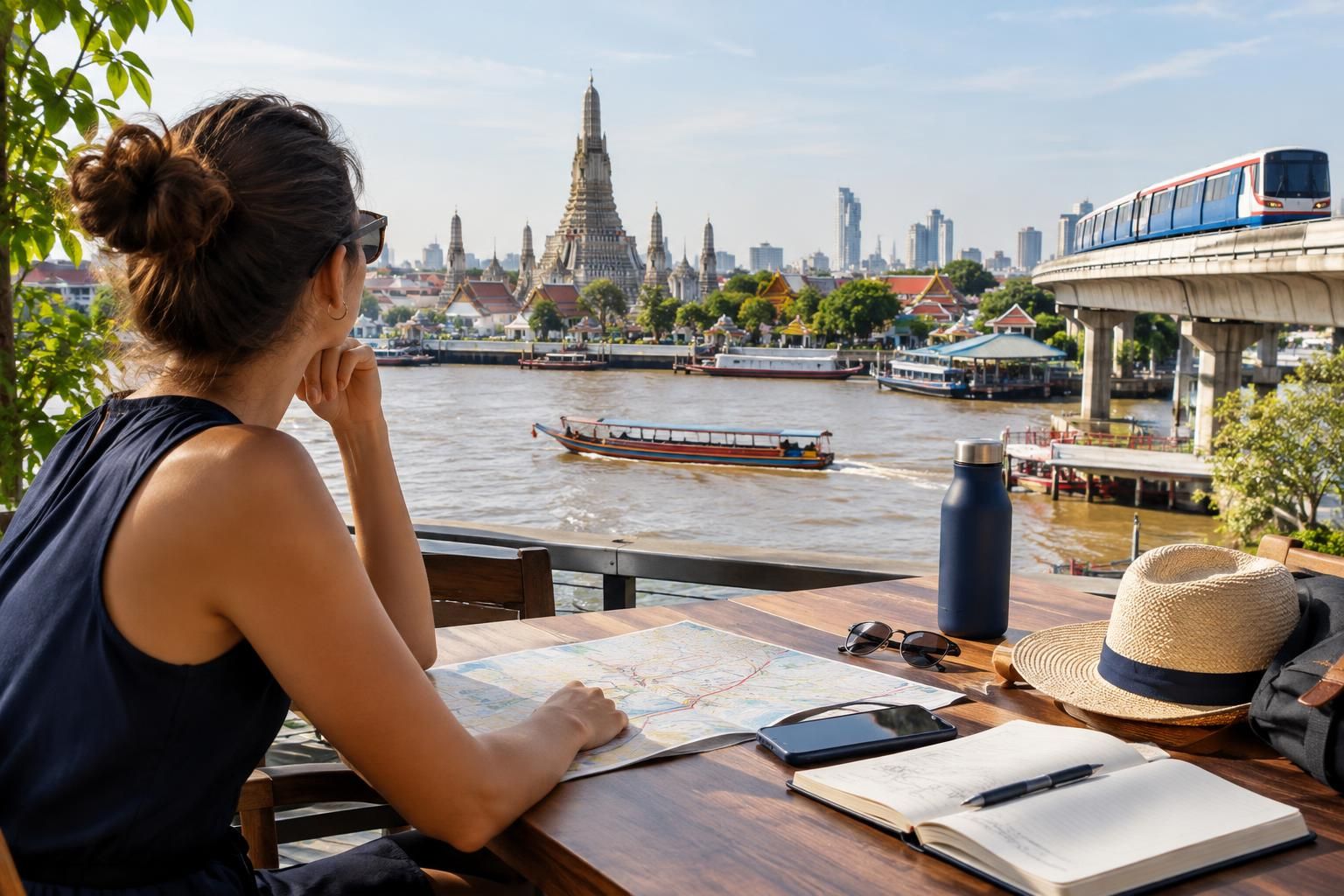
Bangkok becomes easier to enjoy when you stop treating it as a single sightseeing zone. Riverside temples, shopping districts, food streets and residential neighborhoods do not always connect neatly on foot, even when they look close on a map. A stay built around rail and selected boat journeys can reduce dependence on road traffic while making transport part of the experience. The key is not to avoid taxis entirely, but to choose a well-connected base, group outings geographically and recognize when a short ride is worth more than another complicated transfer.
Choose your base around the journeys you will repeat
Start with your priorities rather than a list of hotel neighborhoods. If your plans lean toward shopping, restaurants and exploring contemporary Bangkok, a base near useful BTS Skytrain or MRT connections can simplify daily travel. If riverside scenery and historic districts matter most, consider accommodation with a practical walk to a passenger pier. A river view is attractive, but it does not automatically mean convenient boat access.
Siam and nearby rail-linked areas suit travelers who want a central shopping-and-dining base. Silom and Sathorn can work for a mix of city outings and river access, depending on the exact address. Riverside accommodation offers a different atmosphere, while an old-city stay puts some cultural sights closer but may involve more varied transport. Compare specific locations rather than assuming an entire district has the same convenience.
Before booking, trace the actual walk from the station or pier entrance to the property. Check whether it involves a major road crossing, stairs, an indirect route or a long exposed stretch. For a short stay, an uncomplicated walk can matter more than a larger room farther from transport.
Understand what each transport option does well
Use rail for longer city crossings where both ends sit near stations. It gives the day a clear structure: travel to one neighborhood, explore it, then move on deliberately. Avoid choosing an attraction simply because it appears beside a line on a simplified map; the station exit and final walking route still matter.
Treat river boats as transport with a scenic bonus, not as one interchangeable service. Cross-river ferries, boats making multiple river stops and sightseeing-oriented services serve different purposes. At the pier, confirm the destination, direction, stopping pattern and fare arrangement before boarding. Do not assume a rail payment method also works on a boat.
Keep road transport as a useful fallback for luggage, tired legs or an awkward final connection. A route requiring two rail changes and a long walk may not be the best choice for every traveler. The aim is a manageable trip, not perfect loyalty to one mode of transport.
Build days around clusters, not citywide checklists
Give each full day one main geographic focus. A historic riverside day might combine a major temple visit, lunch nearby and a cross-river outing. A modern-city day could center on a gallery or shopping district, a relaxed meal and an evening neighborhood walk. Leave distant attractions for another day rather than repeatedly crossing the city.
For a four-night visit, think in three flexible sightseeing days: one for the river and historic areas, one for rail-connected neighborhoods, and one shaped around a personal interest such as food, design or markets. Arrival and departure time can then remain useful breathing space rather than carrying essential sightseeing.
Choose one anchor activity each day and make the rest optional. A temple complex can take more energy than expected, and a good lunch may turn into a long break. With fewer fixed commitments, you can linger without feeling that the entire itinerary is slipping.
Treat walking distance and weather as planning factors
Bangkok walking is best planned in short, purposeful stretches. Heat, humidity, uneven surfaces, road crossings and limited shade can make a modest map distance feel demanding. Rather than linking every stop on foot, create small walking loops with a clear place to pause.
Pack a compact umbrella, sun protection, comfortable footwear and a small day bag. Keep electronics and important belongings protected from rain and incidental splashes around piers. For temple visits, carry clothing that can provide additional coverage and check the requirements of each site rather than assuming one outfit suits every setting.
Place exposed sightseeing in the part of the day that best suits the conditions, and keep an indoor alternative nearby. A café, museum or shopping complex can provide a useful break, but account for the journey there. A weather backup across town is less helpful than a modest option within the same area.
Choose accommodation for recovery as well as access
A good Bangkok base should make returning for a break feel realistic. If reaching the hotel requires several connections, you may stay out longer than you enjoy. Travelers sensitive to noise should also consider the room’s position relative to busy roads, nightlife and shared spaces, rather than judging the property only by its neighborhood.
Look closely at air-conditioning, lift access, room layout and luggage arrangements. Families may value space to rest between outings; solo travelers may prefer a straightforward station-to-door route. If a property advertises a shuttle or boat connection, check its operating details and alternatives before making it essential to your plans.
Leave room for food stops and an uncomplicated departure
Food works best as part of the neighborhood you are already exploring. Save a few possibilities around each day’s main stop rather than building a route around scattered meals. This also leaves room to choose based on appetite, seating, weather and how much energy you have left.
Plan the departure journey separately from sightseeing. Confirm which airport or terminal you need, compare the full door-to-door route and account for luggage, transfers and walking. Keep the final outing close to your accommodation or departure route. One last relaxed meal is often a better ending than a distant attraction followed by a rushed return.
A rewarding Bangkok itinerary does not need to eliminate traffic or connect every landmark. Choose a base with genuinely useful access, let each day stay within a manageable area and use boats, rail and occasional road journeys according to their strengths. That structure leaves more attention for the city itself: river views, neighborhood meals and the discoveries between planned stops.
AI-assisted evergreen travel guide. Featured image is an AI-generated illustration, not a specific product or booking.