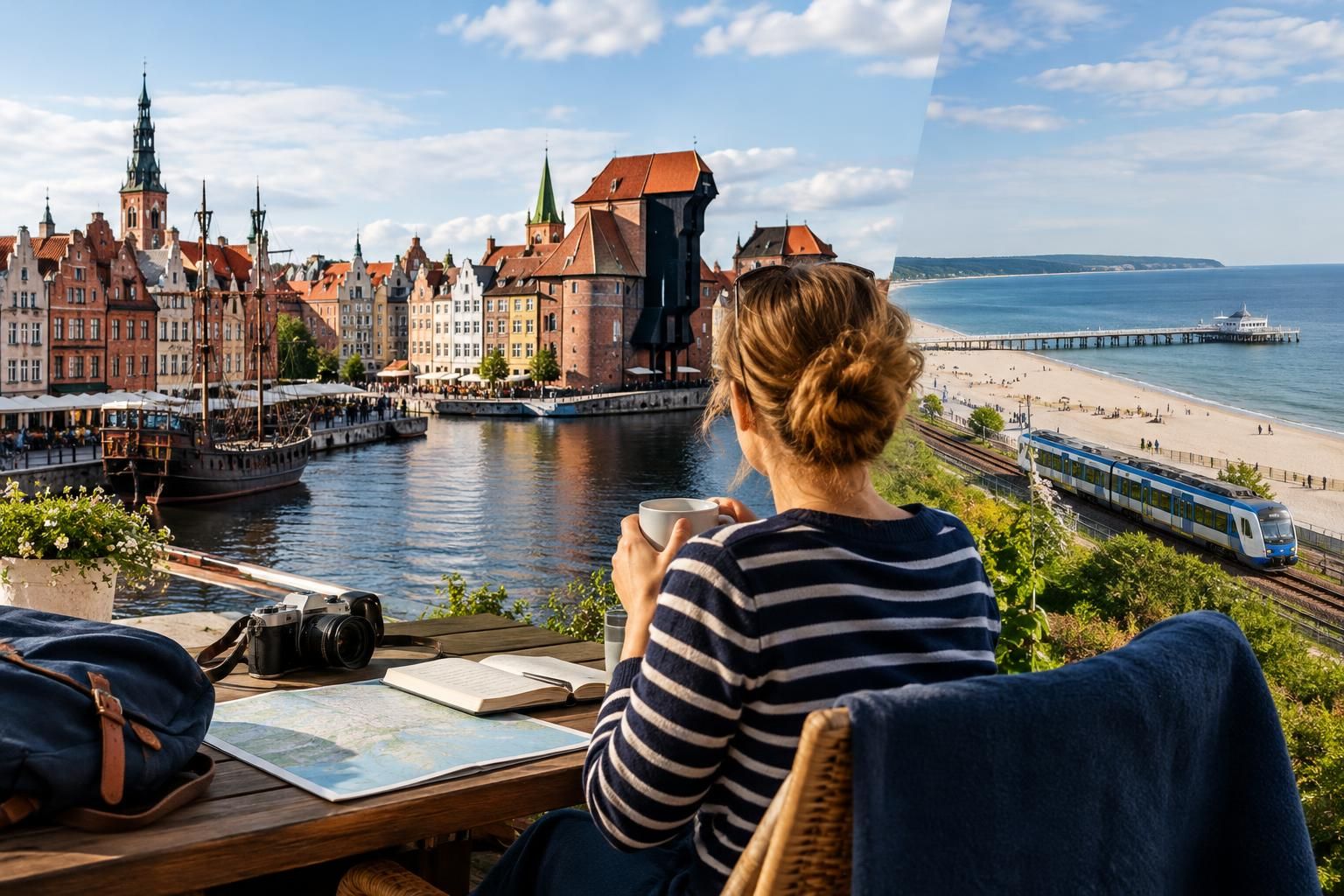
Gdańsk makes a rewarding base for travelers who want architecture, substantial history and time beside the sea without moving hotels. Its appeal lies in the contrasts: ornate merchant houses and working waterfronts, major museums and neighborhood cafés, city sightseeing and wide Baltic beaches. Nearby Sopot and Gdynia offer different versions of coastal life rather than more of the same. For a five-night visit, the most useful decision is not how much of northern Poland to include, but how to balance these experiences. Build the trip around Gdańsk, give the coast a full day and keep one day flexible.
Choose a base for evenings, not just sightseeing
For a first visit, staying in or near the historic center makes it easy to explore in short sessions and return after dinner on foot. Much of the postcard architecture belongs to the Main Town, or Główne Miasto; accommodation descriptions sometimes use broader labels. Check the actual map position rather than assuming that every property described as central offers the same walking convenience.
A waterfront address can be atmospheric, but consider noise, bridge crossings and the route from your arrival station. If regional outings matter more than evening scenery, look at accommodation with a straightforward connection to Gdańsk Główny or the rail corridor through Wrzeszcz. For apartments, check lift access, stairs, curtains and kitchen equipment individually. An attractive historic exterior does not tell you how comfortable the room will be.
Give the historic center time without making it the whole trip
Use your first full day for orientation rather than a checklist. Link the Long Market, the lanes around St Mary’s Church and the Motława waterfront, then leave the main sightseeing streets for a quieter café or side-street wander. Gdańsk rewards looking upward at façades and noticing its relationship with the river, so allow more time than the distances suggest.
The center’s appearance also invites a useful historical question: what was rebuilt, and why? Much of its historic fabric was reconstructed after wartime destruction. Approaching it as both a merchant city and a reconstructed city adds depth to the walk. Choose one interior visit that interests you rather than entering every landmark simply because it lies along the route.
Separate the major history visits
The Museum of the Second World War and the European Solidarity Centre address different but demanding chapters of history. The former explores the war and its wider human consequences; the latter focuses on the Solidarity movement and the struggle against communist rule. If both appeal, place them on different days. Each deserves attention rather than a hurried slot between meals.
Pair a substantial museum visit with something undemanding afterward: lunch, a waterfront walk or unstructured time back at your accommodation. Around the former shipyard, distinguish public visitor areas from working premises and follow posted access information. Travelers with children, or anyone sensitive to difficult material, can consider the subject matter and likely attention span before committing to a long exhibition visit.
Choose a coastal day that matches your interests
Sopot is the natural choice for a resort-town outing: think beach walking, seaside architecture and time around the pier area. Gdynia has a more modern maritime character, with a city waterfront and port-related interests. For a first five-night stay, choose one as the main excursion rather than treating both as compulsory stops on a single rushed circuit.
You can also reach the sea without leaving Gdańsk’s urban area. Brzeźno or Jelitkowo can suit a simpler beach afternoon, depending on your base and transport preferences. Plan the coast as an outdoor experience, not a promise of swimming weather. A long walk, a warm drink and lunch can make a satisfying day even when the Baltic looks more dramatic than inviting.
Use public transport, but budget for the complete journey
Regional rail links Gdańsk, Sopot and Gdynia, while local buses and trams help connect city neighborhoods and coastal areas. When comparing routes, count the walk to the stop, waiting, any interchange and the final stretch to the beach or museum. A short train ride can still occupy a substantial part of the morning once these pieces are included.
Check the relevant operator, ticket coverage and validation method before traveling rather than assuming one ticket works across every service. Keep your arrival day simple, especially with luggage. A compact suitcase or backpack is easier to manage on uneven paving and station stairs, and leaving bags at your accommodation before sightseeing is usually more pleasant than carrying them through the historic center.
Build five nights around weather and energy
A workable outline is an arrival-evening stroll, a historic-center day, a museum-and-shipyard day, a coastal outing and one flexible full day before departure. Use that final day for the second major museum, another neighborhood or the seaside visit you postponed. Avoid filling the spare day in advance: it is what lets the itinerary adapt without losing an experience you care about.
Pack layers, a wind-resistant outer layer, rain protection and comfortable walking shoes. For food, alternate sit-down meals with simpler lunches, trying pierogi, soups or fish according to your tastes rather than making every meal an event. Set aside separate budget categories for accommodation, transport, museum admissions and discretionary seaside spending; this makes trade-offs clearer than a single daily target.
The strongest Gdańsk itinerary gives equal respect to the city’s history and its coastal setting. Stay in one well-chosen base, separate the most absorbing museum visits and make room for an ordinary beach walk. Five nights allow you to explore beyond the famous façades without spending the whole break in transit.
AI-assisted evergreen travel guide. Featured image is an AI-generated illustration, not a specific product or booking.