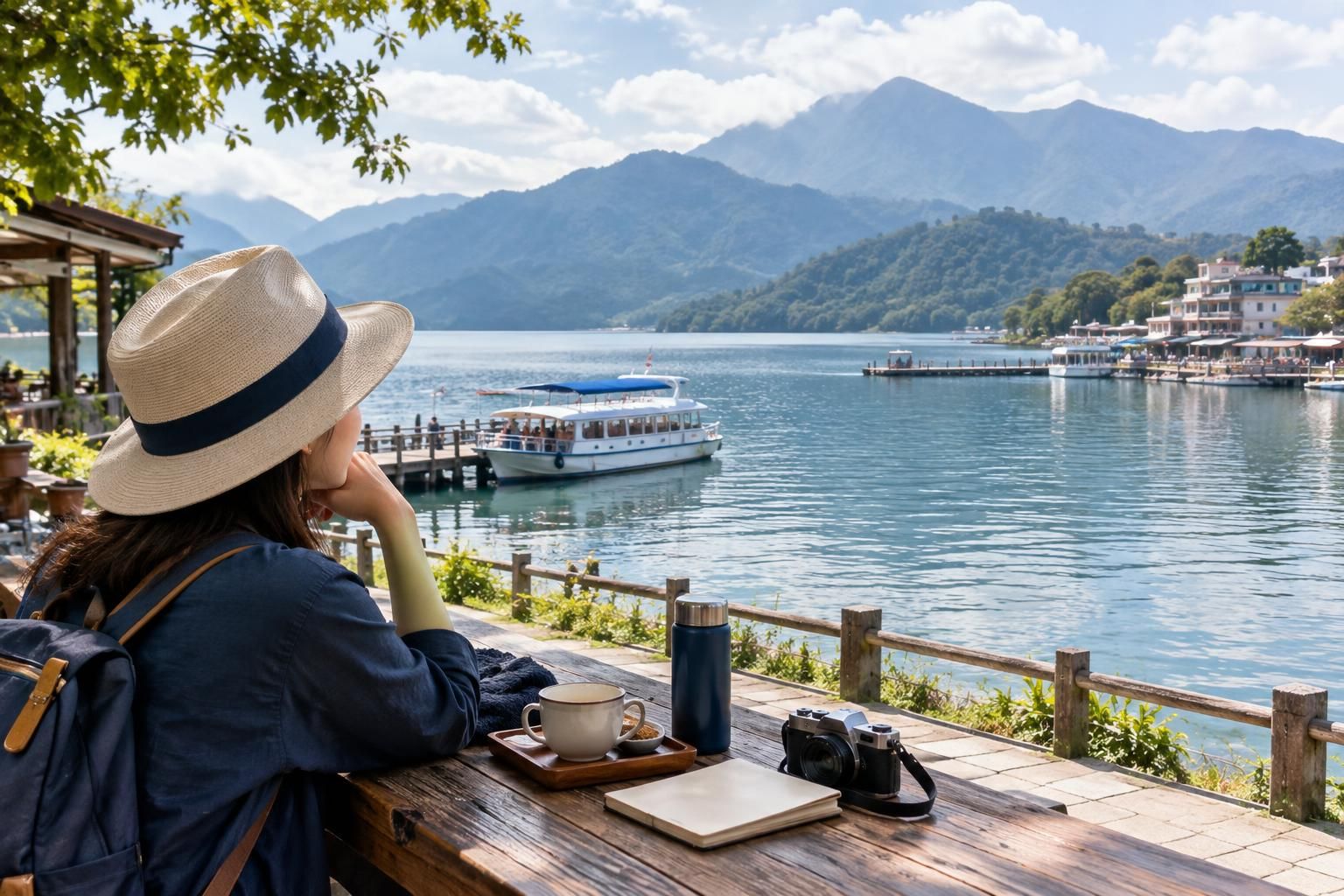
Taiwan’s Sun Moon Lake works best as more than a photograph between longer journeys. Forested slopes, waterfront paths, temples and tea stops give a two-night stay a satisfying rhythm, especially if you resist trying to circle the entire lake. Traveling without a car can suit that slower approach, but it helps to understand that boats, buses and walking routes serve different purposes. Choose a practical base, group nearby sights together, and treat the lake as somewhere to spend time rather than a circuit to complete.
Decide whether two nights fit your wider Taiwan route
Two nights allow an arrival afternoon, one full day and a final morning. That is enough for a few contrasting experiences: a lakeside stroll, a boat journey if services suit your plans, and a temple or tea-focused outing. Add a third night if you want longer walks, enjoy slow mornings, or prefer having another chance at outdoor activities after rain.
Taichung is a useful gateway to consider when fitting the lake into a western Taiwan itinerary. Check the actual departure point for your onward connection: the high-speed rail station and the central railway station are separate places. Compare the whole journey from your previous accommodation to your lakeside room, including transfers and waiting, rather than comparing only the fastest train segment.
Choose between Shuishe and Ita Thao
Shuishe is a logical starting point for travelers who prioritize straightforward arrival logistics and access to the western side of the lake. Ita Thao, on the southeastern shore, offers a different village setting, with food browsing and access toward the ropeway area. Neither base removes the need to plan transport, so choose according to the places you most want to spend time.
Check a property's precise position rather than relying on a lake-view description. A room above the waterfront may involve a steep approach, while accommodation outside either village may require additional transport for dinner. Look for clear information about steps, lifts, luggage storage and the walk from your arrival stop. For a short stay, a convenient room can be more useful than a dramatic view.
Use boats, buses and walking for different jobs
Think of lake transport as a collection of links, not a single seamless sightseeing loop. Boats can connect selected waterfront areas and provide a different perspective on the surrounding hills. Buses may be more useful for particular road-accessible sights. Before committing to an outing, check current routes, boarding points, ticket conditions and return options; do not assume every ticket covers every service.
Build each day around one main area and, at most, one substantial move. For example, explore near your accommodation in the morning, then cross to another lakeside area if boat operations and the return journey work. Keep enough flexibility to return by a different mode when practical, and avoid making the final departure of the day essential to reaching your room.
Choose a short waterfront outing instead of a full circuit
The lake's cycling reputation can make a complete circuit sound like the obvious activity, but road sections, gradients and mixed traffic make route selection important. If your goal is scenery rather than distance, choose a shorter designated lakeside segment, such as a section toward Xiangshan from Shuishe, and turn back while the outing still feels comfortable. Walking is an equally valid choice.
If renting a bicycle, ask which parts of your proposed route use separated paths and which join roads. Check bicycle fit, brakes, return arrangements and any restrictions relevant to the route. Carry water and rain protection, and allow time for stops without calculating your return from riding speed alone. Travelers with different energy levels can share a short outing rather than commit to a demanding loop.
Give temples, tea and local culture their own time
Wenwu Temple can provide a contrasting outing to the waterfront, with its hillside position and architectural detail. Plan the journey and account for steps rather than assuming it is a casual extension of a lakeside stroll. At religious sites, follow posted guidance, keep voices considerate and ask before photographing ceremonies or individuals.
Sun Moon Lake is also connected with the Thao Indigenous community and the tea-growing landscapes around Yuchi. In Ita Thao, approach cultural displays and locally offered experiences as opportunities to learn, not merely backdrops for photographs. For a tea visit, establish whether you are arranging a tasting, a shop stop or a farm experience. These involve different amounts of travel and advance coordination.
Build a weather-flexible three-day outline
On arrival day, settle in, locate your transport stops and take a short walk near your base. Use the full middle day for your priority outdoor activity, then add one nearby experience if energy and conditions allow. Keep departure morning local: breakfast, a final waterfront stroll or a tea purchase fits better than an outing dependent on several connections.
Pack grippy walking shoes, a light rain layer, sun protection and a small day bag. Mist may soften distant views without spoiling a village visit, while heavier rain or disrupted services may call for a simpler day. Keep meals and indoor breaks flexible, protect your onward connection, and avoid treating a prepaid activity as a reason to ignore uncomfortable conditions.
A rewarding car-free Sun Moon Lake stay depends less on covering the shoreline than on making a few good choices. Stay near useful transport, select manageable walks, and give one or two experiences room to unfold. Two nights can then feel like a genuine lakeside pause rather than an extended transfer.
AI-assisted evergreen travel guide. Featured image is an AI-generated illustration, not a specific product or booking.