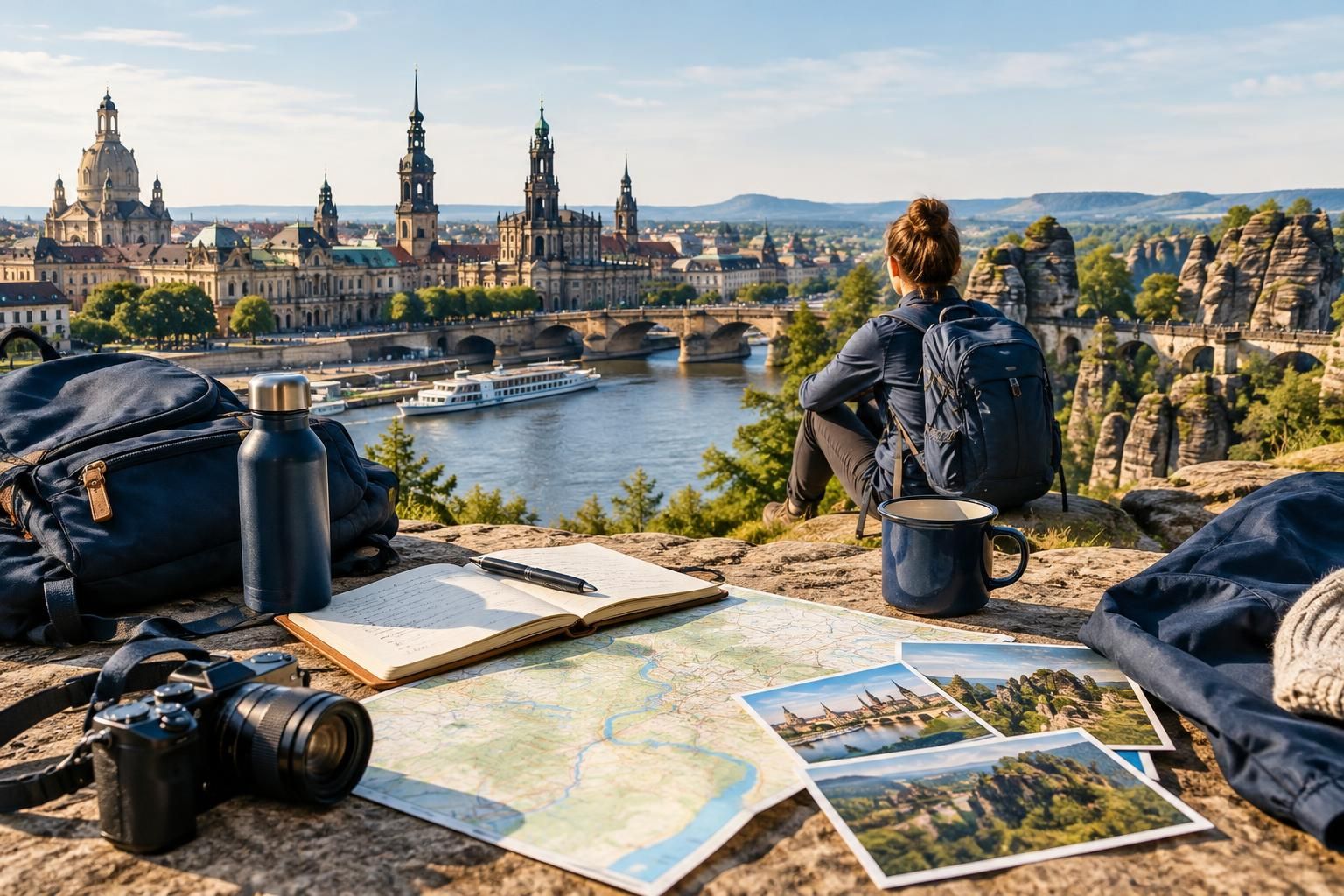
Dresden and Saxon Switzerland make a rewarding pairing for travelers who want culture and countryside without crossing half of Germany. The city offers art collections, monumental architecture and neighborhoods worth exploring slowly; farther along the Elbe, sandstone towers and wooded valleys change the character of the trip. Despite its name, Saxon Switzerland is in Germany, southeast of Dresden near the Czech border. Six nights give you enough time to enjoy both places, provided you resist treating every viewpoint and museum as essential. The key decisions are where to sleep, how much walking you actually want and how much flexibility to leave for weather.
Choose between one city base and a split stay
Staying all six nights in Dresden works well if museums, restaurants and evening walks matter most. You unpack once and can choose your countryside days around the forecast. The trade-off is repeated travel between the city and walking areas, especially when a route begins beyond a railway station and needs an additional local connection.
For a more balanced trip, consider three nights in Dresden and three around Bad Schandau or another well-connected Elbe town. Bad Schandau suits travelers who want to organize days around the surrounding landscape, while Pirna offers a historic town setting between Dresden and the sandstone region. Before choosing accommodation, map the actual journey from the station to the property: a riverside address can still involve a crossing, an uphill walk or a separate transfer.
Give Dresden two full days rather than a checklist
Use your first full day for the historic center and one substantial indoor visit. The Zwinger, Frauenkirche area and Elbe riverfront can anchor a walk, but adding several major collections may leave little time to appreciate any of them. Choose according to your interests—painting, decorative arts or regional history—and check the relevant ticket arrangements before committing the rest of the day.
Spend the second day across the river in Neustadt, combining streets, small shops and cafés with a different perspective on the city skyline. This creates a useful contrast with the monumental center. If art is your priority, substitute another collection for part of the neighborhood walk rather than squeezing both into an already full day.
Plan walking days by terrain, not distance alone
Saxon Switzerland is not simply a landscape of gentle riverside paths. Routes can include prolonged steps, uneven rock, narrow passages and substantial ascent. A short distance on a map may demand much more effort than a longer urban walk. Read route descriptions for elevation, surfaces and exposed sections, and select an itinerary that suits the least confident walker in your group.
The Bastei area is an obvious starting point for its sandstone scenery, but a recognizable viewpoint does not require an ambitious all-day circuit. Consider one focused outing there and a separate day around a wooded valley or another part of the Elbe landscape. Avoid automatically extending a walk because the next viewpoint looks close; the return journey deserves its own time and energy allowance.
Build each excursion around the complete transport chain
Rail is a useful backbone for this trip, but the nearest station is not always the start of the experience. An outing may combine a train with a ferry, bus or uphill approach on foot. Work backward from your intended route, identifying the starting point, finishing point and connections at both ends. Check current services and any path restrictions shortly before traveling.
A circular walk is often simpler to organize than a point-to-point route, although the latter can avoid retracing your steps. Compare both before deciding. If driving, remember that having a car does not eliminate parking constraints or the walk from a parking area to a viewpoint. Choose transport for the whole excursion rather than assuming one method is always easier.
Choose accommodation for evenings and practical needs
In Dresden, compare a central historic-area stay with a Neustadt base according to the evenings you want. Being near your preferred restaurants or an easy return route can matter more than having a landmark outside the window. Check room orientation, lift access and whether reaching the entrance involves steps, particularly if traveling with luggage or anyone who finds stairs difficult.
For the countryside portion, prioritize a manageable walk to transport, somewhere to dry damp clothing and a workable dinner plan. An apartment can suit travelers who prefer simple breakfasts and packed lunches, but check grocery access rather than assuming supplies will be convenient. A secluded property is a different holiday choice from a station-area guesthouse, even when both appear close on a regional map.
Keep one day flexible and pack for two kinds of travel
A workable six-night structure is to arrive in Dresden, spend two days exploring the city, then transfer to the Elbe valley for two countryside days before departure. Treat this as a framework, not a fixed sequence. If staying entirely in Dresden, move the outdoor excursions to whichever days offer more suitable conditions and retain museums as indoor alternatives.
Pack comfortable city shoes and footwear suited to your chosen walking terrain, plus layers, rain protection and a small day bag. Download route information and carry enough water and food for the outing you have planned. Keep the final day relatively light: a riverside stroll or unhurried town visit is easier to fit around luggage and onward travel than a demanding walk with several connections.
The strongest Dresden and Saxon Switzerland itinerary balances depth with flexibility: a few well-chosen cultural visits, realistic countryside routes and accommodation that makes everyday logistics easy. Decide whether city evenings or landscape access matter more, then build around that preference. Six nights need not cover the whole region to deliver a satisfying contrast between art, river life and sandstone scenery.
AI-assisted evergreen travel guide. Featured image is an AI-generated illustration, not a specific product or booking.