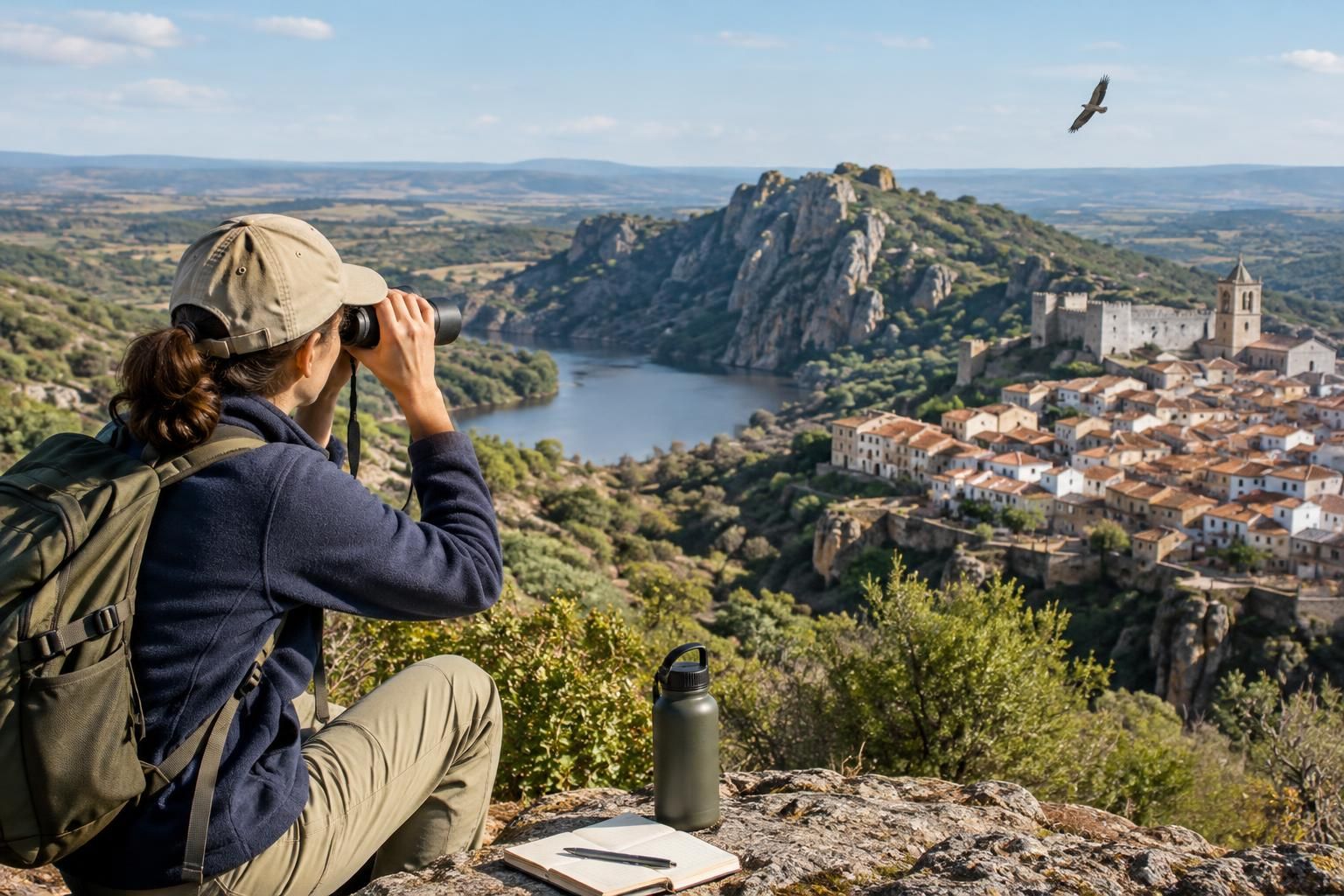
Birdwatching does not have to mean identifying every silhouette or spending an entire holiday behind binoculars. In Spain’s Extremadura region, it can be the thread connecting medieval streets, broad grazing landscapes and rocky river valleys. Trujillo and the area around Monfragüe National Park make a useful pairing for travelers who want nature without giving up architecture, leisurely meals and comfortable evenings. Plan a week around two bases, leave room for unproductive wildlife stops, and treat noticing more as the goal rather than completing a species checklist.
Divide the week between a town and the countryside
A practical seven-night arrangement is four nights in Trujillo followed by three near Monfragüe. Trujillo gives the first part of the trip an easy balance: spend a morning looking across open country, then return for stone streets, the main square and a meal without another drive. Its compact historic center also provides an enjoyable day when you want a break from scanning distant hillsides.
For the second base, consider Torrejón el Rubio or rural accommodation positioned for your intended park outings. The point of moving is to shorten repeated journeys, not to collect another hotel. Before reserving, map the actual roads between the property, observation areas and dinner options. A countryside address can look close to everything while still requiring a drive for each meal.
Choose a season for the experience, not a guaranteed sighting
Spring can appeal for greener landscapes and breeding-season activity, while autumn offers a different palette and a less spring-centered wildlife experience. Summer may call for a strongly early-and-late outdoor rhythm because inland heat can make exposed stops tiring. Winter suits travelers comfortable with shorter days, cool conditions and a quieter landscape.
No season delivers every bird, and migration timing and weather vary. Start with your tolerance for heat, cold and daylight constraints, then decide which wildlife interests you most. If seeing a particular species would determine whether the trip feels worthwhile, discuss realistic expectations with a local wildlife guide before building the holiday around it. Otherwise, aim for variety: town rooftops, open farmland, wooded slopes and river viewpoints.
Use a car thoughtfully and keep daily routes short
For this two-base countryside itinerary, a rental car is the straightforward option because observation points and rural accommodation are dispersed. Compare arrival points by the whole journey rather than the cheapest flight alone. Airport collection, unfamiliar driving, rest breaks and the final approach to your accommodation all belong in the first day’s plan. Avoid making arrival day your most ambitious sightseeing day.
Build each outing around one landscape and two or three possible stops. In the Trujillo area, that might mean an open-country drive followed by an unhurried town afternoon. Around Monfragüe, group established viewpoints and a suitable walk rather than crisscrossing the park. Pull over only where stopping is permitted and there is proper space; a promising bird is not a reason to block a narrow road or enter farmland.
Make your first wildlife sessions simple
Begin at an established observation area, such as the Salto del Gitano viewpoint in Monfragüe, rather than trying to discover an obscure location. Spend time looking before reaching for an identification guide. Notice size, wing shape, flight style and whether a bird is alone or moving with others. Those observations are more useful to a beginner than a hurried attempt to match colors at a distance.
One guided session near the start can help you understand habitats, viewing etiquette and the difference between superficially similar birds. Ask whether the outing involves long periods standing, rough walking or mostly vehicle-based stops. Keep the rest of the week less structured so you can return to a landscape you enjoyed. Check current park access information and any seasonal restrictions before choosing walks or observation locations.
Choose accommodation and equipment for time outdoors
In Trujillo, decide between the atmosphere of the old town and easier vehicle access farther out. Historic accommodation may involve steps, uneven approaches or parking away from the entrance, so clarify those details if they matter. For a rural stay, prioritize comfortable sleeping temperatures, somewhere to sit indoors, and workable food arrangements over a dramatic but inconvenient location.
Bring binoculars you can hold steadily, comfortable closed shoes, sun protection and layers for changing conditions. A small day bag, water and an offline map are more useful than a heavy collection of specialist equipment. Download a bird guide if you prefer using your phone, but allow time simply to watch. Keep well back from nests, avoid playback calls, and never move closer just to improve a photograph.
Leave space for history, food and an unplanned afternoon
A satisfying week needs alternatives that are not consolation prizes. Give Trujillo a proper town day, with time for its sloping streets and views rather than squeezing it between drives. Cáceres can provide another architecture-focused outing if you are happy to add the journey. Keep such excursions optional: adding every nearby historic town would undermine the relaxed nature of the trip.
A loose sequence works well: arrive and settle in; alternate a countryside morning with a town-focused day; then move toward Monfragüe for a guided introduction and independent exploring. Leave the final full day undecided until you know the weather and your energy levels. Carry a picnic when dining options are uncertain, take all litter away, and respect gates and private land throughout the agricultural landscape.
Extremadura rewards patience more than an overloaded itinerary. Two well-chosen bases, short daily routes and a little help interpreting the landscape can make birdwatching approachable even on a first attempt. Plan for enjoyable days rather than promised sightings, and the towns, open spaces and small discoveries can each become a worthwhile part of the week.
AI-assisted evergreen travel guide. Featured image is an AI-generated illustration, not a specific product or booking.