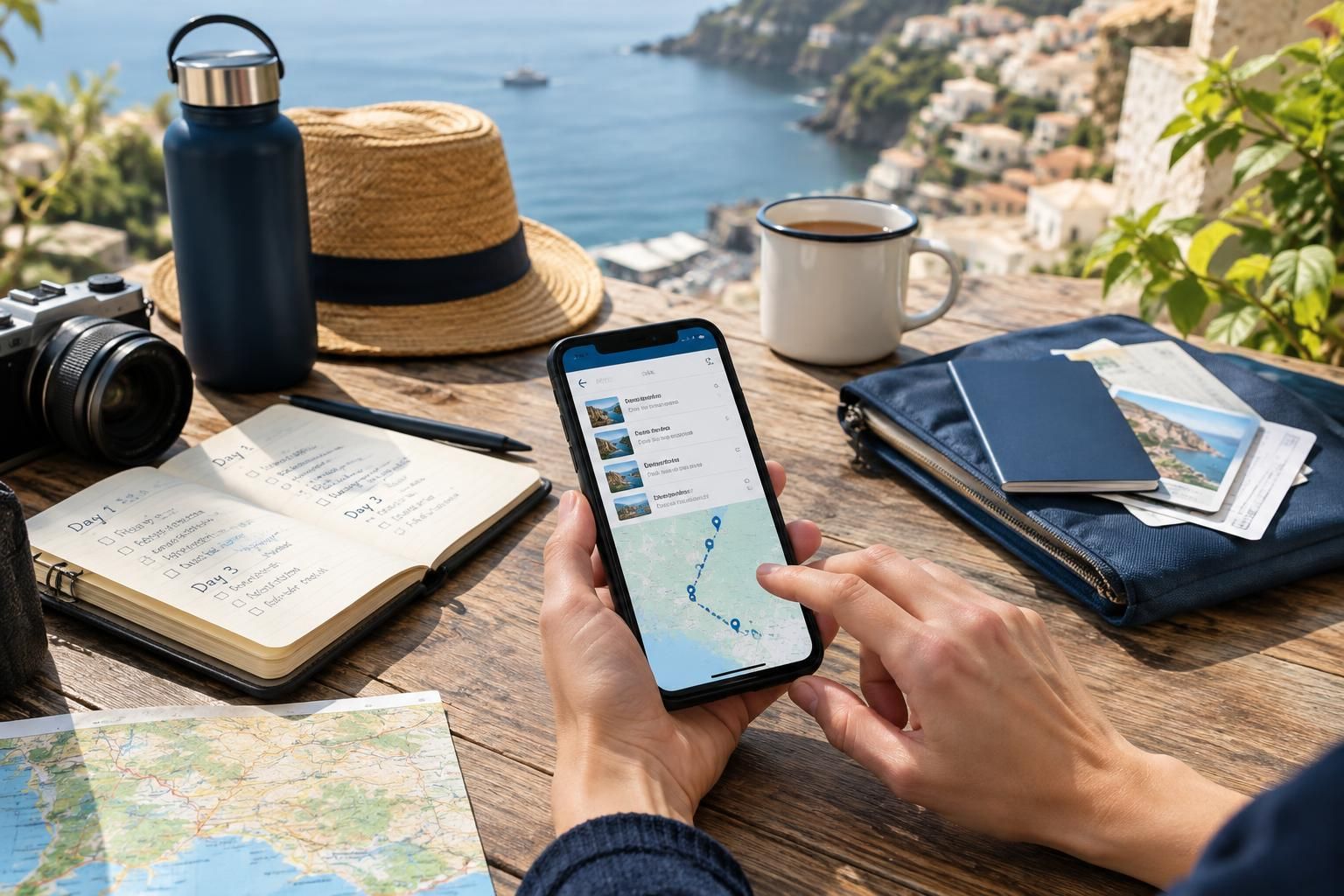
Travel plans often depend on a chain of small digital conveniences: a booking email, a map search, a message from your host. When connectivity disappears or your phone battery runs low, even a straightforward arrival can become frustrating. An offline travel plan gives you enough information to keep moving without duplicating every detail of your holiday. The aim is not to document everything. It is to make the next important step easy to find, especially when you are tired, carrying luggage or navigating somewhere unfamiliar.
1. Build the plan around travel moments, not document types
Organize information in the order you will need it. A folder called Accommodation may be tidy, but an arrival page containing your station, onward route and lodging address is more useful when you step off a train. Create a short overview, followed by a page or note for each major move between bases.
For each move, record where you are leaving from, where you are going, the relevant booking reference and the final steps to your accommodation. Use descriptive names such as Thursday: Station to Lakeside Apartment rather than Screenshot 24. Keep the full confirmations separately so the practical summary stays readable.
2. Make arrival instructions your most detailed page
Arrival is where small information gaps can have the greatest effect. Save the accommodation name and full address, including its local-language version where available. Add the entrance description, check-in arrangement and any instructions supplied by the property. A building address alone may not tell you which courtyard, doorway or reception desk you need.
Write down your preferred route from the airport, port or station, then add one realistic alternative. This might be public transport followed by a short walk, with a taxi as the fallback. Note the destination clearly enough to show another person. Treat saved route details as a planning aid, not a substitute for checking current service information before departure.
3. Save maps for the places between the highlights
Download map areas covering your accommodation, arrival points and the routes connecting them, where your mapping tool supports it. Include enough surrounding territory to handle a wrong turn or a different station exit. A map cropped tightly around a museum is less useful if you cannot see how to get there from your base.
Mark practical places as well as attractions: your lodging, a grocery shop, a laundry option and the correct departure terminal or station. Offline map features vary, and live departures or route planning may not remain available. Open the saved area without connectivity before leaving home to see what actually works.
4. Separate useful booking records from valid travel documents
Save booking confirmations and downloadable documents directly to your device rather than relying on an email inbox to load them later. Keep names, dates and booking references visible. For journeys across time zones, label the local departure and arrival dates clearly, particularly when an overnight journey changes the calendar day.
Do not assume that a screenshot replaces a ticket. Some services use changing codes, require an original document or handle entry through a specific system. Check the provider's instructions for the format you need and any offline option offered. Where paper is accepted, a small printed backup can reduce dependence on one device.
5. Keep a short offline menu of things to do
Your offline plan should support spontaneity rather than become a rigid itinerary. For each base, save a handful of appealing options with a location and one sentence explaining why you chose them. A waterfront walk, a ceramics district and a small local museum provide more variety than ten similar attractions.
Include alternatives suited to different energy levels and weather conditions, but leave changing details for a fresh check when connected. Group options geographically so you can combine nearby places without repeatedly crossing town. If you emerge from lunch wanting an unplanned afternoon, this short menu gives you somewhere to start without another research session.
6. Make the essentials available beyond one phone
A downloaded plan is still vulnerable to a flat battery or misplaced device. Give a travel companion their own copy of shared logistics rather than making one person the sole holder of every confirmation. Solo travelers can carry a compact paper sheet with the first accommodation address, key journey references and essential arrangements.
Be selective about sensitive information. A shared sightseeing note does not need identity-document scans, payment details or private access codes. Keep sensitive records separate and use device security features. If you carry a paper summary, include only what would genuinely help you continue the trip, not a printed archive of your personal information.
7. Rehearse one journey, then stop adding detail
Before departure, switch off connectivity briefly and walk through your first arrival using only the saved material. Can you find the correct address, open the necessary documents and understand the onward journey? This simple rehearsal reveals missing downloads and confusing file names more effectively than collecting another batch of screenshots.
Remove duplicates and clearly mark replaced plans so an old reservation does not compete with a new one. At each change of base, refresh only the next relevant section. Keep the plan small enough to scan quickly: a reliable page for tomorrow is more useful than a sprawling archive you cannot navigate.
A good offline travel plan answers three questions: where am I going next, how will I get there and what do I need on arrival? Build around those decisions, keep a modest backup beyond your main phone and leave room for discovery. The result should make your holiday easier to navigate, not give you more paperwork to manage.
AI-assisted evergreen travel guide. Featured image is an AI-generated illustration, not a specific product or booking.