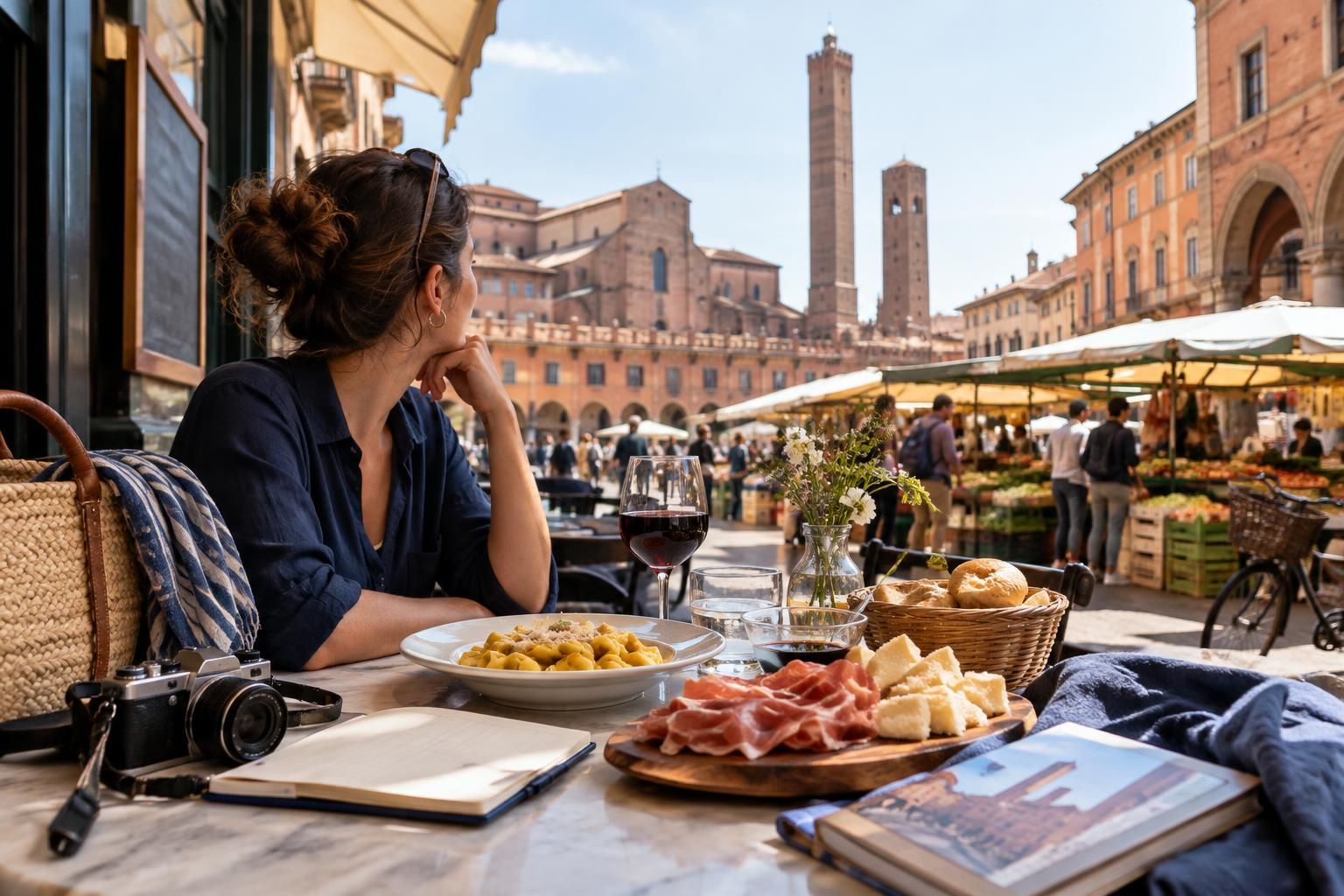
Bologna rewards travelers who enjoy understanding a place through everyday meals. Pasta traditions, market streets and neighborhood food shops give a visit a natural rhythm, while porticoes, university history and substantial museums keep it from becoming an eating itinerary with sightseeing squeezed between courses. Five nights gives you four full days: enough for an introduction without changing hotels or crossing Emilia-Romagna in pursuit of every specialty. The most useful planning decision is to make Bologna the main experience, then choose just one excursion that adds something different.
Choose a base for evenings, not just arrival
The historic center is the simplest starting point for a walking-focused stay. Look around the streets between Piazza Maggiore and the western side of the center if you want to combine major sights with evening meals nearby. The university quarter offers a different atmosphere, but accommodation close to busy gathering places may not suit light sleepers.
Staying nearer Bologna Centrale can simplify arrival and a rail excursion, though station convenience should not outweigh the neighborhood you want to return to each evening. Compare the actual walking route with luggage, rather than judging distance from a map alone. Confirm lift access, steps, cooling arrangements for warm-weather stays and whether a room faces a busy street or an internal courtyard.
Build four full days around contrasting experiences
Give your first full day to orientation: Piazza Maggiore, the surrounding market streets and an unhurried walk beneath the porticoes. Make the second day more focused, pairing a museum or university-related visit with a cooking class or a longer lunch. Reserve the third for a possible day trip, and keep the fourth in Bologna for whatever caught your attention earlier.
This structure works better than assigning every meal and attraction before arrival. Choose one substantial commitment per day, then group other stops nearby. If food is your central interest, count a hands-on class or guided tasting as the main activity, not as an extra to fit between two museums. Leave your arrival evening uncomplicated, especially after a long journey.
Explore regional food without turning meals into a checklist
Start with a few Bolognese reference points: tagliatelle al ragù, tortellini in broth and mortadella. They offer different ways into the local food culture, from a sit-down pasta meal to a simple lunch assembled from food shops. You do not need to order several rich courses at every sitting to eat meaningfully.
Alternate a substantial restaurant meal with something lighter, such as a modest lunch or groceries enjoyed at your accommodation where permitted. Browse the Quadrilatero area for its concentration of food businesses, but also spend time on less central streets. Compare menus by what you actually want to eat rather than by the number of famous dishes listed.
Travelers with dietary requirements should plan more deliberately. Traditional pasta can contain egg, filled pasta may include meat or cheese, and broths or sauces can contain ingredients that are not obvious from a dish name. Ask specific questions before ordering. A cooking class is most useful when its menu and ability to accommodate your needs are clear before you commit.
Choose one day trip: Modena or Parma
Modena makes sense if you want a compact city visit combining its cathedral setting with an introduction to balsamic vinegar traditions. Parma is a strong alternative for travelers interested in a different urban atmosphere, art and the food culture associated with Parmigiano Reggiano and cured ham. Pick according to your interests rather than trying to fit both into one day.
A city visit and a producer visit are not interchangeable. Food production often happens outside historic centers, and reaching a rural location may require separate transport or an organized excursion. Check the precise meeting point, visit language, duration and return arrangements before booking. For a straightforward car-free day, stay within your chosen city and enjoy its streets, architecture and food shops.
Give the trip a life beyond the table
Bologna's porticoes make walking part of the experience rather than merely a way to connect sights. Pair central landmarks with quieter lanes, small squares and time to sit. For an art-focused interval, consider the Pinacoteca Nazionale; for a different perspective, explore the city's university heritage. Select one substantial indoor visit instead of collecting museum stops.
The porticoed route toward the Sanctuary of San Luca offers a more physical outing, with sustained uphill walking. Treat it as a separate half-day decision, not an effortless extension of a city stroll. Choose a shorter section or another neighborhood walk if distance, gradients or heat would make the full route uncomfortable. Covered streets provide shelter, but they do not remove seasonal weather considerations.
Organize transport, reservations and food shopping
A car adds little to a stay focused on central Bologna and one city-based rail excursion. Before travel, compare your arrival options and check the ticket conditions for any regional train journeys, including whether a ticket requires activation or validation. Keep your departure day free of ambitious sightseeing so luggage and onward travel remain manageable.
Reserve selectively: a particular restaurant, cooking class or specialist visit may justify advance planning, while leaving other meals open preserves flexibility. Pack comfortable shoes and a compact rain layer. If you hope to bring food home, consider refrigeration needs, packaging, carrier restrictions and the import requirements of your destination before buying. Shelf-stable purchases are generally easier to organize than chilled ingredients.
A satisfying Bologna break depends less on how many specialties you taste than on how comfortably food fits into the wider trip. Choose a walkable base, alternate rich meals with lighter ones and give a single day trip enough space to feel worthwhile. The remaining time belongs to the city itself: its porticoes, collections, neighborhood streets and everyday routines.
AI-assisted evergreen travel guide. Featured image is an AI-generated illustration, not a specific product or booking.