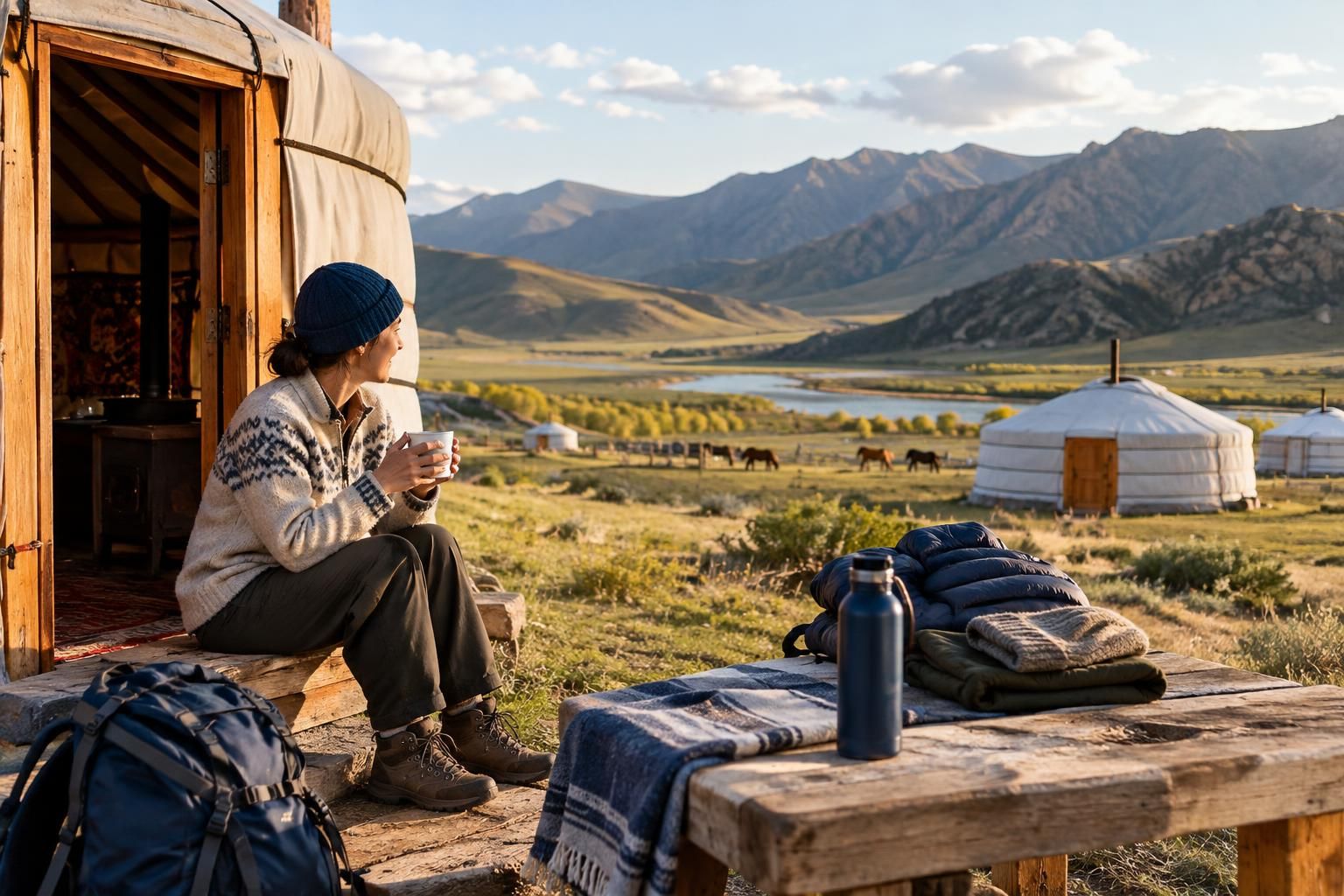
A night in a Mongolian ger, the round, felt-covered dwelling associated with pastoral life, can be much more than a scenic accommodation choice. It changes the rhythm of a trip: meals, daylight, weather and the surrounding landscape become more important than a list of attractions. Yet ger stays vary considerably, from visitor camps with private bathrooms to hosted arrangements with shared household facilities. The best starting point is not finding the most remote location. It is deciding how you want to spend your days, which comforts matter and how much driving you want between them.
Choose the experience before choosing the landscape
A visitor camp and a stay with a pastoral household are different experiences, even when both involve sleeping in a ger. A camp is accommodation organized for travelers, with service levels that may range from simple to elaborate. A hosted stay takes place around a household’s routines and responsibilities. Neither format is automatically more meaningful; the right choice depends on your expectations and the arrangement being offered.
For a first visit, decide whether your priority is quiet scenery, walking, organized excursions or time with hosts. If privacy and predictable facilities matter most, compare camps on those terms. If you want a hosted experience, ask how interaction is arranged, whether interpretation is included and what guests are expected to do independently. Do not assume that staying nearby means joining daily work or family activities.
Use fewer bases and make the driving worthwhile
Mongolia’s open landscapes can make a route look deceptively simple on a map. Road conditions, the final approach to accommodation and time spent stopping can matter as much as distance. Build a trip around a few worthwhile bases rather than a chain of one-night stays. Ask for realistic door-to-door journey estimates, including breaks, rather than relying only on mapping software.
For a shorter introduction, consider a ger stay in the Gorkhi-Terelj area as an alternative to an ambitious cross-country circuit. A longer journey might focus on central Mongolia, with the Orkhon Valley as a landscape anchor. These are different route concepts, not stops that must be combined. Two nights in one place gives you a full day without packing; three allows more flexibility if weather changes your plans.
Keep some space between returning to Ulaanbaatar and an important onward departure. A final city night also offers a practical opportunity to reorganize luggage and enjoy a different pace before leaving.
Ask specific questions about everyday comfort
The word ger tells you little about the bathroom, bedding or electricity. Before committing, ask whether toilets and showers are private or shared, how far they are from the sleeping area and whether hot water has limitations. Clarify bed arrangements, charging access, lighting and whether there is somewhere to secure valuables. These details are especially useful for families and anyone uncomfortable walking outdoors at night.
Heating deserves its own conversation. Ask what heating is provided, who operates it and what guests should do if the room becomes uncomfortable overnight. Do not assume you will be expected or permitted to tend a stove yourself. If smoke, strong smells or particular sleeping conditions are a concern, explain your requirements before choosing accommodation rather than relying on a general description of comfort.
Pack for the space you will actually use
A soft-sided bag is easier to manage in compact accommodation and vehicles than an oversized rigid suitcase. Keep overnight essentials together: sleepwear, a warm layer, toiletries, a small towel if needed and shoes that are easy to put on for trips outside. A headlamp is useful when paths or shared facilities have limited lighting.
Pack adaptable layers rather than clothing for one expected temperature. Include protection from wind and rain, along with a hat and sun protection for exposed landscapes. A power bank can reduce dependence on charging access, while downloaded maps and saved accommodation details help when connectivity is limited. Confirm what bedding, towels and drinking-water arrangements are provided so you neither duplicate bulky items nor arrive missing essentials.
Give meals and activities room to work
Discuss meals before arrival, particularly if you have dietary requirements. Ask what can realistically be prepared, whether meals follow set times and whether you need to bring supplementary food. A remote stay is not the place to assume that every preference can be accommodated at short notice. Be clear about requirements without treating a household kitchen like a restaurant with an extensive menu.
Plan one main activity per full day, leaving space for meals, weather and simply being outside. A guided walk, photography outing or arranged cultural activity may be enough. If considering horse riding, describe your experience accurately and ask about instruction, equipment and the proposed route. An advertised activity should be an option to assess, not an obligation to fill the day.
Treat hospitality as a relationship, not an attraction
In a hosted setting, let your host or interpreter explain household customs rather than arriving with a rigid etiquette checklist. Ask before entering private spaces, photographing people or handling objects. Permission to visit does not automatically include permission to record everyday life. Children and working household members should never feel expected to perform for guests.
Clarify payments, included activities and any expectations around gifts through the person arranging the stay. Avoid bringing items on the assumption that they are needed. Follow local guidance around livestock, gates and waste, and take responsibility for what you bring. Consideration often means accepting that the most memorable part of a stay may be an ordinary, unhurried moment.
A rewarding first ger stay starts with practical choices: a manageable route, clearly understood facilities and enough time to settle in. Choose accommodation for the experience it genuinely offers, not just its appearance in photographs. With fewer transfers and realistic expectations, there is more room to appreciate Mongolia’s landscapes and the people who welcome you into them.
AI-assisted evergreen travel guide. Featured image is an AI-generated illustration, not a specific product or booking.