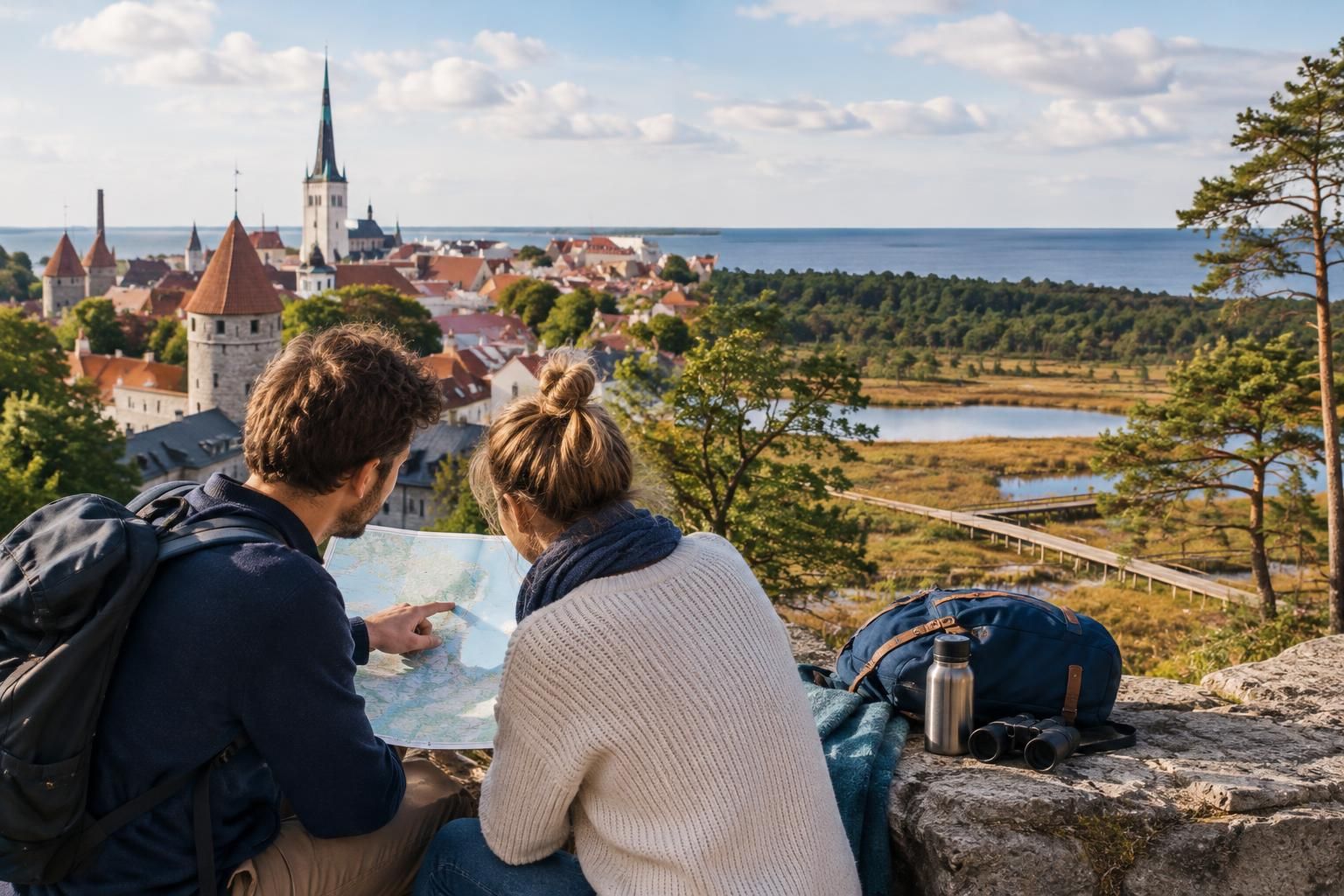
Estonia rewards a trip that leaves room between its sights. Tallinn offers medieval lanes, substantial museums and neighborhoods shaped by timber housing and maritime industry. To the east, Lahemaa National Park brings a different rhythm: pine forests, bog landscapes, manor grounds and villages facing the Baltic Sea. Combining the two creates a varied break without requiring a long circuit around the country. For six nights, divide your stay between Tallinn and one rural base, using the city portion for walking and the countryside portion for unhurried outings. The key decisions are when to travel, whether to rent a car and how remote you want your accommodation to feel.
Divide six nights between two contrasting bases
A three-night stay in Tallinn followed by three nights near Lahemaa is a balanced starting point. Spend your arrival day settling in, then give the city two full days rather than treating it as a gateway. Moving east afterward makes the countryside feel like a deliberate second chapter, not a hurried excursion squeezed between museums.
For an easy departure, consider reversing that order and finishing in Tallinn. This reduces the distance you need to cover on your final morning, especially if your flight or ferry leaves early. With only four nights, remain in Tallinn and arrange one countryside outing instead. Two accommodation changes can consume too much of a shorter break.
Choose the season for the activities you actually want
Late spring and summer suit travelers who want generous daylight for village stops, outdoor meals and walks. The Baltic coast can still feel cool in wind, so do not build the trip around swimming or consistently warm evenings. Popular walking areas may feel busier during summer holiday periods; staying nearby gives you more freedom over when to visit.
Autumn lends itself to woodland scenery and a quieter rural atmosphere, but shorter days make compact plans more important. Winter changes the trip substantially: snow, ice and limited daylight can complicate rural driving and walking. If you prefer straightforward independent outings, choose a milder season. Whatever your dates, check conditions and the seasonal operation of accommodation, restaurants and attractions before committing.
Organize Tallinn around neighborhoods, not a checklist
Use one day for the Old Town, combining the lower streets with the uphill lanes of Toompea. Cobbles, gradients and stairs can make a short map distance feel longer than expected. Choose one museum or interior visit, then leave room for courtyards, viewpoints and a seated lunch. Staying inside the historic center is atmospheric, while accommodation just outside it may offer a simpler arrival with luggage.
Give your second day a different character. Kalamaja and the Telliskivi area suit an interest in wooden architecture, reused industrial spaces and informal eating. Alternatively, pair Kadriorg’s park setting with an art-focused visit. Avoid trying to cover both sides of the city in depth on the same day. Travelers with limited mobility should examine the specific walking surfaces, entrances and transport connections around their chosen hotel.
Use a car selectively rather than throughout the trip
For this itinerary, a rental car is most useful during the Lahemaa portion. Collecting it when you leave Tallinn avoids paying for several days of city parking and navigating streets where walking is usually more rewarding. Compare collection and return arrangements before choosing your accommodation, including luggage space, parking and any conditions attached to the rental.
A car-free version needs more deliberate planning. Choose lodging with a confirmed transfer option or arrange guided outings from Tallinn, rather than assuming rural buses will connect every village and trailhead conveniently. Ask about the complete journey, including the return leg and the distance from the stop to your accommodation. If those connections make the rural stay cumbersome, a Tallinn base with organized day trips is a reasonable alternative.
Pick a rural base for evenings as well as excursions
Coastal villages such as Võsu and Käsmu are worth considering if you want shoreline walks and a village setting. Accommodation around the Palmse or Sagadi area may appeal more if manor landscapes and access to several inland outings matter most. Treat these as different styles of stay, not interchangeable pins on a map.
Before booking, establish where dinner will come from. A self-catering kitchen can be especially useful when rural dining choices are limited or seasonal, but plan your grocery stop before arriving. Check heating for cooler months, outdoor seating for warmer ones and whether bedrooms face a shared social area. If a sauna is part of the appeal, confirm whether it is private or communal and whether separate booking is needed.
Build countryside days around one main landscape
Make one day about bog scenery, another about the coast and a third about woodland or manor grounds. The Viru bog area is a recognizable starting point for researching a walk, while Käsmu offers a coastal counterpoint. Check route length, surface, access and current conditions rather than assuming every boardwalk is a short, accessible loop. Narrow sections, wet timber and uneven approaches can affect suitability.
Pack a waterproof layer, warm mid-layer, comfortable shoes with grip and insect protection appropriate to the season. Carry water and food for rural outings, and download maps before leaving reliable connectivity. Stay on designated routes through sensitive bog terrain. Keep one flexible half-day for poor weather or simply lingering somewhere appealing; the contrast with Tallinn works best when the countryside does not become another checklist.
A successful Tallinn-and-Lahemaa trip depends less on covering distance than on choosing complementary bases. Give Tallinn enough time for neighborhoods beyond its medieval center, then select rural accommodation that makes meals and daily outings straightforward. With transport settled and room for changing weather, six nights can deliver both a satisfying city break and a genuine change of pace.
AI-assisted evergreen travel guide. Featured image is an AI-generated illustration, not a specific product or booking.