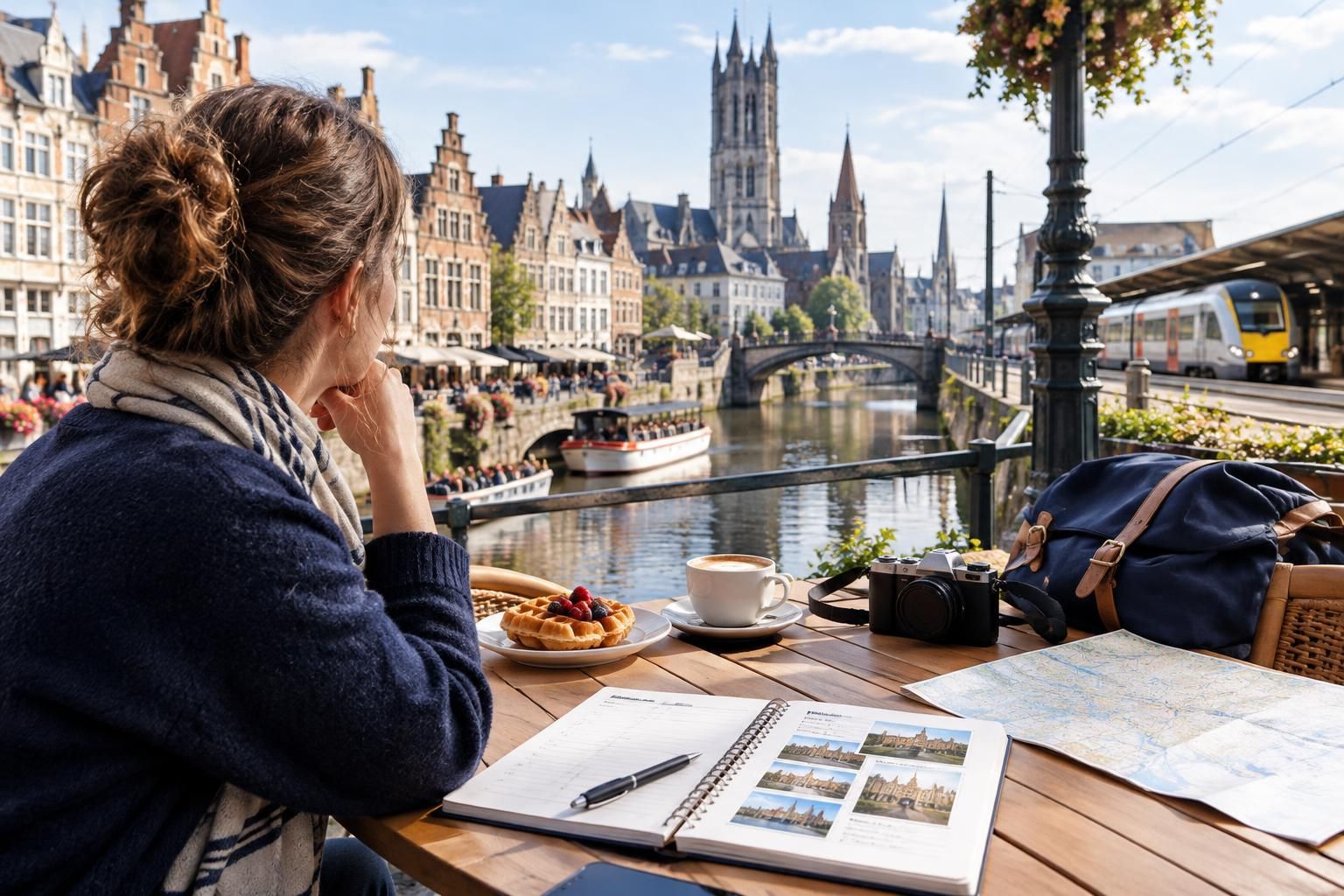
Belgium rewards travelers who resist changing hotels every night. Several of its distinctive cities sit within a compact rail network, making it possible to unpack once and still experience contrasting architecture, food and neighborhoods. Ghent is an appealing base for this approach: a historic canal city with a university presence and enough substance to deserve days of its own. For a five-night stay, the most useful decision is not how many cities you can collect, but which two day trips would add something different. Pair Ghent with Bruges for medieval streets and waterways, Antwerp for art and design, or Brussels for a larger-capital experience. Keep the remaining time for unhurried exploration rather than treating your base as somewhere to sleep.
Choose accommodation around your actual travel pattern
Ghent’s main railway station, Gent-Sint-Pieters, is outside the medieval center. Staying near it can simplify arrivals and repeated rail departures, but you will need to account for the connection into the historic core. A central hotel or apartment reverses that trade-off: atmospheric evening walks become easy, while day trips begin with an extra local journey.
For two excursions during five nights, prioritize the neighborhood where you want to spend your evenings. Look around the historic center or its edges if canals, restaurants and wandering matter most. Favor the station area if you expect several early departures or have luggage that makes local transfers awkward. Compare the complete station-to-door route, not just a property's distance from a landmark.
Older buildings can have steep stairs, compact rooms and limited lift access. If these details matter, ask about the specific room rather than relying on a general property description. Light sleepers should also consider whether windows face a lively square, a tram route or a quieter courtyard.
Give Ghent two different kinds of day
Use your first full day to understand the city on foot. Build a loose route around the Graslei and Korenlei quays, the streets near Saint Bavo’s Cathedral and the lanes of Patershol. Choose one substantial interior visit rather than trying to enter every landmark. The aim is to learn how the neighborhoods connect and discover places you might revisit.
Make your second Ghent day more personal. Art-focused travelers might organize it around a museum; others could explore shops, linger over lunch or follow the waterways beyond the busiest streets. Leave space for sitting down. Cobbles, repeated stops and standing inside attractions can make a compact city surprisingly tiring.
If seeing a particular artwork or interior is central to the trip, check its admission arrangements when setting your dates. Avoid making that visit dependent on a tightly timed return from another city.
Pick day trips for contrast, not completeness
Bruges is a natural choice if you enjoy historic streetscapes, canals and small-scale details. Give the day one anchor, such as a museum or church, then allow time to walk away from the most photographed squares. Because Ghent also offers waterways and medieval architecture, consider whether this similarity is exactly what you want or whether you would prefer more contrast.
Antwerp offers a different emphasis through its port-city character, fashion associations, museums and varied architecture. Brussels suits travelers interested in grand civic spaces, comic-strip culture or neighborhoods with a more metropolitan feel. In either city, select one manageable area and one main attraction rather than attempting a miniature city-wide tour.
For a first five-night visit, choose two excursions at most. A third may be feasible, but it removes your spare day for poor weather, tired feet or something unexpectedly interesting in Ghent.
Make rail days simple from door to door
Before committing to an excursion, compare the whole journey: reaching the departure station, the train trip, any changes and the walk or local connection at the other end. A short rail journey can still produce a long outing when your accommodation and chosen attraction are far from their stations.
Check current timetables, ticket conditions and engineering notices close to travel. Do not assume one fare or ticket type works identically across every service. Save the correct station names and accommodation address offline, and carry enough phone charge for the return journey.
Build each day around a generous return window rather than the last possible departure. Avoid pairing a full sightseeing day elsewhere with a prepaid evening activity in Ghent. The freedom to stay for dinner or come back early is one of the main benefits of having a single base.
Use meals and weather to shape the pace
Treat lunch as a proper break, especially on walking-heavy days. Belgian food experiences need not become a checklist: you might choose a traditional stew, fries, a bakery lunch or a vegetable-focused meal according to appetite and budget. Review menus before sitting down if dietary requirements are important, and ask about ingredients rather than inferring them from a dish’s name.
Pack for changeable conditions with a rain-resistant outer layer, comfortable shoes and a small day bag. Keep one indoor option for each excursion, but avoid responding to rain by stacking several museums together. One longer visit and a relaxed meal can be more satisfying than hours of continuous sightseeing.
Arrange five nights without overfilling them
A balanced sequence is arrival and a short neighborhood walk, a full Ghent day, one day trip, another Ghent day, then a second excursion. Departure follows the fifth night. This alternates more demanding travel days with time close to your accommodation.
Leave the order flexible where reservations permit. Put the excursion you care about most earlier in the stay, giving yourself room to adjust if transport disruption or weather intervenes. On arrival day, resist ambitious plans: finding your accommodation, buying essentials and enjoying an easy dinner is enough.
A Ghent-based trip works best when the city remains the center of the experience, not merely a convenient station stop. Choose accommodation that suits your evenings, select two contrasting excursions and measure travel days from door to door. With that structure in place, five nights can offer both variety and the pleasure of returning somewhere familiar.
AI-assisted evergreen travel guide. Featured image is an AI-generated illustration, not a specific product or booking.