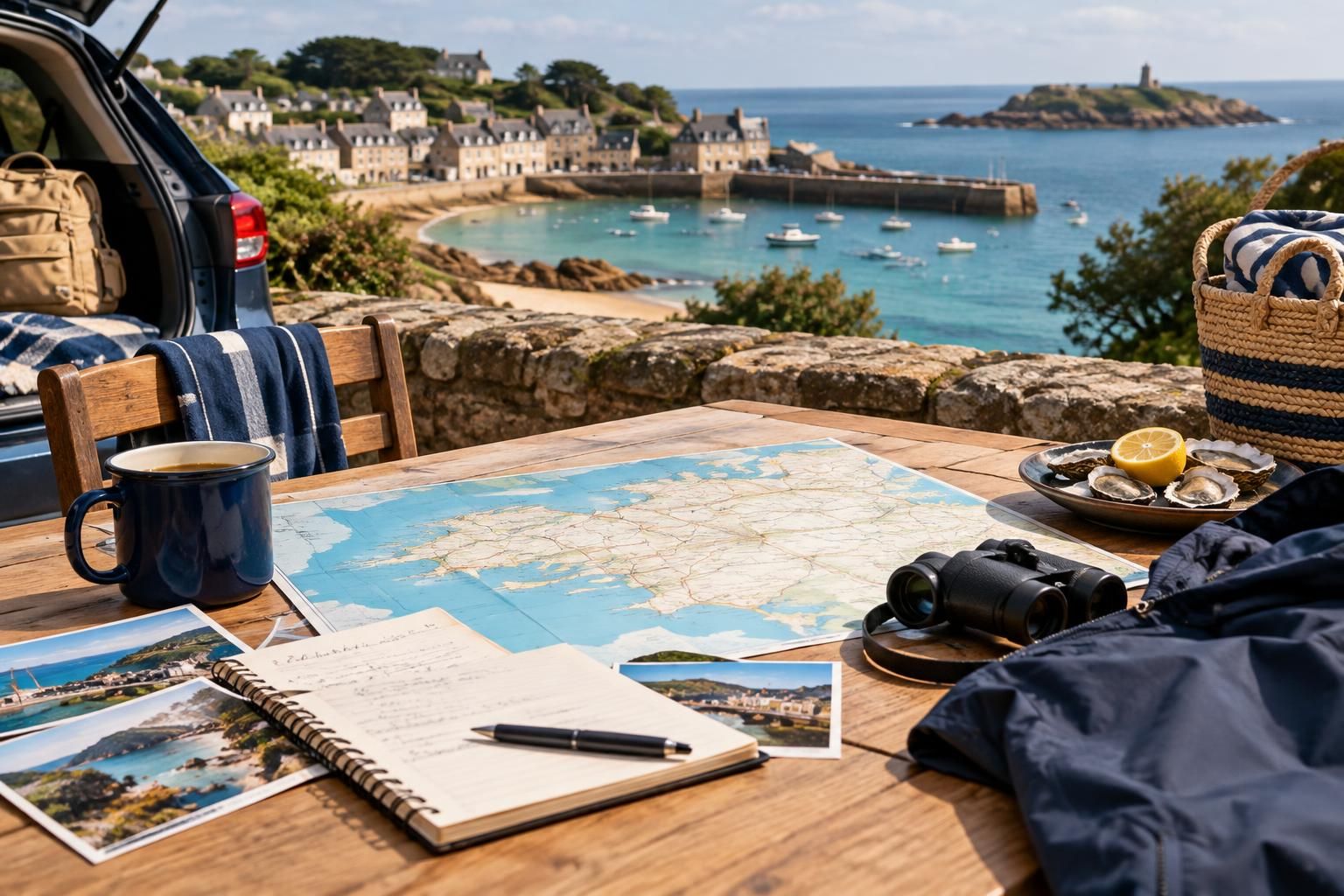
Brittany rewards travelers who resist the temptation to circle the entire peninsula in a week. Its appeal lies in the details: a harbor at low tide, a granite headland, a market-town lunch and an afternoon that stays pleasantly unplanned. Trying to connect every famous coastal stop can turn those moments into views through a windscreen. A more satisfying approach is to choose one stretch of coast, divide your stay between two bases and treat weather and tides as part of the itinerary. Here is how to build a week with variety without spending most of it on the road.
Choose one coastal pairing rather than the whole peninsula
For a first visit, northern Brittany offers a useful combination of historic towns and distinctive coastal scenery. You could pair the Saint-Malo or Dinan area with a second base near the Pink Granite Coast around Perros-Guirec and Trégastel. The first half emphasizes walled streets, estuary views and harbor life; the second shifts toward rock formations, beaches and short coastal walks.
Southern Brittany offers a different rhythm. A pairing around the Gulf of Morbihan and the Concarneau area suits travelers drawn to sheltered waters, smaller ports and beach afternoons. Neither pairing needs to include every celebrated sight. Choose the north or south according to the landscapes you want, then leave the opposite coast for another trip.
Split seven nights between two practical bases
A three-night stay followed by four nights gives each base enough time to feel like somewhere you are visiting rather than merely sleeping. Arrive, settle in and spend the first evening locally. Use the following days for a nearby town, a coastal outing and some unstructured time. Make the transfer between bases an outing in its own right, with one worthwhile stop rather than a chain of diversions.
Choose accommodation by its everyday usefulness. A room within walking distance of dinner can be more valuable than a remote sea view, particularly if you want to leave the car parked after a day out. Compare parking arrangements, stairs, kitchen facilities and outdoor space. In a historic center, clarify where luggage can be unloaded and how far the actual parking place is from the property.
Build days around clusters, not a list of landmarks
Coastal journeys can take longer than their map distance suggests. Small roads, town centers and repeated parking stops add friction. For each day, choose one compact cluster: a harbor town and a nearby beach, for example, or a headland walk followed by lunch in a village. Avoid crossing your entire chosen region for a single photograph.
Around a northern base, one day might focus on Saint-Malo’s streets and waterfront, while another centers on Dinan and the Rance valley. Near the Pink Granite Coast, keep a day for the shoreline around Ploumanac’h and another for a different coastal pocket. These are planning examples, not fixed routes; the useful principle is to keep each day geographically coherent.
Let tides shape the experience, without controlling the whole trip
Brittany’s coast changes character with the tide. A harbor that looks full and reflective at one point may reveal boats resting on exposed ground later. Broad sand can appear where water previously dominated the view. If photography, beach time or a particular waterfront scene matters to you, consult a local tide table when arranging that day rather than assuming the coast will look the same throughout.
Treat any route involving tidal access as a separate planning decision. Do not infer that an exposed stretch is an ordinary walking route simply because other people are using it. Check current local guidance for the exact place and keep an alternative outing available. You can enjoy the changing shoreline from established promenades and viewpoints without making a crossing central to your holiday.
Prepare two versions of each day
A flexible Brittany itinerary needs more than a generic rainy-day list. Pair each outdoor plan with a nearby alternative: a coastal walk with time exploring a historic town, a beach afternoon with a museum, or a picnic with a relaxed indoor lunch. Wind and visibility can affect the appeal of an exposed headland even when it is not raining.
Pack for changes within the day: a waterproof outer layer, a warmer mid-layer, comfortable walking shoes and a small day bag are useful foundations. Add a spare pair of socks and something to hold damp clothing. If beach time is important, keep towels and a change of clothes accessible in the car rather than buried beneath your main luggage.
Make food and small stops part of the plan
Leave room for Brittany’s everyday pleasures rather than scheduling only major attractions. A crêperie lunch, a bakery stop or a wander around a market town can anchor an otherwise simple day. Buckwheat galettes and sweet crêpes offer an easy introduction to regional food; seafood can be another focus for those who enjoy it. Check menus rather than assuming every restaurant will suit every preference.
Self-catering accommodation makes a mixed approach practical: breakfast at your base, a substantial lunch out and a light supper on some evenings. Carry water and a few picnic basics so a missed meal stop does not dictate the route. Before setting off, identify one main objective and one optional stop. Everything else can remain a welcome discovery.
The strongest Brittany road trip is not the one with the longest coastline covered. It is the one that gives you time to notice how a place changes between morning and evening, sunshine and cloud, high water and low. With two well-chosen bases, compact daily outings and flexible alternatives, a week can feel varied without becoming rushed.
AI-assisted evergreen travel guide. Featured image is an AI-generated illustration, not a specific product or booking.