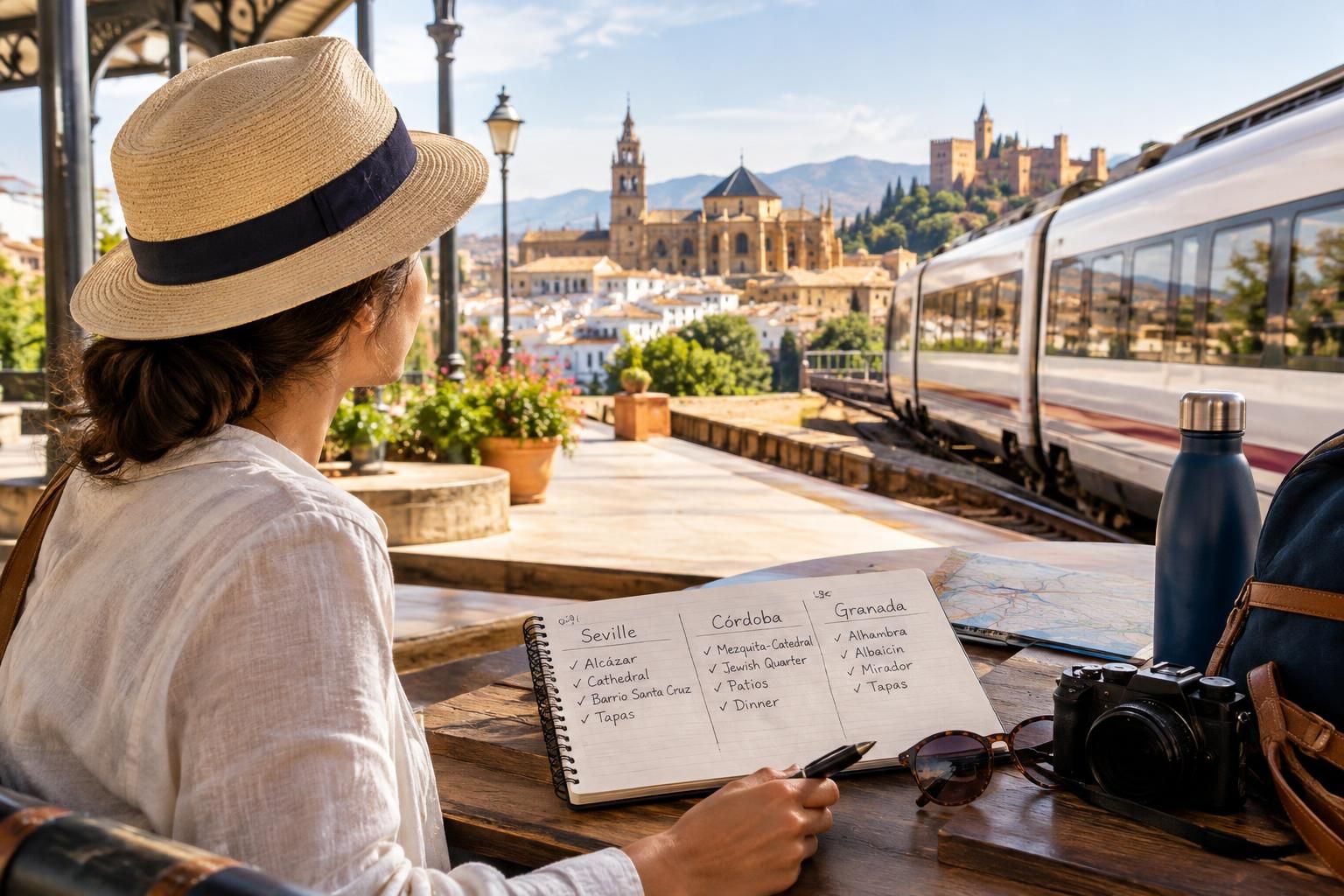
Seville, Córdoba and Granada make a rewarding introduction to Andalusia because each brings a different atmosphere to the journey. Seville offers expansive squares and riverside walks, Córdoba rewards close attention to lanes and courtyards, and Granada combines hillside neighborhoods with the architectural landscapes of the Alhambra. Linking them by rail can keep the trip focused on places rather than driving and parking. The key is not to treat three cities as three consecutive sightseeing marathons. With nine nights, thoughtful accommodation choices and a little restraint, there is time for major monuments and the everyday pleasures between them.
Divide the nights according to how you want to spend your days
A useful starting point is four nights in Seville, two in Córdoba and three in Granada. This gives Seville three full days, preserves an evening and a full day in Córdoba, and leaves Granada enough space for both the Alhambra and the city below it. Travelers who prefer smaller historic centers could shift one Seville night to Córdoba rather than adding another destination.
Choose the direction after comparing your arrival and departure options. Flying into one city and leaving from another can reduce backtracking, but a return journey through the same gateway may still suit your budget or wider plans. Sketch the whole route before booking accommodation, including the final transfer to your departure airport. An appealing hotel saving is less useful if it creates an awkward last morning.
Treat train journeys as part of the itinerary
Check the specific rail options between your chosen cities before fixing the sequence. Compare total journey time, any changes, ticket conditions and the distance between each station and your accommodation. Do not assume that every service follows the same route or offers the same flexibility. If an itinerary involves a connection, leave enough room for unfamiliar platforms and moving luggage.
On transfer days, plan one modest activity rather than a major timed visit. Arriving, reaching the hotel and getting oriented can consume more energy than the train ride itself. A neighborhood walk or a relaxed meal fits better than an ambitious monument booking. Keep essentials accessible in a small bag, and choose luggage you can handle independently through stations and narrow streets.
Choose accommodation for the walk home, not just the landmark view
In Seville, compare the historic center with areas closer to its edges or across the river in Triana. Central lanes can be atmospheric, while a less central address may suit travelers who value quieter evenings or easier vehicle access. In Córdoba, staying in or near the old town makes it easier to enjoy its streets at different times of day rather than only during a concentrated sightseeing visit.
Granada requires particular attention to terrain. A hillside room may offer character and views but also mean repeated climbs or steps with luggage. A lower, more central base can make a mixed itinerary simpler. For all three cities, read the property description for lift access, room position, cooling or heating, and luggage arrangements. Proximity to restaurants is convenient, but rooms directly above lively streets may not suit light sleepers.
Give each city one anchor experience and room around it
Build Seville around a major architectural visit, such as the Real Alcázar or cathedral, then reserve another half-day for the river, Triana or a sequence of smaller squares. In Córdoba, make the Mosque-Cathedral the central visit and explore the surrounding historic streets without trying to turn every courtyard and lane into a checklist. These cities reward noticing details: tiled entrances, shaded passages and the changing character of a square.
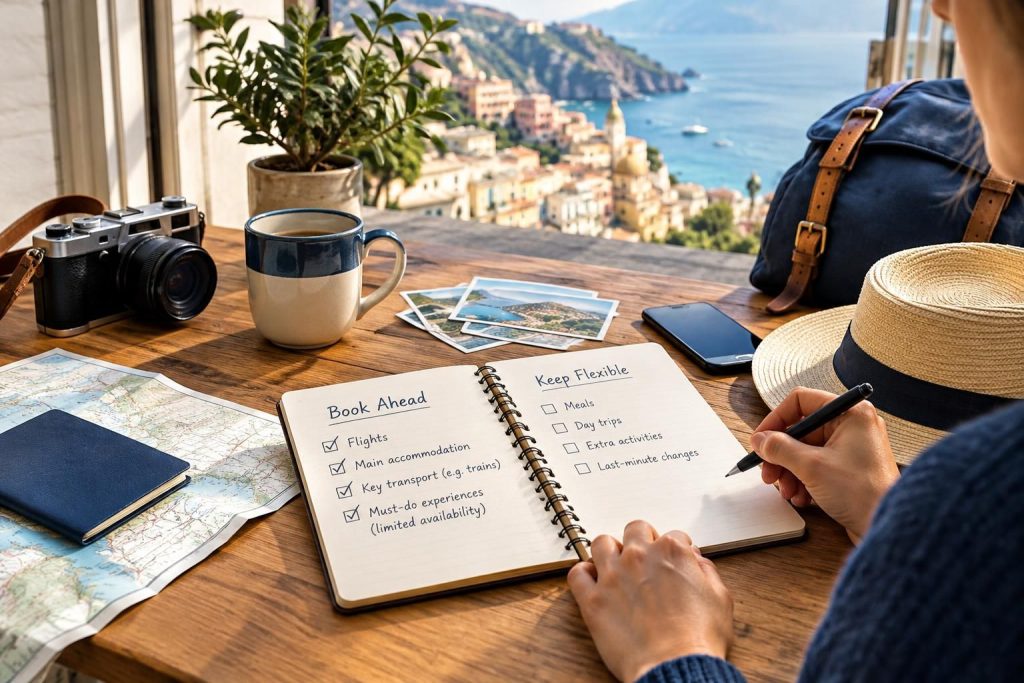
In Granada, give the Alhambra a generous block of time rather than squeezing it between other commitments. Check the official booking requirements, entry arrangements and any separate timed components before shaping that day. Use a different day for the Albaicín and lower city, adjusting the walking route to your appetite for hills. Across the trip, book your highest-priority experiences first and leave smaller stops flexible.
Match the daily rhythm to weather and energy
Season affects how this itinerary feels. Hot-weather trips benefit from earlier outdoor walks, a substantial midday pause and less ambitious afternoons. Cooler periods can favor longer walking days, but daylight and evening temperatures still deserve attention. Check the forecast close to departure rather than packing for a single idea of southern Spain; Granada's setting can make its conditions feel different from those in Seville.
Organize each day into one main visit and one optional neighborhood outing. An indoor stop, a long lunch or time back at the accommodation can separate them. Comfortable footwear matters more than dressing for photographs, particularly on uneven paving and slopes. Carry a compact extra layer when appropriate, and avoid hauling everything you own through a monument simply because it is a sightseeing day.
Leave space for meals and resist adding distant day trips
Food can give the journey structure without requiring a restaurant reservation for every meal. Alternate a seated lunch with a lighter evening, or reverse that pattern according to your preferences. Look at menus before sitting down, ask about unfamiliar dishes and communicate dietary requirements clearly. A tapas-style outing can be enjoyable, but ordering a few dishes in one comfortable place is equally valid.
With nine nights, the strongest addition may be an unscheduled morning rather than another town. Extra excursions introduce station transfers, tickets and decisions that compete with time in your three bases. If you want a countryside or village stay, consider extending the trip or replacing one city. Keep the final evening simple so packing and departure preparations do not consume your last full day.
A satisfying Andalusian rail trip depends less on fitting in every famous sight than on balancing three distinct cities. Settle the route first, choose accommodation with walking and luggage in mind, and give your priority visits enough time. The gaps between those plans are where a courtyard, a riverside stroll or an unexpectedly leisurely meal can become part of the journey.
AI-assisted evergreen travel guide. Featured image is an AI-generated illustration, not a specific product or booking.