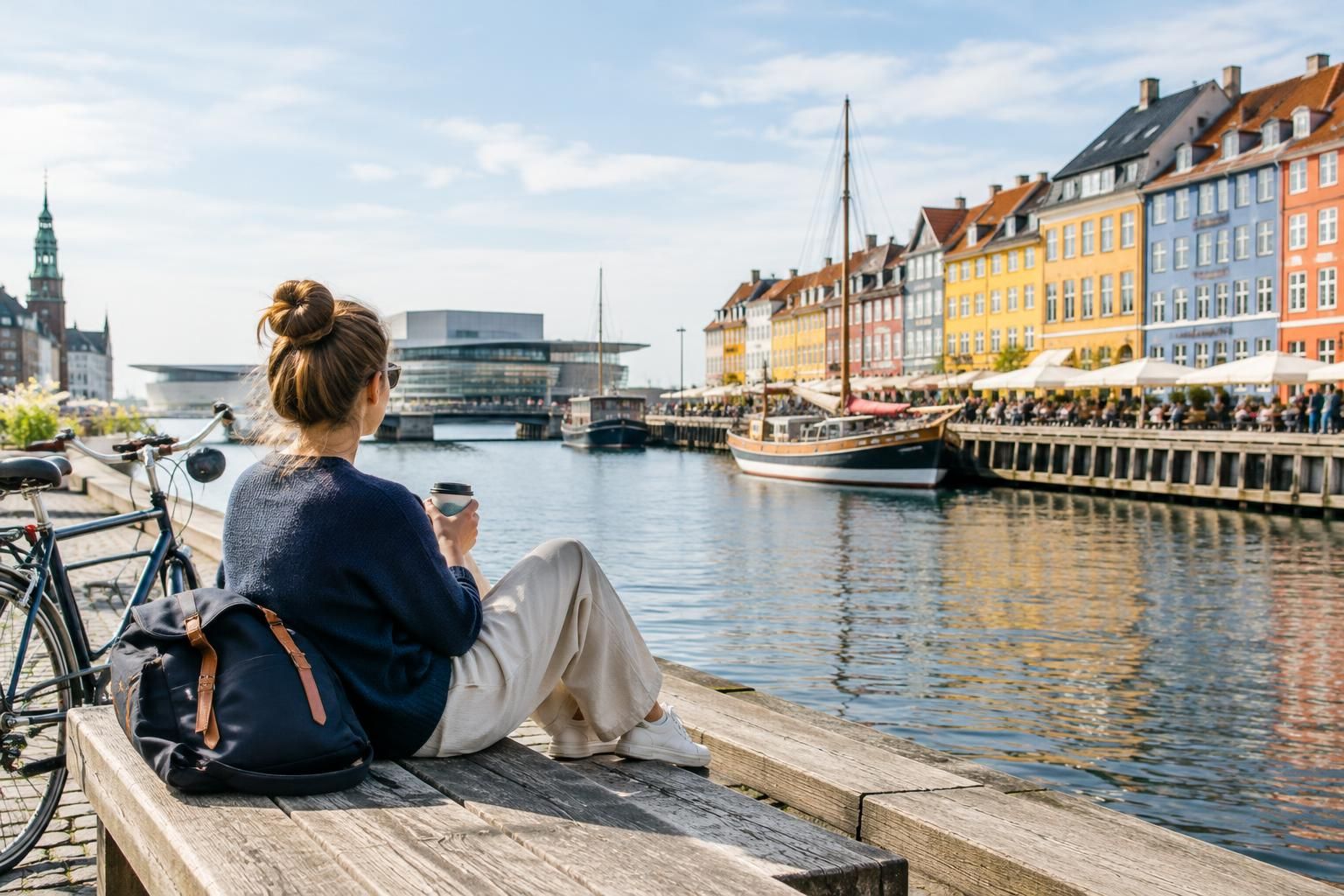
Copenhagen rewards an interest in design even when you are not inside a museum. A courtyard entrance, a harbor swimming area or the arrangement of chairs in a café can be as absorbing as a celebrated building. The most satisfying approach is to connect a few deliberate visits with time spent noticing how the city works. Four nights allow three full days plus smaller arrival and departure windows: enough for central architecture, a neighborhood beyond the historic core and either another city day or an excursion. Rather than compiling a checklist of famous objects, build the trip around materials, public spaces and the relationship between buildings and water.
Choose a base that makes returning easy
Indre By, the historic center, suits visitors who want to connect older streets, waterfront walks and cultural sights on foot. Look beyond the neighborhood label to the actual location: a room above a busy restaurant street offers a different evening from one facing an internal courtyard. Ask about stairs, lifts and room orientation if these affect your comfort.
Vesterbro can suit travelers who want cafés and restaurants near their accommodation, while Christianshavn offers canals and a useful setting for exploring the harbor. Compare the complete stay cost rather than the room rate alone. Breakfast, transport, luggage storage and the ability to make a simple meal can change which option is most practical. A beautiful hotel lobby is not a substitute for a quiet bedroom.
Give each day a clear geographical shape
Use the arrival afternoon for orientation rather than a timed attraction. Walk a manageable loop near your accommodation, find a convenient food shop and identify your nearest useful transit stop. For the first full day, connect the historic center with the Frederiksstaden area and Designmuseum Danmark, subject to its visiting arrangements. Keep the museum as the main commitment, with streets, squares and a waterfront pause around it.
Devote a second day to Christianshavn and the harbor, choosing one stretch to explore rather than attempting the entire waterfront. Reserve the third for Nørrebro, another architectural interest or a trip beyond the city. This structure leaves room to swap days if rain makes an indoor visit more appealing. Avoid attaching a distant excursion to the same day as your highest-priority museum.
Balance landmark buildings with ordinary places
Choose two or three design themes before traveling. Furniture enthusiasts might focus on proportions, joinery and materials; architecture lovers might compare brick courtyards with contemporary waterfront construction. Visitors interested in urban life can pay attention to benches, playgrounds, bicycle parking and transitions between public and private space. A theme gives an otherwise aimless walk a satisfying purpose.
For a varied architectural selection, consider the Black Diamond waterfront extension of the Royal Danish Library, the Opera House as a harbor landmark and the Danish Architecture Center for exhibitions. Check access and exhibition details when arranging the trip rather than assuming every building offers unrestricted interiors. Exterior views still have value. Residential courtyards and apartment entrances, however photogenic, should not be treated as public attractions.
Walk first, and make cycling an optional experience
Walking works well for closely grouped sights because it lets you stop without interrupting anyone else's journey. Use public transport to bridge longer gaps or conserve energy for a museum. When comparing ticket options, map your actual journeys first and check current coverage and conditions. A pass is not automatically worthwhile simply because it includes more travel than you expect to use.
Cycling can offer another perspective, but it need not be a requirement for enjoying Copenhagen. If you are unfamiliar with busy cycle routes, learn local conventions and practice handling the bicycle before using it for sightseeing. Do not try to navigate, photograph buildings and ride at the same time. Travelers who prefer walking should remain attentive when crossing cycle tracks, particularly near stops and junctions.
Decide whether an out-of-city day adds enough
Louisiana Museum of Modern Art in Humlebæk is a possible excursion for travelers interested in the relationship between art, architecture and landscape. Treat it as the day's main event, allowing for the rail journey, the onward walk and time outdoors if conditions suit. Confirm transport and visiting arrangements before committing, and avoid squeezing it between two city reservations.
Staying in Copenhagen is equally worthwhile. A slower day in Nørrebro can combine streets around Jægersborggade with Assistens Cemetery, approached respectfully as both a burial ground and a green space. Add a café stop and time to browse independent shops without assuming shopping must be the day's purpose. Choose the excursion for a strong personal interest, not because an itinerary seems incomplete without a day trip.
Budget for pauses and pack for waterfront weather
Concentrate paid visits on the collections or buildings that genuinely interest you. Alternate them with neighborhood walks and exterior architecture, and give lunch its own place in the day rather than treating it as an interruption. A bakery breakfast, a casual lunch and one deliberately chosen dinner can provide more variety than booking every meal as an occasion.
Bring comfortable shoes, a wind-resistant outer layer and rain protection that leaves your hands free. Waterfront stops can feel cooler than sheltered streets, so use removable layers rather than one heavy outfit. A compact bag makes museums and cafés easier, though individual storage policies vary. Leave some luggage space if furniture books, ceramics or other fragile purchases are likely temptations.
A design-focused Copenhagen break works best when the city itself remains part of the experience. Choose a convenient base, group visits geographically and give each day only one major commitment. With room for ordinary streets, a lingering lunch and a change of weather, four nights can reveal not just distinctive buildings and objects, but how thoughtful design shapes everyday travel.
AI-assisted evergreen travel guide. Featured image is an AI-generated illustration, not a specific product or booking.