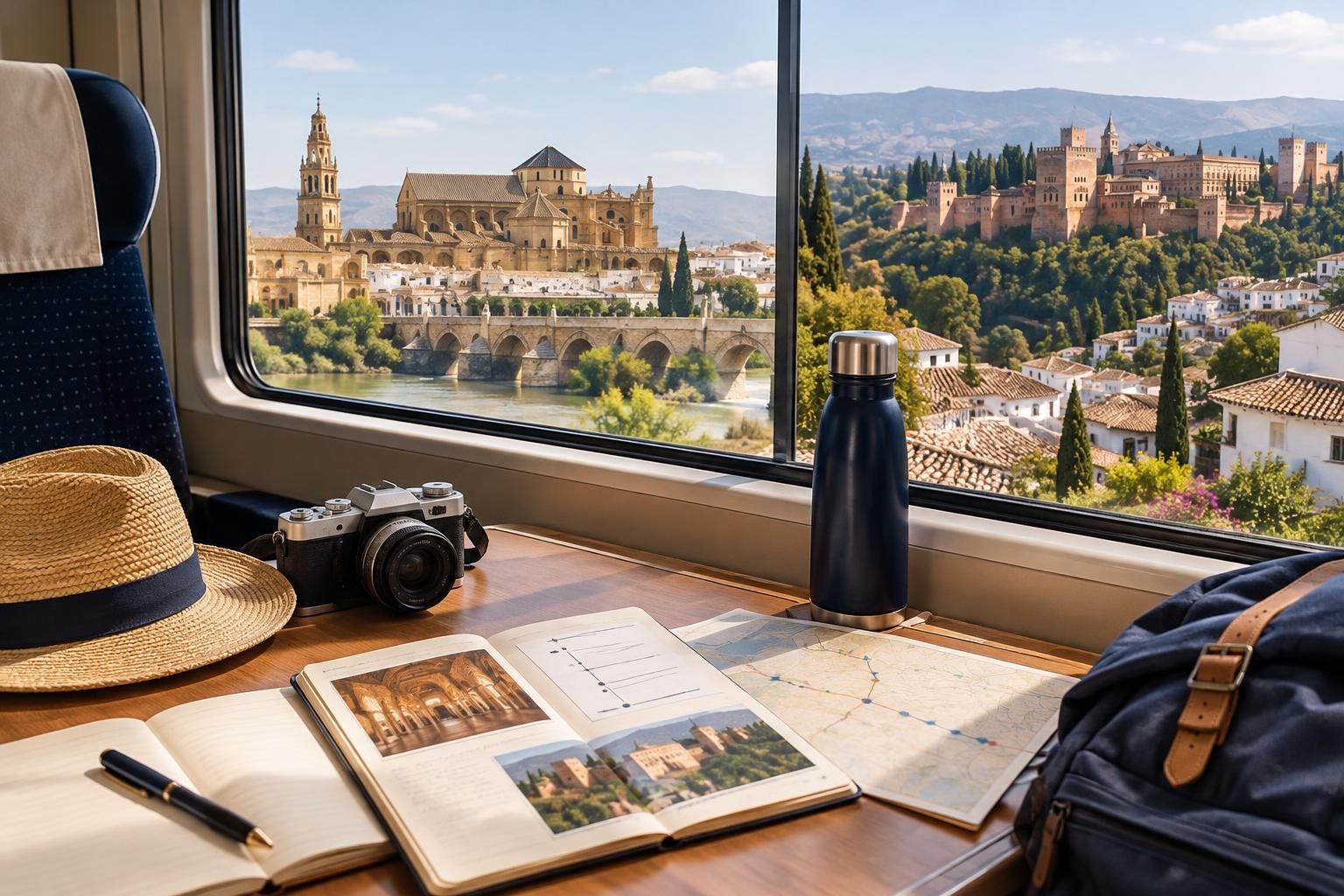
Córdoba and Granada make a rewarding pairing for travelers who enjoy architecture but do not want every day to revolve around a guided tour. Both cities invite close attention to courtyards, carved surfaces, water and the relationship between buildings and streets. Their different landscapes keep the trip varied: Córdoba lends itself to compact neighborhood wandering, while Granada adds hills, layered views and longer climbs. Seven nights gives you room for the major monuments, quieter districts and an unhurried transfer. The key is to treat this as two city stays rather than a race through southern Spain.
Split the week into three nights in Córdoba and four in Granada
A three-night Córdoba stay followed by four nights in Granada is a useful starting point. Córdoba’s central historic areas suit a relatively compact plan, while Granada benefits from extra time for its slopes and the scale of the Alhambra visit. Reverse the order if your arrival and departure options work better that way; there is no need to preserve a particular sightseeing sequence.
Before booking accommodation, map the whole journey, including travel from your arrival airport and onward from the final city. Compare rail options for your actual dates rather than assuming a direct service or a convenient connection. A journey that looks short between stations can occupy much of a day once you include checkout, luggage and reaching the next lodging. Keep that transfer day free of prepaid sightseeing.
Choose accommodation for access as well as atmosphere
In Córdoba, consider staying within walking reach of the historic center without insisting on its busiest lanes. Around the Judería, atmosphere comes with a practical trade-off: narrow streets, uneven paving and possible limits on vehicle access. A room on a slightly wider street may be easier with luggage while still allowing spontaneous evening walks.
In Granada, decide whether you value hillside character or simpler daily movement. The Albaicín offers distinctive streets and views, but an appealing map location can conceal a steep approach. More central, lower-lying areas can make station transfers and returns after dinner less demanding. Ask about the walking route, entrance steps and lift access rather than relying on neighborhood labels.
For either city, check the room’s position within the building. Courtyard-facing rooms, street-facing balconies and ground-floor rooms offer different compromises in daylight, privacy and noise. Seasonal heating or cooling arrangements also deserve attention. Choose a setting you will enjoy returning to, since a midday break can be an important part of the itinerary.
Give each major monument its own day
Make the Mosque-Cathedral the main anchor of one Córdoba day and the Alhambra the main anchor of one Granada day. Their architectural complexity rewards a slower pace. Pair each with a meal and a modest neighborhood walk, not another substantial monument that turns the afternoon into a deadline.
For the Alhambra, check the ticket components and any timed-entry requirements before arranging the rest of your Granada stay. Do not assume every ticket includes the same spaces or that entry to the wider complex settles access to every interior. Apply the same care to other monuments: confirm what your chosen admission covers and whether identification or a particular arrival procedure is required.
Choose a guided visit if you want help understanding historical layers and architectural details. Choose an independent visit if you prefer lingering over particular spaces. Either way, leave room afterward to sit, look back over photographs or simply rest; the most memorable visit is not necessarily the one with the most commentary.
Build neighborhood days around one route, not a checklist
In Córdoba, devote a separate outing to lanes, small squares and the relationship between enclosed courtyards and public streets. Continue toward the river if energy and conditions suit. Courtyard access can depend on the property and occasion, so treat interiors as planned visits where appropriate rather than assuming residential doors are open to visitors.
In Granada, explore the Albaicín as a district rather than a succession of viewpoints. Pick one uphill route and allow time for pauses instead of repeatedly descending and climbing. Another day can focus on the central streets and the Realejo, giving the trip a different texture without another major excursion. Map distances alone are a poor guide to effort on sloping streets.
Plan for temperature, rain and walking fatigue
Season matters, but a flexible daily structure is more useful than expecting particular weather. In warmer conditions, use the earlier part of the day for exposed walking and reserve the middle for lunch, an indoor visit or your room. In cooler or wet weather, shorten outdoor loops and avoid making a distant viewpoint the only purpose of an outing.
Pack shoes with reliable grip, a refillable water bottle, sun protection and a light layer appropriate to the forecast. A small day bag is easier to manage in busy interiors than your travel bag. If stairs or uneven surfaces are a concern, investigate individual routes and monument access in advance; neither an entire neighborhood nor a historic complex should be assumed to have uniform access.
Protect the spare time instead of adding another city
With seven nights, the temptation is to add Seville, Málaga or a countryside excursion. Resist unless that extra destination is more important than depth in the two you have chosen. Córdoba and Granada both reward revisiting a street at another time of day, taking a longer lunch or following an unexpected architectural detail.
Keep one half-day in each city lightly planned. Use it for a smaller museum, a missed neighborhood or a quiet café stop. For meals, make a short list of options near each day’s route rather than crossing the city for every reservation. This keeps food part of the experience without making the entire day dependent on another journey.
A successful Córdoba and Granada trip needs fewer fixed commitments than its famous sights might suggest. Settle the transport, choose accommodation with realistic walking access and arrange the monument visits that matter most to you. Then leave enough space for courtyards, neighborhood streets and pauses. The contrast between the two cities becomes clearer when you have time to notice it.
AI-assisted evergreen travel guide. Featured image is an AI-generated illustration, not a specific product or booking.