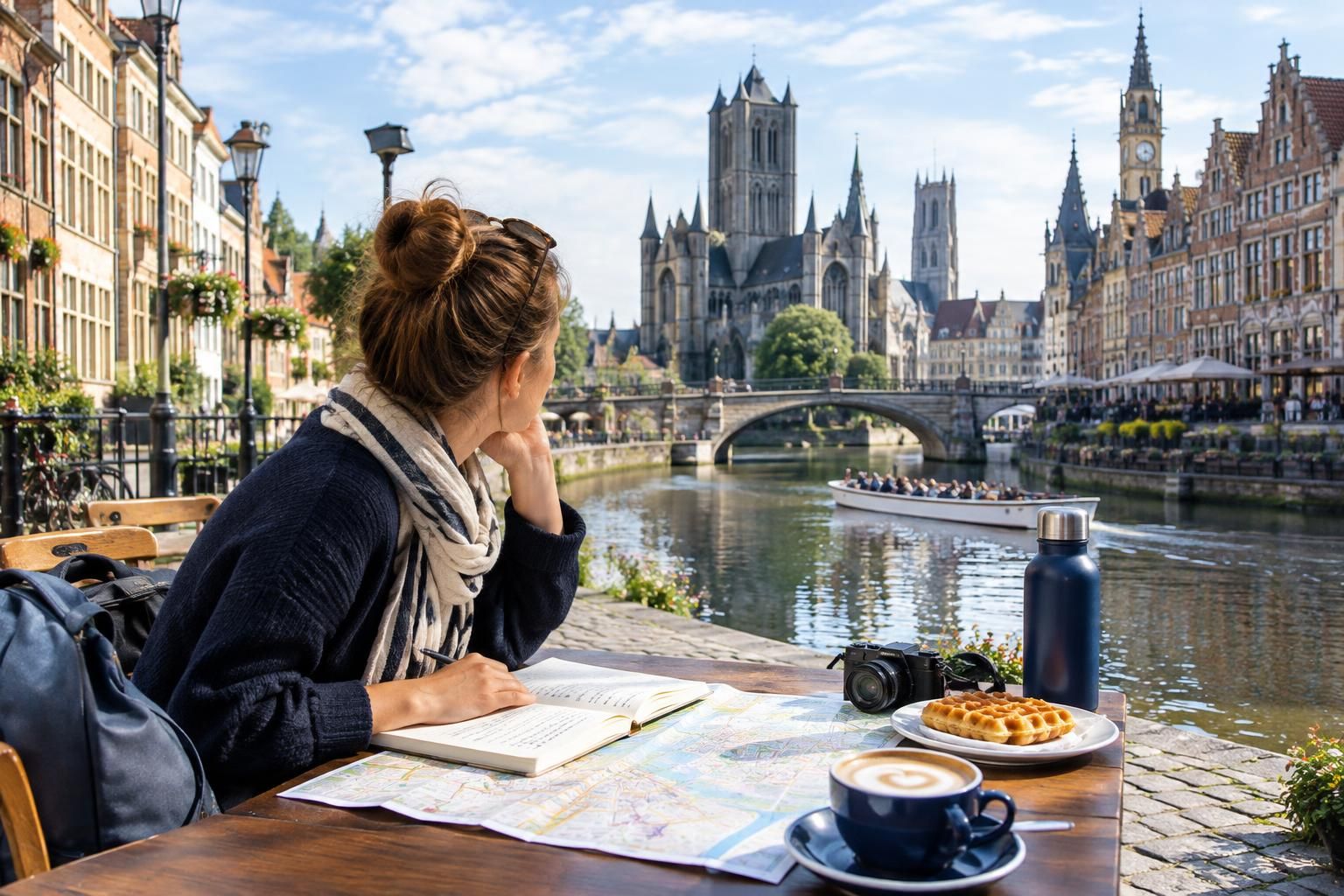
Belgium’s compact geography can tempt travelers to collect cities rather than enjoy them. A five-night stay in Ghent offers a different approach: settle into one neighborhood, explore a city with a distinctive life beyond its monuments, and add a rail excursion only when it improves the trip. Ghent combines waterways, medieval architecture, art and a university-city atmosphere, making it a rewarding base rather than simply a stop between Brussels and Bruges. The key planning decision is not how many places you can reach, but how much time you want to spend changing scenes.
Give Ghent the largest share of the trip
For five nights, reserve at least two full days for Ghent itself. Use the arrival afternoon for a short neighborhood walk, then devote your first full day to the historic center. The Graslei and Korenlei waterfronts, the streets around Saint Bavo’s Cathedral and the lanes of Patershol make a coherent introduction without requiring a packed timetable.
Keep another day for a contrasting side of the city: an art museum, quieter residential streets or a longer waterside walk. Place one day trip between these Ghent days. A second excursion should remain optional, particularly if you enjoy lingering over meals or want time to draw, photograph buildings or browse shops. Returning to the same streets at different times often reveals more than another hurried arrival elsewhere.
Choose accommodation for evenings as well as sightseeing
Staying in or near the historic center makes it easier to step out for an early walk or return briefly before dinner. Around Patershol and the northern side of the center, consider whether you prefer restaurant-lined streets or a quieter side road. Rooms facing lively squares can feel atmospheric by day but may be less appealing when you want an early night.
Accommodation nearer Gent-Sint-Pieters station can suit travelers prioritizing rail excursions, but it changes the rhythm of a Ghent stay. The station is outside the medieval core, so include the onward transfer when comparing locations. Before booking, check lift access, stair arrangements, room orientation and luggage storage. In older buildings, these practical details may matter more than decorative character.
Plan the complete rail journey, not just the intercity leg
When comparing arrival routes, account for every stage: your arrival airport or railway station, the train into Ghent, and the final journey to your accommodation. A connection that looks simple on a map can feel less convenient with luggage, especially if it involves an unfamiliar interchange. Leave the arrival evening free of anything difficult to rearrange.
For day trips, compare station-to-destination travel rather than train time alone. Bruges station sits beyond its historic center, while Antwerp-Central is itself an architectural highlight but still requires some onward walking for the old town. Check the relevant operator’s current journey planner and ticket conditions before committing. Do not assume a multi-journey product is better value than individual tickets; compare it against the journeys you actually intend to make.
Pick Bruges or Antwerp according to your interests
Choose Bruges if you want a day centered on canals, historic streets and a relatively concentrated old-town landscape. Give the visit a simple structure: a walk into the center, one indoor attraction, lunch and a less direct route back. Rather than moving from landmark to landmark, leave room for quieter streets beyond the busiest squares.
Choose Antwerp if you prefer a larger-city contrast, with art, fashion, substantial shopping streets and varied neighborhoods. Its scale rewards choosing a particular area or theme instead of attempting an all-purpose highlights circuit. If both cities appeal, visit one early in the stay and decide afterward whether a second excursion still sounds enjoyable. Keeping a day uncommitted is a practical choice, not a gap in the itinerary.
Balance major interiors with unstructured outdoor time
Ghent’s major historic interiors can anchor individual half-days. Saint Bavo’s Cathedral and the Ghent Altarpiece may appeal to art-focused travelers, while the Gravensteen offers a different route into the city’s past. Check the visit arrangements for the specific experience you want, since entering a building and accessing a particular artwork or exhibition may involve different arrangements.
Pair each substantial visit with something undemanding: a waterfront stroll, a café stop or time in a small neighborhood square. Keep an indoor alternative for wet weather, but avoid treating rain as a reason to stack several museums into one day. Travelers who find uneven paving or prolonged standing tiring should also plan seated breaks and examine attraction access information individually.
Pack for walking and keep meals flexible
Comfortable shoes with reliable grip, a compact waterproof layer and a small day bag are useful for a trip built around walking and rail travel. Pack luggage you can manage through stations and over uneven surfaces. If laundry access lets you take a smaller case, that can make both arrival and departure noticeably easier.
Use food as part of the daily rhythm rather than another checklist. You might plan one longer restaurant meal and keep another meal simple, leaving room for a bakery stop or a regional dish that catches your interest. If a particular restaurant matters to you, check its own booking arrangements; otherwise, retain enough flexibility to eat near wherever the day naturally ends.
A Ghent-based holiday works best when the base remains the main event. Choose accommodation that supports your preferred evening routine, allow for station transfers and make day trips selective rather than automatic. Five nights can then offer both familiarity and variety: recognizable neighborhood streets, meaningful time with art and architecture, and a contrasting Belgian city without the disruption of another hotel move.
AI-assisted evergreen travel guide. Featured image is an AI-generated illustration, not a specific product or booking.