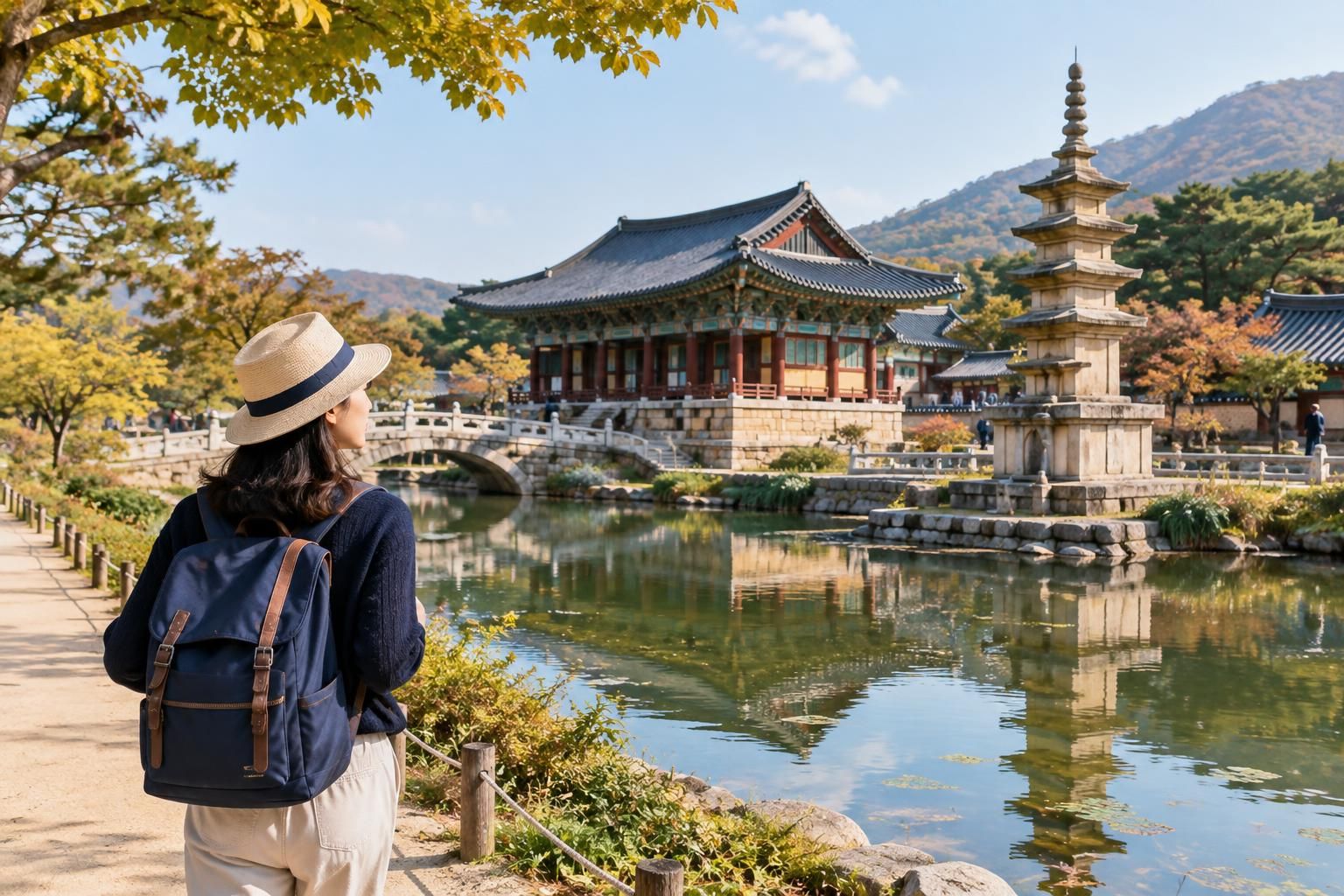
Gyeongju offers a different rhythm from South Korea’s biggest cities: grassy burial mounds, historic temple sites and stretches of open landscape invite a slower approach. Yet its attractions are not all gathered into one walkable district. The key to a rewarding car-free visit is to treat central Gyeongju as one cluster and the outlying sights as separate excursions. With two or three nights, a well-placed base and a little transport planning, you can enjoy the former Silla capital without spending each day moving between distant stops.
1. Give Gyeongju enough time to feel different
Two nights can suit travelers who want a central heritage walk and one substantial outing. Three nights create more room for a museum visit, a slower meal or a weather-related change of plan. A single overnight is still possible, but it works best when you choose either a central sightseeing focus or an outlying temple visit rather than trying to fit everything into both arrival and departure days.
Build the stay around contrasts, not a checklist. Burial mounds make more sense when paired with an introduction to Silla history; a busy café street feels more appealing after a quiet stretch among archaeological remains. Leave at least one unassigned half-day. Gyeongju’s appeal includes the spaces between landmarks, and a tightly packed itinerary can turn those pleasant walks into hurried transfers.
2. Choose a base for the evenings you want
For a first car-free visit, consider accommodation around the central historic district or within a manageable walk of it. Areas near Hwangnidan-gil appeal to travelers who want cafés, restaurants and evening wandering close at hand. Check the actual walking route rather than relying only on a property’s description of being central: a short distance on a map can still involve an inconvenient road crossing or luggage-unfriendly approach.
Bomun Lake offers a different setting, with a resort-oriented feel and lakeside surroundings, but it is separate from the central heritage cluster. It may suit travelers who value downtime at their accommodation more than walking out to historic streets. A hanok-style stay can add character, though room layouts, bedding, sound insulation and bathroom arrangements vary. Choose the room features you need rather than booking solely for the building’s appearance.
3. Make the central sights one connected experience
Use Daereungwon and the surrounding burial-mound landscape as an anchor for a central walking day. From there, shape a route through the historic area toward Cheomseongdae and, if your energy allows, Donggung Palace and Wolji Pond. These places reward different kinds of attention: the scale of the mounds, the structure of the observatory and the relationship between water and reconstructed palace architecture.
Avoid treating this as one uninterrupted march. Put a meal or café break between clusters, and keep any evening sightseeing flexible until you have checked access arrangements for your dates. If you want to return to a site after dark, resist crossing the same ground repeatedly during the afternoon. Comfortable shoes and a modest day bag will contribute more to this day than an ambitious list of extra stops.
4. Keep Bulguksa and other outlying sights separate
Bulguksa lies outside central Gyeongju, so plan it as a dedicated excursion rather than an easy addition between downtown sights. Decide in advance whether you prefer public transport, a taxi or an organized outing. Compare the full journey, including getting to the departure point and returning afterward, rather than judging options only by the time spent inside a vehicle.
Seokguram is another possible stop, but adding it means more travel and walking. Pair the two only if temple architecture is a main interest and you are comfortable devoting much of the day to the outing. Namsan is a different proposition again: its heritage sites are spread across a mountain landscape. Treat a visit there as a walking excursion requiring route selection, suitable footwear and attention to weather, not as another downtown monument.
5. Plan arrival and local transport as separate tasks
Do not assume your intercity arrival point will place you beside your accommodation or the historic sights. Before booking, identify the station or bus terminal you will actually use, then map the onward transfer. On arrival day, the simplest option may be worth more than the cheapest one, especially with luggage. Save your accommodation address in Korean as well as English for navigation and transport conversations.
For local journeys, group destinations geographically and compare public transport with occasional taxi use. A car-free trip does not have to mean a bus-only trip; one targeted taxi journey can preserve time for a place you genuinely want to explore. Check current routes and payment arrangements before setting out, and avoid scheduling your departure immediately after an excursion with several transport connections.
6. Use weather and history to shape the final itinerary
Much of Gyeongju’s central appeal is outdoors, with exposed paths and substantial walking. In warm conditions, place longer walks earlier and reserve part of the afternoon for an indoor stop. In colder or wet weather, reduce the number of outdoor clusters rather than assuming you will maintain the same pace. Carry a light layer or rain protection appropriate to the season, plus water for longer outings.
Gyeongju National Museum can provide context for the objects, beliefs and craftsmanship associated with Silla. Consider visiting before your main heritage walk if historical background helps you engage with ruins and landscapes. Alternatively, use it afterward to connect what you have seen. Check visiting arrangements for your dates, and keep another indoor option in mind rather than making the whole weather backup depend on one venue.
A successful car-free Gyeongju stay depends less on seeing every landmark than on keeping each day geographically coherent. Stay near the experiences you want most, separate central walks from outlying excursions and leave room to pause. That balance lets the city’s history emerge through its landscapes as well as its individual sights.
AI-assisted evergreen travel guide. Featured image is an AI-generated illustration, not a specific product or booking.