A flight and a room can make a trip look affordable before the rest of the costs come into view. Station transfers, meals on travel days, admission tickets and small accommodation charges can change the picture considerably. A useful travel budget does not need to predict every coffee. It needs to show what the whole trip might require, which choices matter most and where you have room to adjust. Start with the experience you want, then build a spending plan that includes the less memorable but unavoidable parts of getting there and staying there.
Separate your total limit from your booking budget
Set an overall amount you are comfortable allocating before deciding how much to spend on transport and accommodation. Include money already paid, money still due and spending during the trip. Keep purchases made specifically for the holiday, such as luggage or activity equipment, visible too. Otherwise, those costs can quietly disappear from the calculation even though they still affect what you can afford.
Divide the plan into five simple groups: getting there, staying there, everyday spending, planned experiences and a reserve. For a shared trip, label each amount as either a group total or a per-person cost. A room shared by two people and a museum ticket bought individually should not be entered on the same basis. This small distinction prevents surprisingly large errors.
Price the journey from your front door to your room
Compare transport options using the complete journey, not just the headline fare. Depending on the trip, that may include reaching your departure station, parking, baggage charges, seat selection, transfers at the destination and food along the way. Count both directions. A convenient outward journey can distract from an awkward or costly return.
Look closely at arrival location and timing. A less expensive ticket to a distant airport may involve a longer transfer, while a late arrival might narrow your practical transport choices. Rather than assuming the cheapest connection will suit you, budget for an option you would genuinely use with your luggage and travel companions. For a driving holiday, include fuel, parking and applicable road charges rather than comparing only vehicle rental with train fares.
Compare accommodation by the stay, not the nightly rate
Use the total payable for the full stay when comparing rooms or apartments. Check the booking terms for compulsory charges, cleaning costs, breakfast arrangements and anything payable separately. Treat deposits or temporary payment holds differently from final expenses: they may not increase the trip's ultimate cost, but they can affect how much money remains accessible while you travel.
Then consider what the accommodation changes elsewhere in your budget. A kitchen is useful only if you intend to shop and cook. Included breakfast matters more if it fits your routine. Laundry facilities can reduce paid washing costs, while a cheaper room far from your planned activities may add repeated transport expenses. Judge these features against your actual itinerary rather than assigning every extra an automatic saving.
Build daily spending around realistic day types
One flat daily allowance can hide the difference between a quiet neighborhood day and an excursion with transport, admission and lunch away from your base. Instead, sketch three representative days: an ordinary sightseeing day, a bigger outing and a low-spend day. Give each a food, local transport and incidental spending estimate, then apply them to the rough shape of your itinerary.
Make food assumptions specific enough to be believable. You might plan simple breakfasts, casual lunches and a few longer restaurant dinners, rather than assuming every meal will be either self-catered or eaten out. Include snacks, drinks and travel-day meals if they are part of your usual habits. If your estimates are uncertain, use a range rather than a single precise-looking figure.
Protect the experiences that give the trip its purpose
Choose the activities you would be most disappointed to miss and set aside money for those first. A guided architecture walk, a boat excursion or a cooking class may be central to the holiday, while several minor paid attractions are optional. This makes trade-offs clearer: you can simplify a few meals or skip an extra stop without accidentally losing the reason you wanted to travel.
Budget for the full cost of each priority experience, including getting there and any necessary equipment or meals. Keep optional activities in a separate list instead of treating them all as commitments. Free time can remain genuinely open, with options such as a waterfront walk, a public garden or browsing a neighborhood market. A satisfying itinerary does not require a paid attraction in every gap.
Keep a reserve and track only what helps
Leave some of the total unassigned for changes and overlooked expenses. The appropriate cushion depends on the trip: several connections, remote locations or many separately booked elements create different spending uncertainties from a straightforward stay in one city. Keep this reserve distinct from souvenir money. If the planned trip already consumes your entire limit, simplify it before booking rather than relying on everything costing the minimum.
Record each major expense once, noting whether it is paid, outstanding or estimated. Where different currencies are involved, use a consistent planning conversion and allow room for exchange-rate movement and payment fees. During the trip, a brief daily spending check is usually more useful than logging every small purchase. Review the remaining allowance after expensive days so adjustments stay modest and deliberate.
A realistic trip budget is a set of choices, not a prediction of every expense. Count the complete journeys, compare accommodation totals, model the days you actually want and protect your priorities. With a separate reserve and a simple record of what remains, you can spend less time recalculating and more time enjoying the trip.
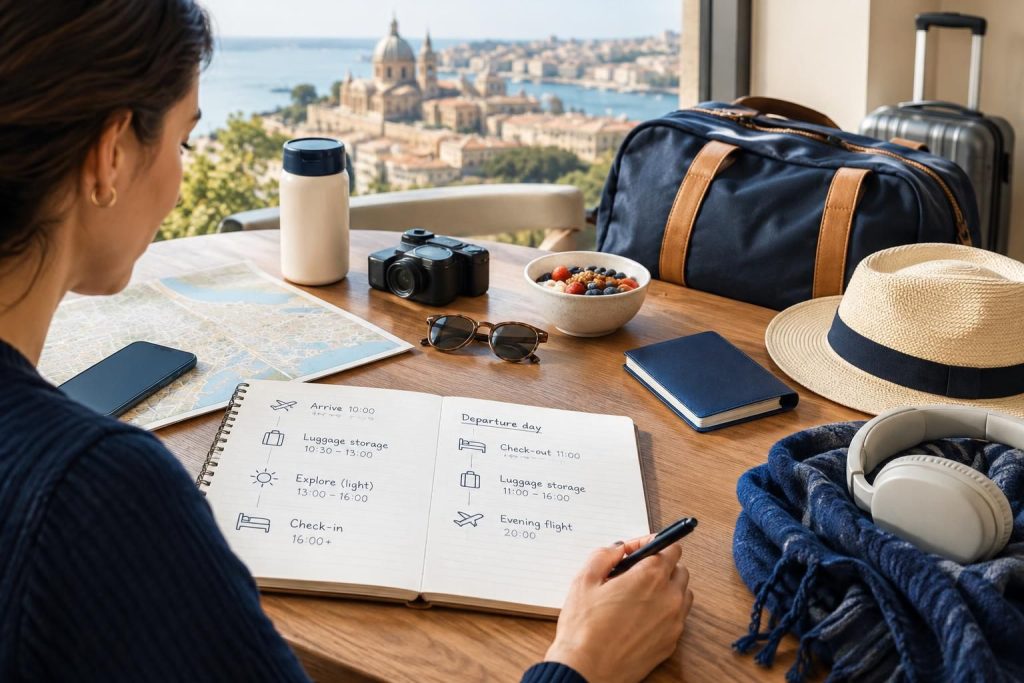
AI-assisted evergreen travel guide. Featured image is an AI-generated illustration, not a specific product or booking.