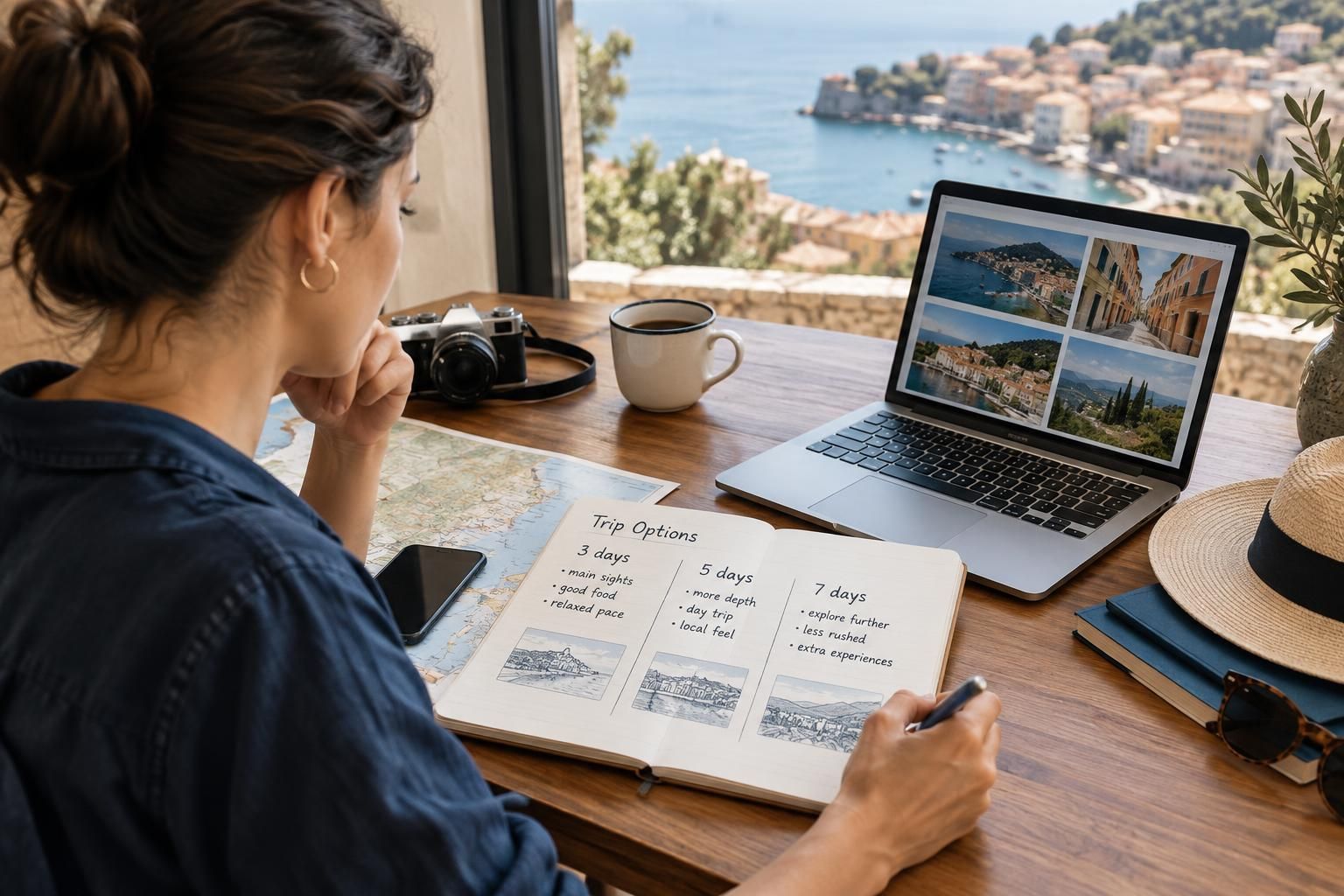
Choosing where to go often gets more attention than deciding how long to stay. Yet trip length shapes almost everything: how much you spend, how quickly you move, which experiences feel worthwhile and whether you return refreshed or ready for another break. The best duration is not simply the longest absence your calendar allows. It is the amount of time that gives your main reasons for travelling enough space, without adding days you cannot comfortably afford or enjoy. Start with the experience you want, then test a few possible lengths before booking.
Define what would make the trip feel complete
Write down two or three outcomes rather than a long attraction list. For a coastal holiday, that might mean having several unhurried swims, exploring one nearby town and enjoying meals without watching the clock. For a city break, it could be visiting a particular gallery, understanding a few neighbourhoods and spending an evening at a performance.
Next, distinguish essential experiences from welcome extras. If your ideal trip requires three substantial outings, squeezing them into two full days creates an obvious mismatch. Equally, a destination with dozens of attractions does not automatically need a long stay if only a handful interest you. Judge completeness against your own priorities, not everything available.
Count usable days, not just nights away
A four-night booking does not necessarily provide four days of exploring. Arrival and departure can leave only fragments of time, particularly when a destination involves several connections or a lengthy transfer. Sketch the likely shape of those days without relying on optimistic assumptions about how quickly you will be ready to go out.
For each possible duration, label days as mostly travel, fully available or partly available. A hypothetical four-night stay with a late arrival and early departure offers three full days between them. Adding one night could therefore increase your useful sightseeing time from three days to four—a more meaningful change than the booking length alone suggests.
Treat spare hours as a bonus rather than the foundation of the itinerary. They can suit a neighbourhood stroll or an easy meal, but are a weak place to put the experience that motivated the whole trip.
Match the duration to the destination's rhythm
Some trips deliver variety within a compact area; others depend on distances, preparation or slower routines. A small city with several interests close together may suit a short break. A countryside stay built around walks, market visits and time at your accommodation may need more space to develop its appeal.
Consider how you personally settle into a place. If you enjoy finding a regular breakfast spot and revisiting favourite streets, allow time for repetition. If discovery is your main pleasure, check whether the destination offers enough different experiences for a longer stay. Neither preference is more adventurous; they simply call for different durations.
For trips with several bases, count the moves as part of the experience's cost in time and attention. Before adding another destination, ask whether an extra night in an existing base would create a better holiday.
Compare the cost of one more day with its value
Separate costs that mostly belong to the trip as a whole from those that grow with every night. Your journey to the destination may be a substantial commitment, while accommodation, meals and activities continue accumulating during the stay. This makes both very short and unnecessarily long trips worth examining carefully.
Compare two or three realistic versions, such as four, six and eight nights. Estimate each total using the same comfort level and spending habits. Then describe what the additional nights actually buy: a second walking day, a quieter pace, a visit farther afield or simply more time away.
Be wary of extending a holiday solely to justify the effort or money already involved. Extra nights are worthwhile when they improve the experience and remain comfortable within your budget, not merely because they make the initial journey feel more economical.
Allow for the pace you can sustain
Build a sample middle day, when the excitement of arrival has settled. Include getting ready, meals, movement between places and downtime alongside the main activity. If every day requires an early start and a full evening, either extend the trip or reduce its scope.
Different experiences also need different amounts of recovery time. A demanding walk, a long excursion or several hours of concentrated museum viewing may leave you wanting a simpler following day. This does not always mean scheduling an empty day; a local café, a garden or time reading at your accommodation can provide a useful change of pace.
Consider your return as well. A trip that uses every available day may leave no room for household tasks or a gentle transition back to work. Keeping a day at home can sometimes improve the overall break more than adding another night away.
Test the shortest, longest and best-balanced versions
Create three brief outlines before choosing dates. The shortest version should contain only your essentials. The longest should show what you would genuinely do with the extra time, rather than filling space with attractions you barely want to visit. The middle version should preserve your priorities while allowing some flexibility.
Look for warning signs. A short outline that depends on perfect connections is fragile. A long one filled with expensive activities just to prevent boredom may be a poor fit. The strongest version usually has a clear purpose for most days, room to change your mind and no pressure to make every hour productive.
Choose your trip length by counting useful time, identifying what matters and checking whether the pace and total cost work together. If the itinerary feels crowded, remove something before automatically adding nights. If it feels thin, shorten the stay or choose a place better suited to lingering. The right duration gives your holiday room to unfold without making time away an end in itself.
AI-assisted evergreen travel guide. Featured image is an AI-generated illustration, not a specific product or booking.